
realistic warrior tattoos
Realistic Warrior Tattoo Artist San Francisco Bay Area
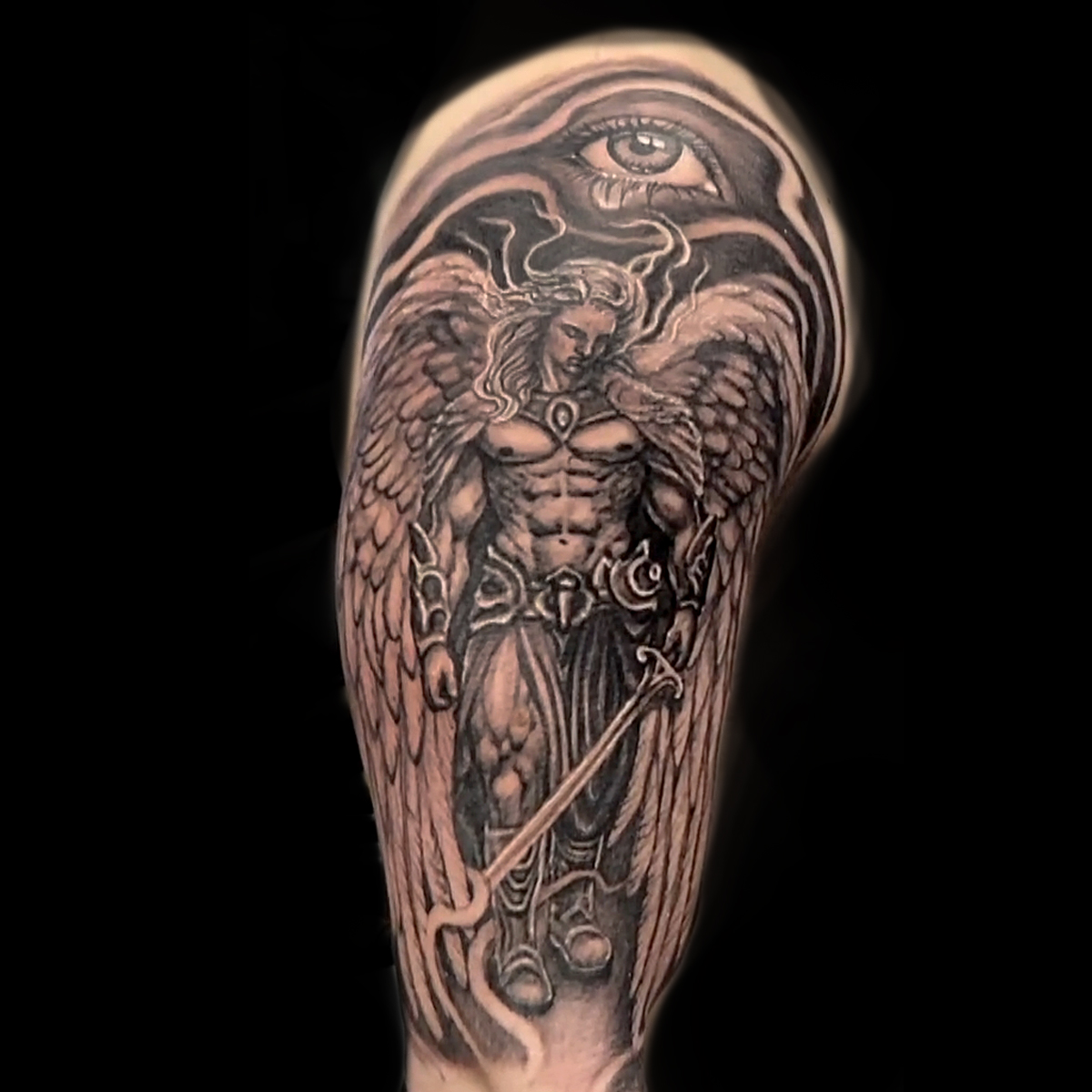
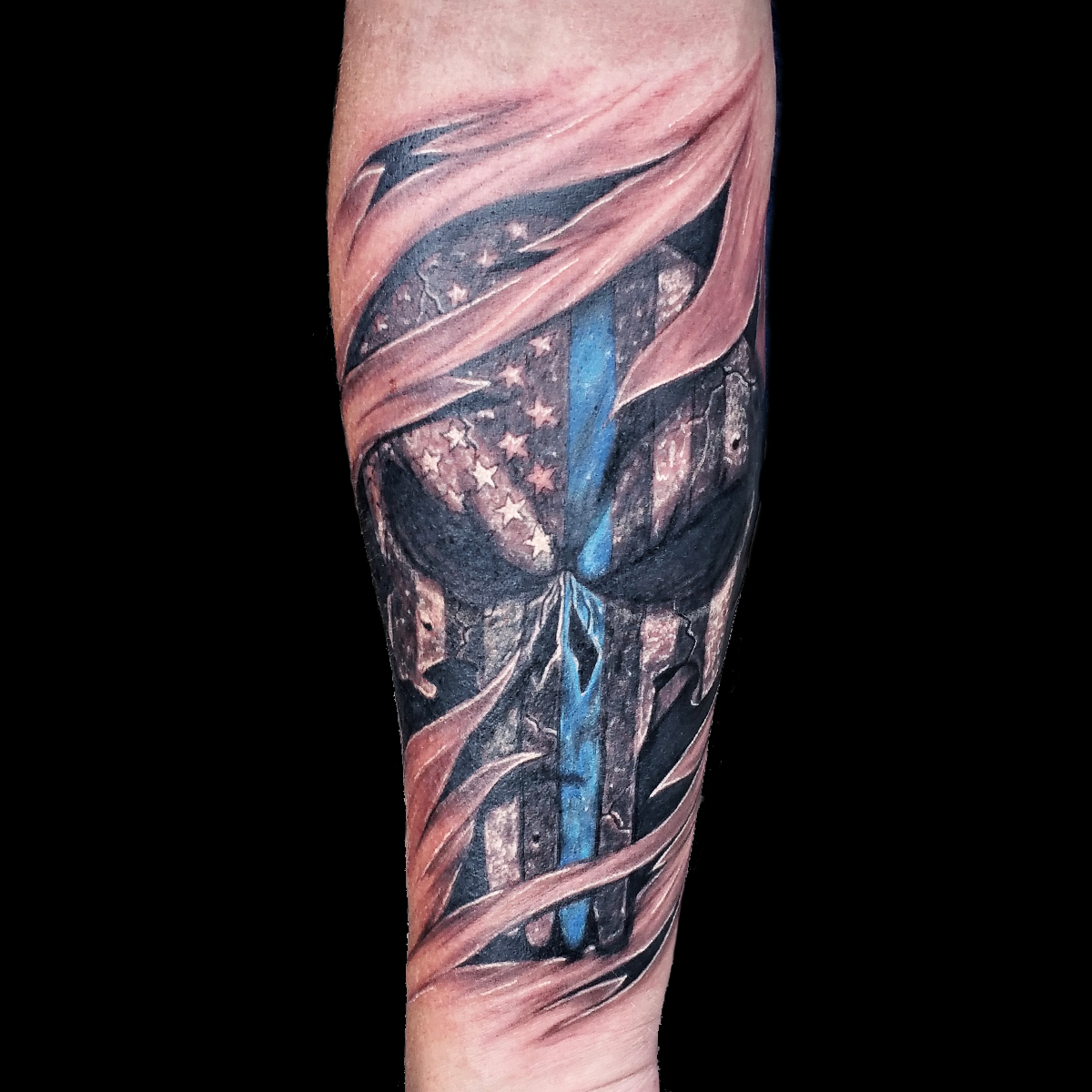
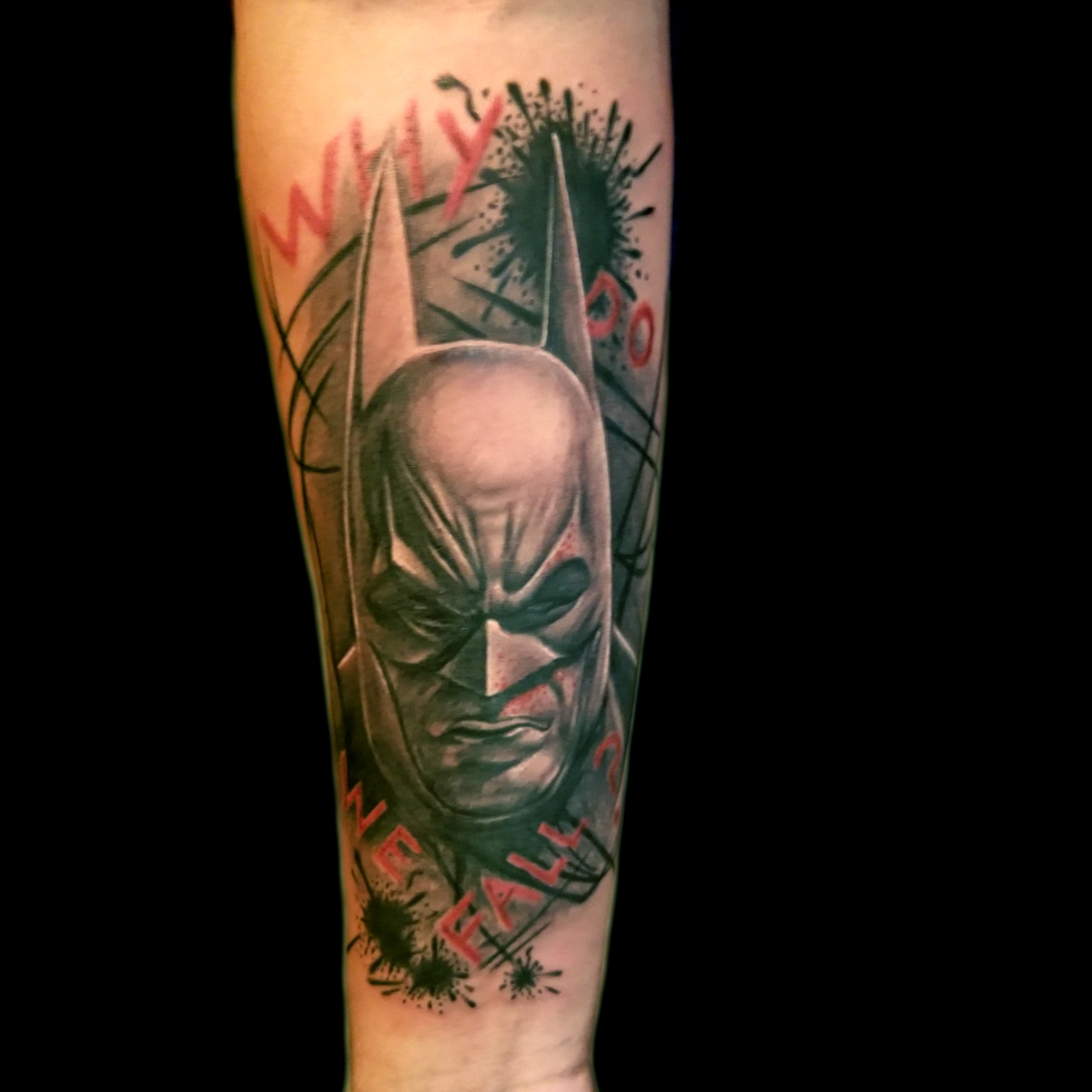
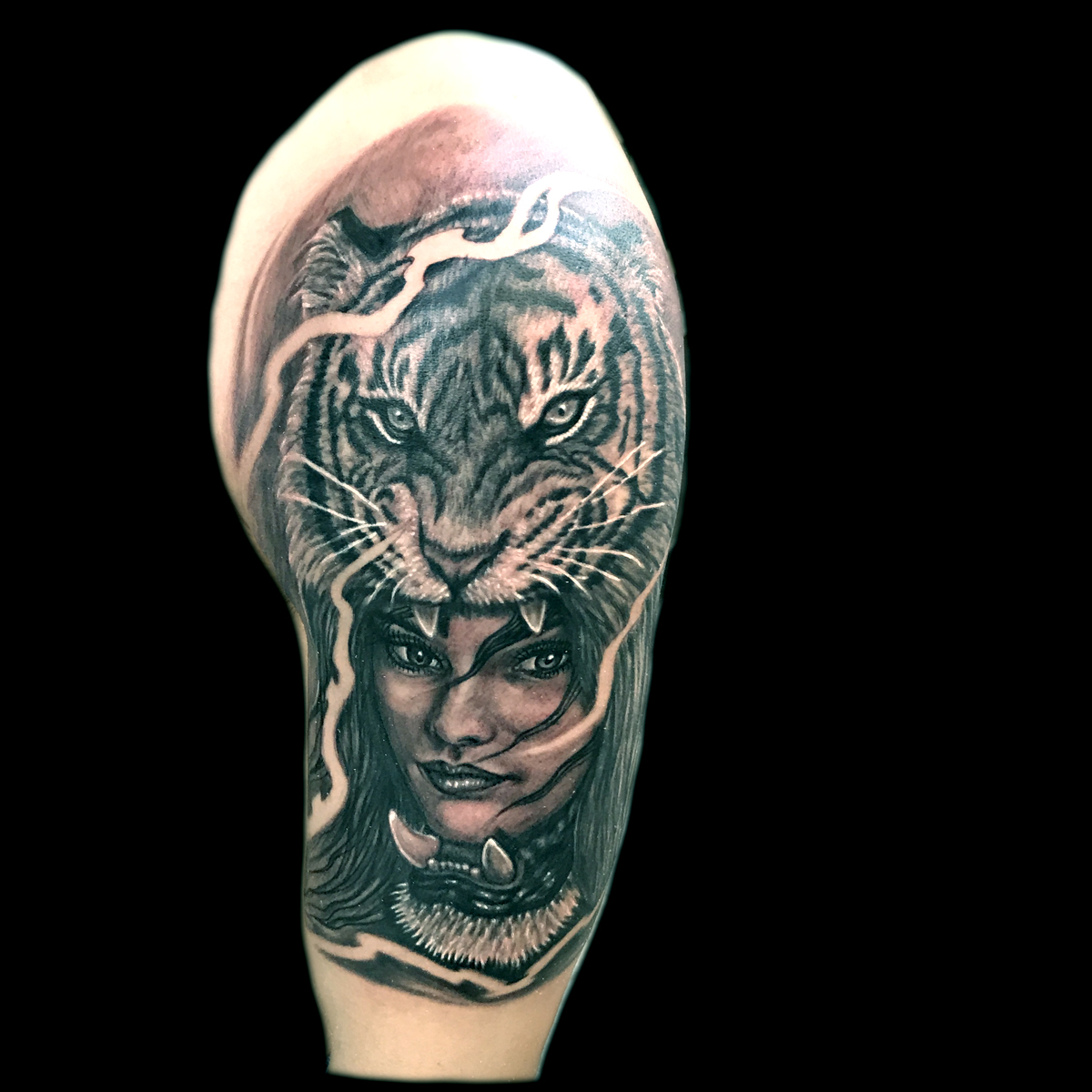
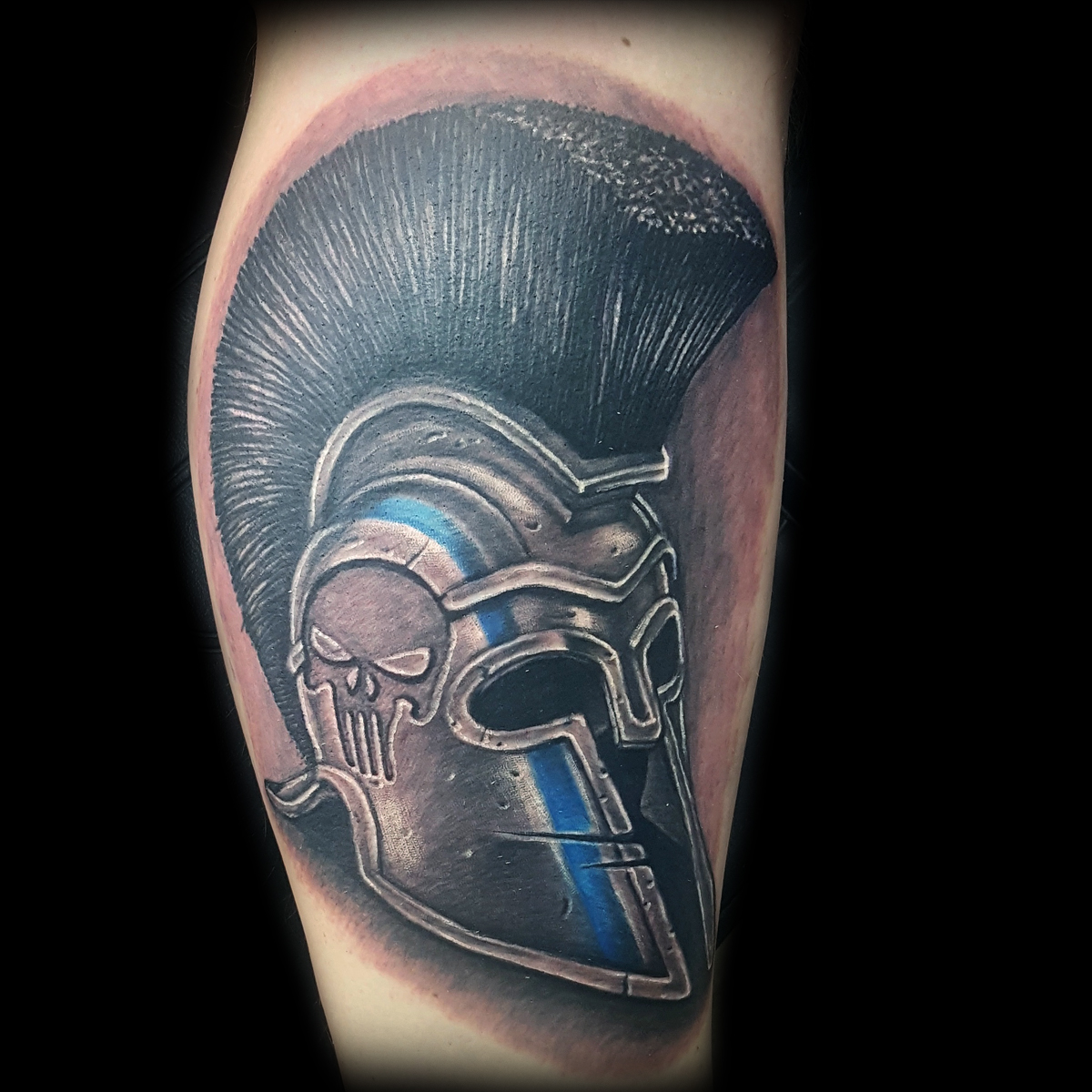
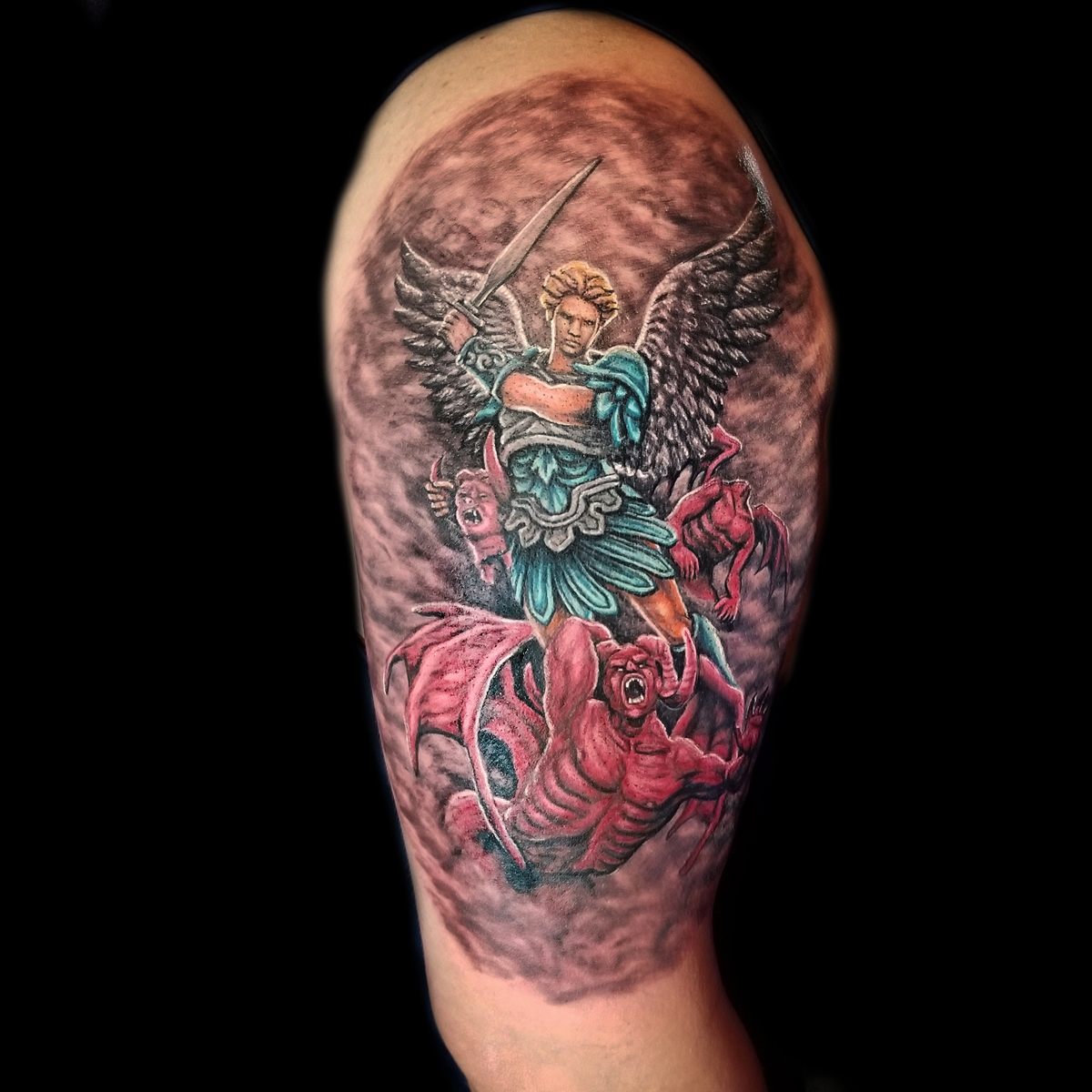
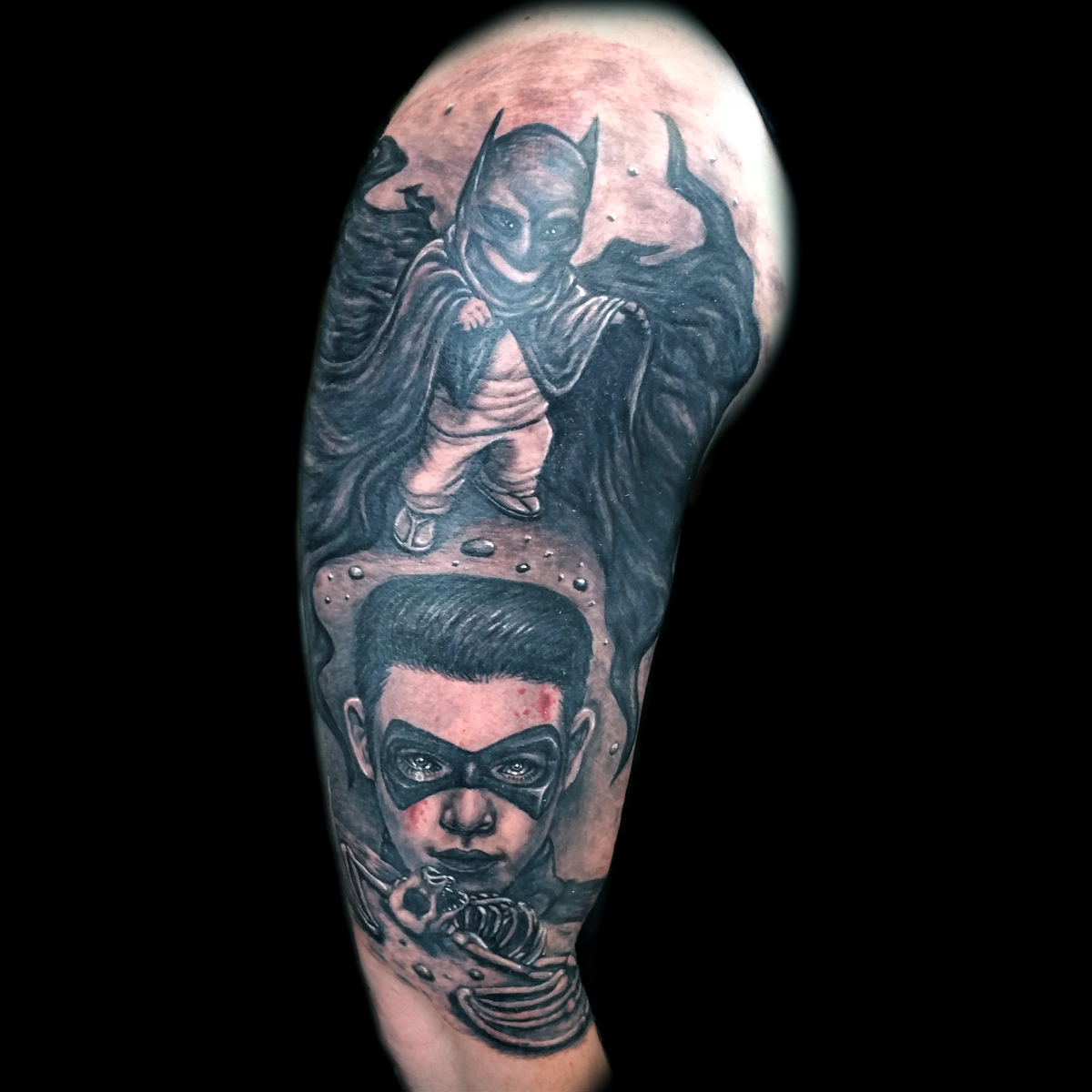
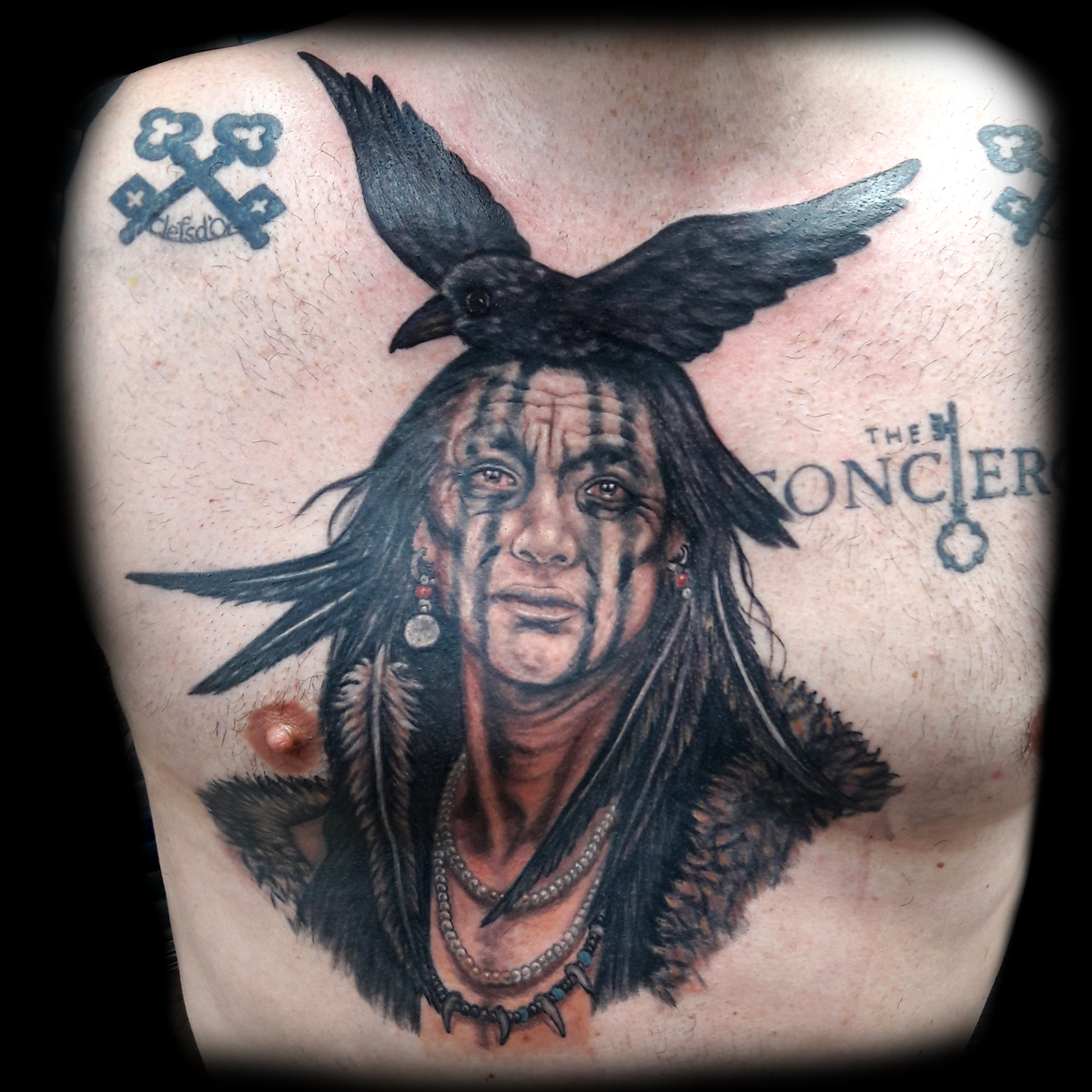
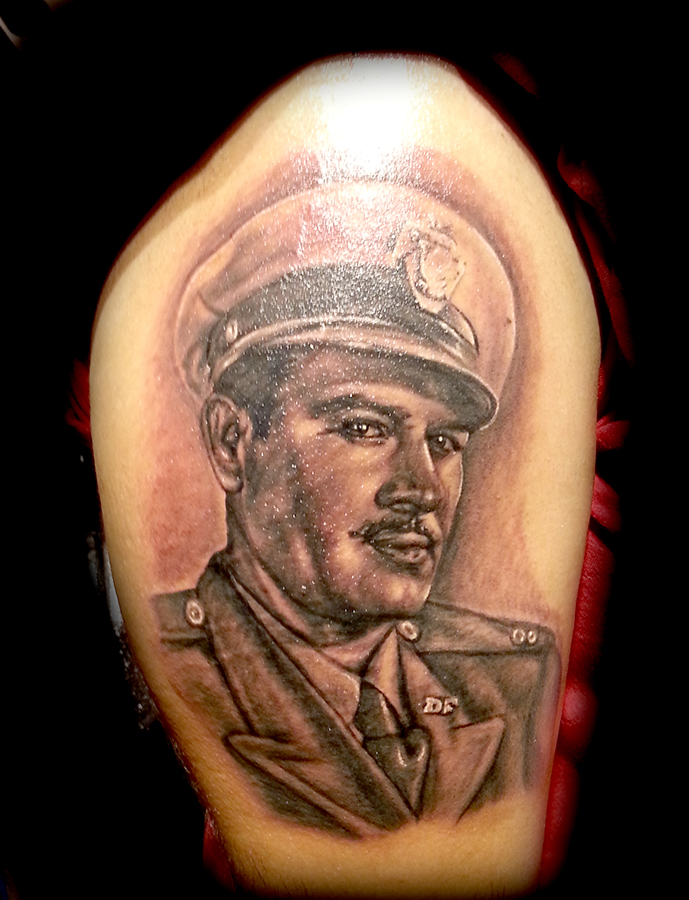
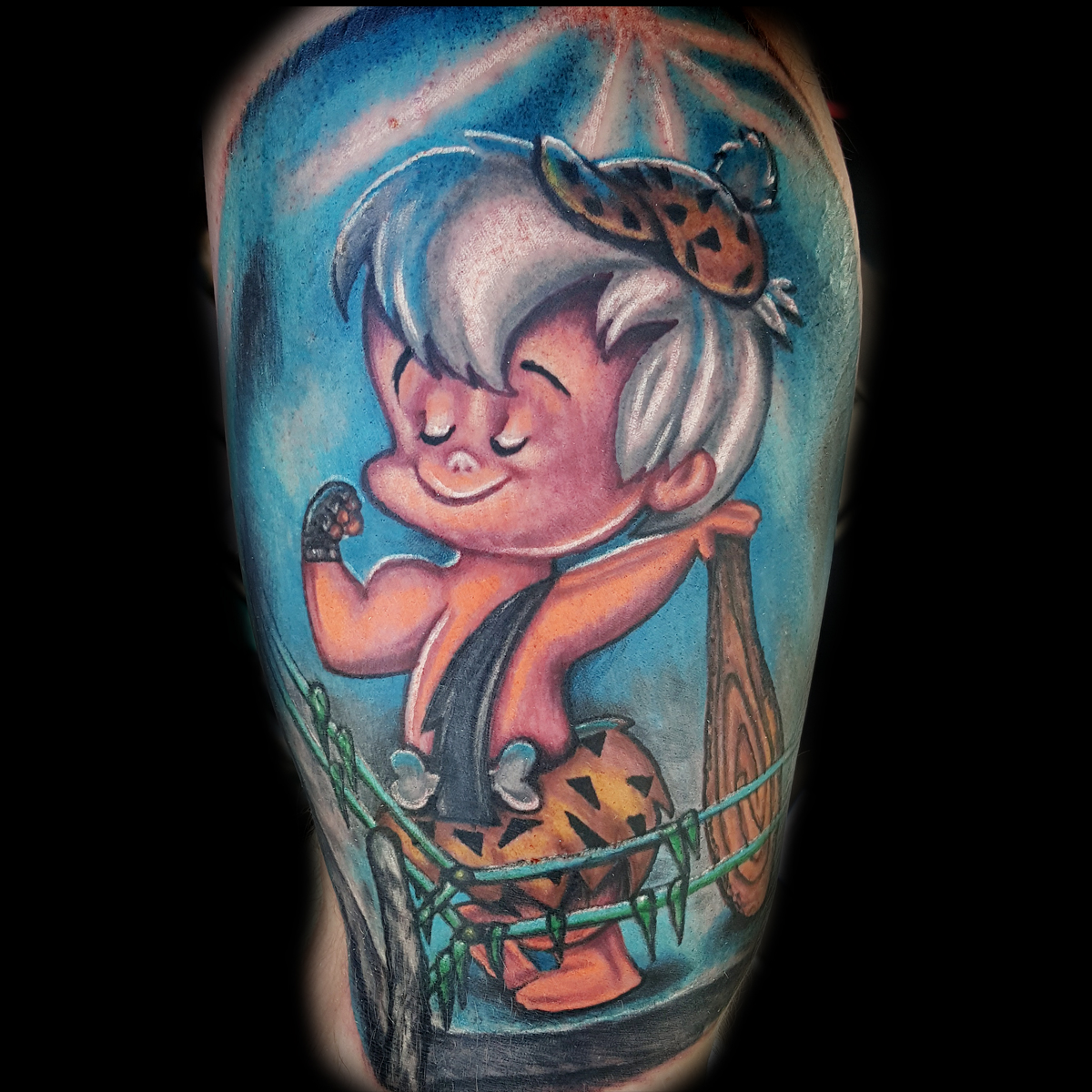
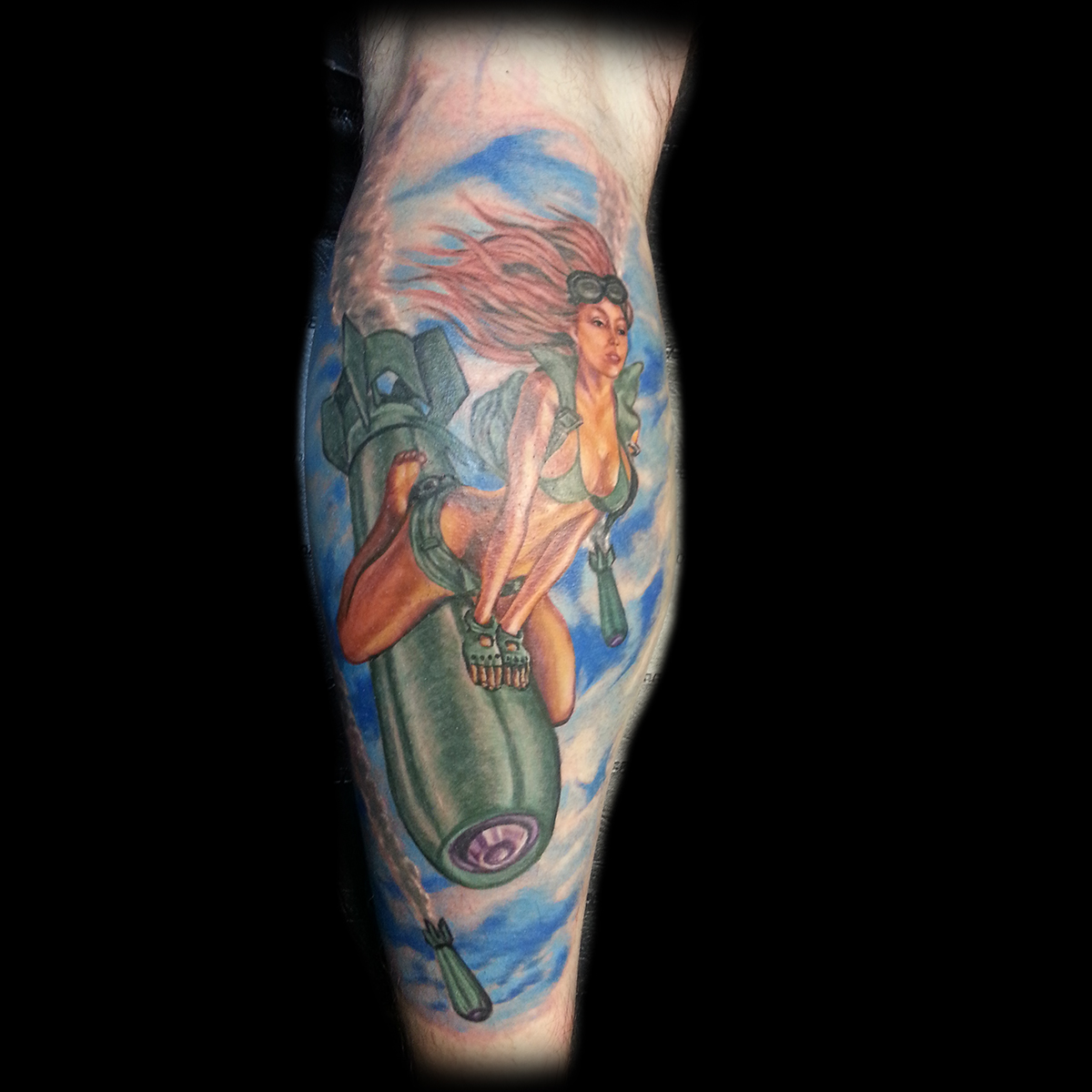
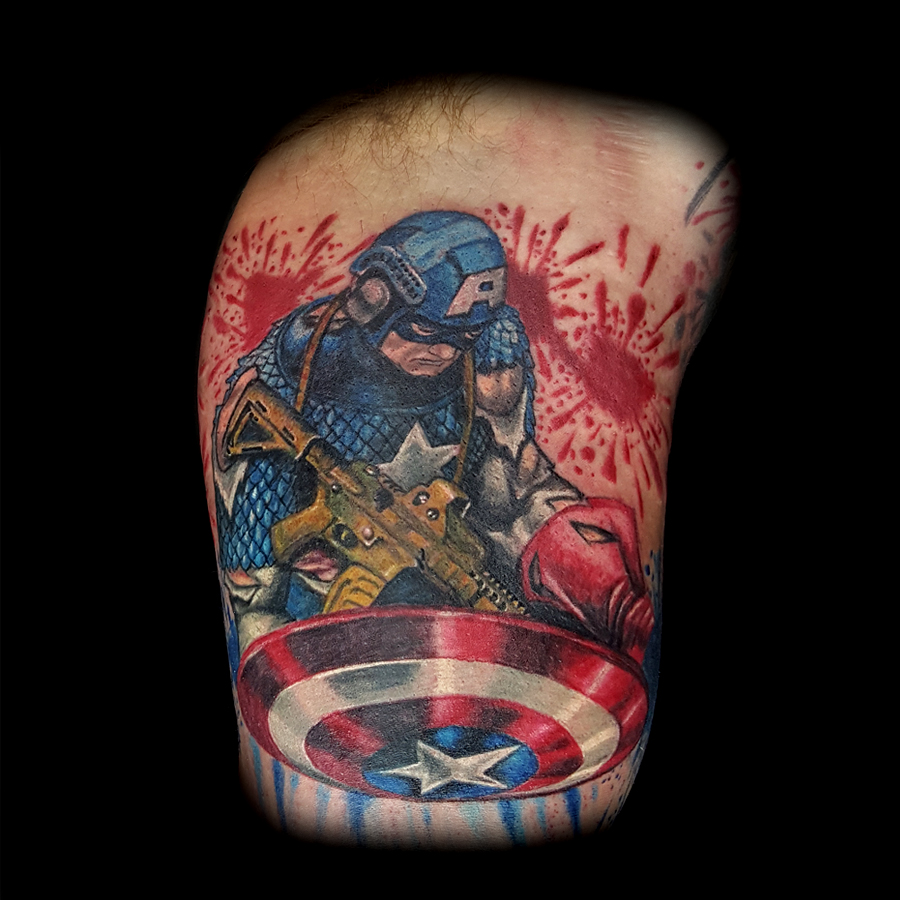
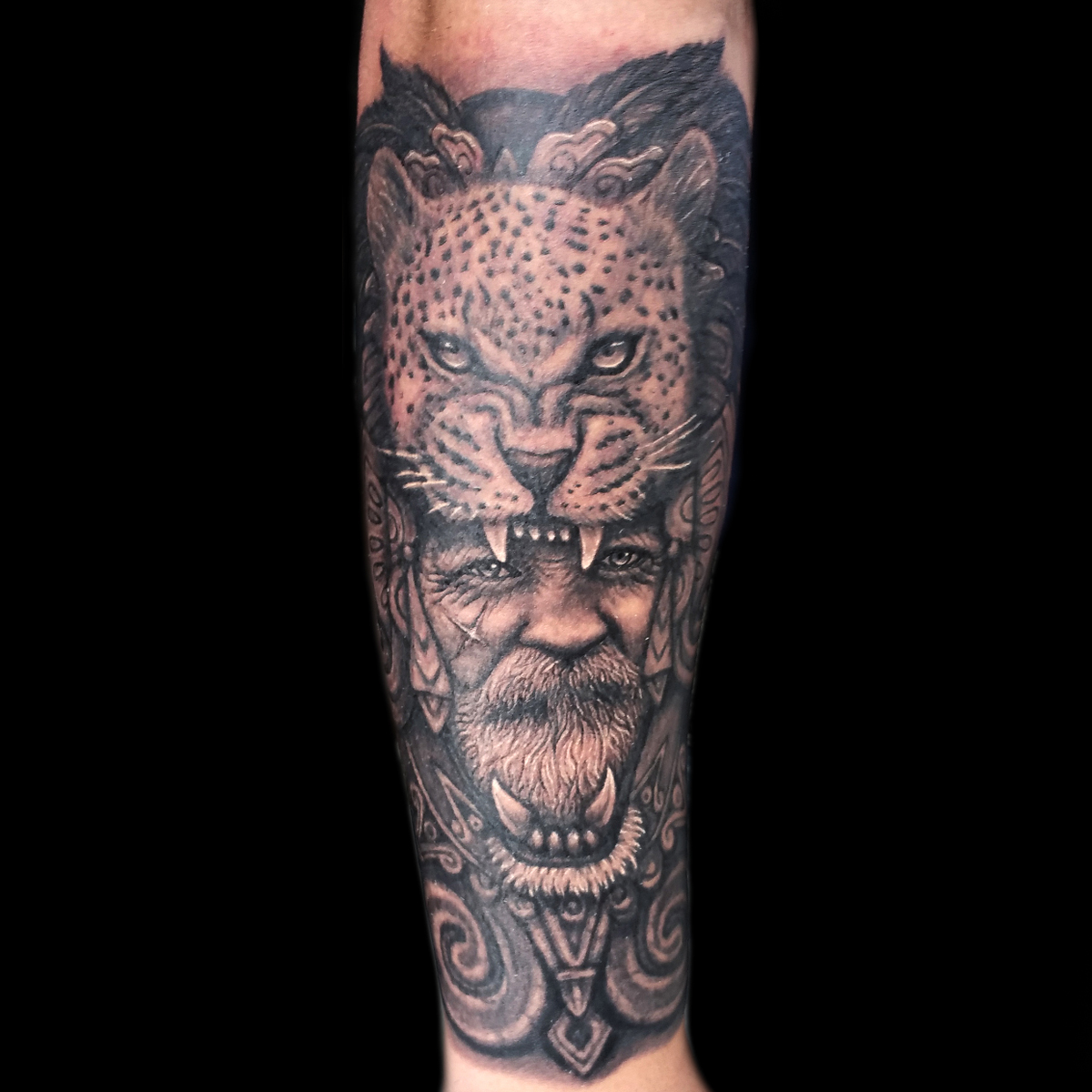
A realistic warrior tattoo can transform an idea of strength into a powerful piece of body art. Detailed faces, worn armor, dramatic shadows, and carefully rendered weapons can give the character an almost lifelike presence. At Masterpiece Tattoos in San Francisco, Brian Martinez creates custom realistic warrior designs based on each client’s vision, preferred style, and placement.
Warrior imagery can mean something different to everyone. Courage may be the main message for one person, while another may use the design to represent resilience, loyalty, protection, or overcoming adversity.
For that reason, the strongest warrior tattoos are not simply impressive images. They have a story behind them.
The Art of a Realistic Warrior Tattoo
Creating believable warrior artwork requires careful control of light, texture, anatomy, and proportion.
A face needs natural features and expression. Armor should have believable surfaces and reflections. Weapons require accurate shapes and perspective. Even the background needs to work with the main character.
For example, deep shadows can make an armored helmet appear heavier. Subtle highlights can reveal scratches across metal. Meanwhile, realistic skin texture can give the warrior a weathered appearance.
As a result, small details can dramatically change the personality of the finished tattoo.
Warrior Tattoos With Meaning
Strength is an obvious theme, but it is far from the only one.
Many people connect warrior imagery with personal experiences. A battle-worn character can symbolize survival after a difficult period. A shield may represent protection of family. Likewise, a sword can represent determination and the willingness to move forward.
In addition, the surrounding imagery can add another layer of symbolism.
Mountains may represent endurance. Storm clouds can suggest adversity. An eagle can communicate freedom, while a wolf may represent loyalty.
Ultimately, the composition should reflect what the warrior means to you.
Realistic Warrior Portraits
The face often becomes the emotional center of the tattoo.
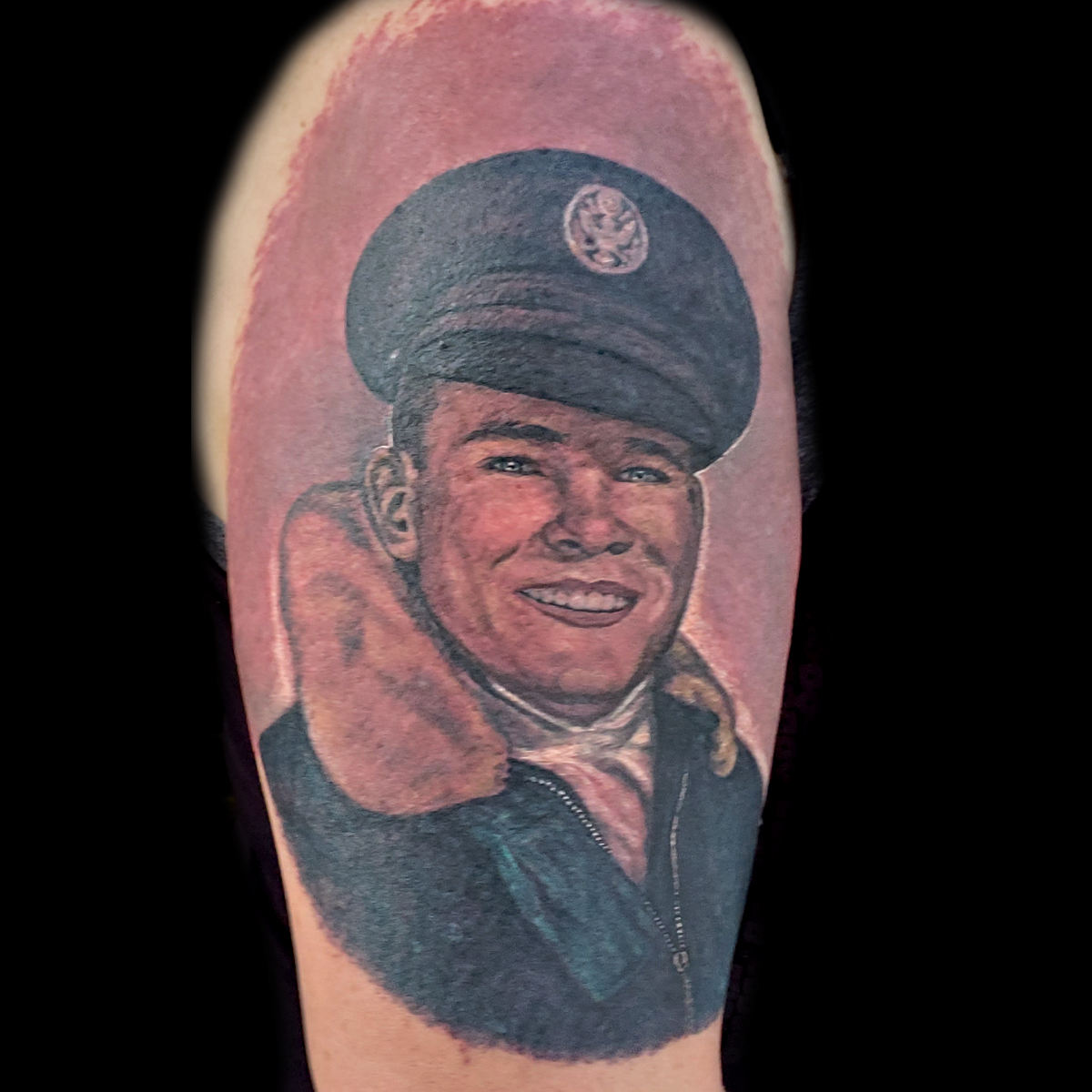
Realistic portrait work requires careful attention to facial proportions. Eyes, nose, mouth, skin texture, and expression all need to work together.
A calm expression can create a completely different mood from an intense battle stare. Weathered skin and scars can also make the character appear experienced.
Furthermore, hair and facial hair provide opportunities for detailed texture.
For portrait inspiration, explore the portrait tattoo artist collection.
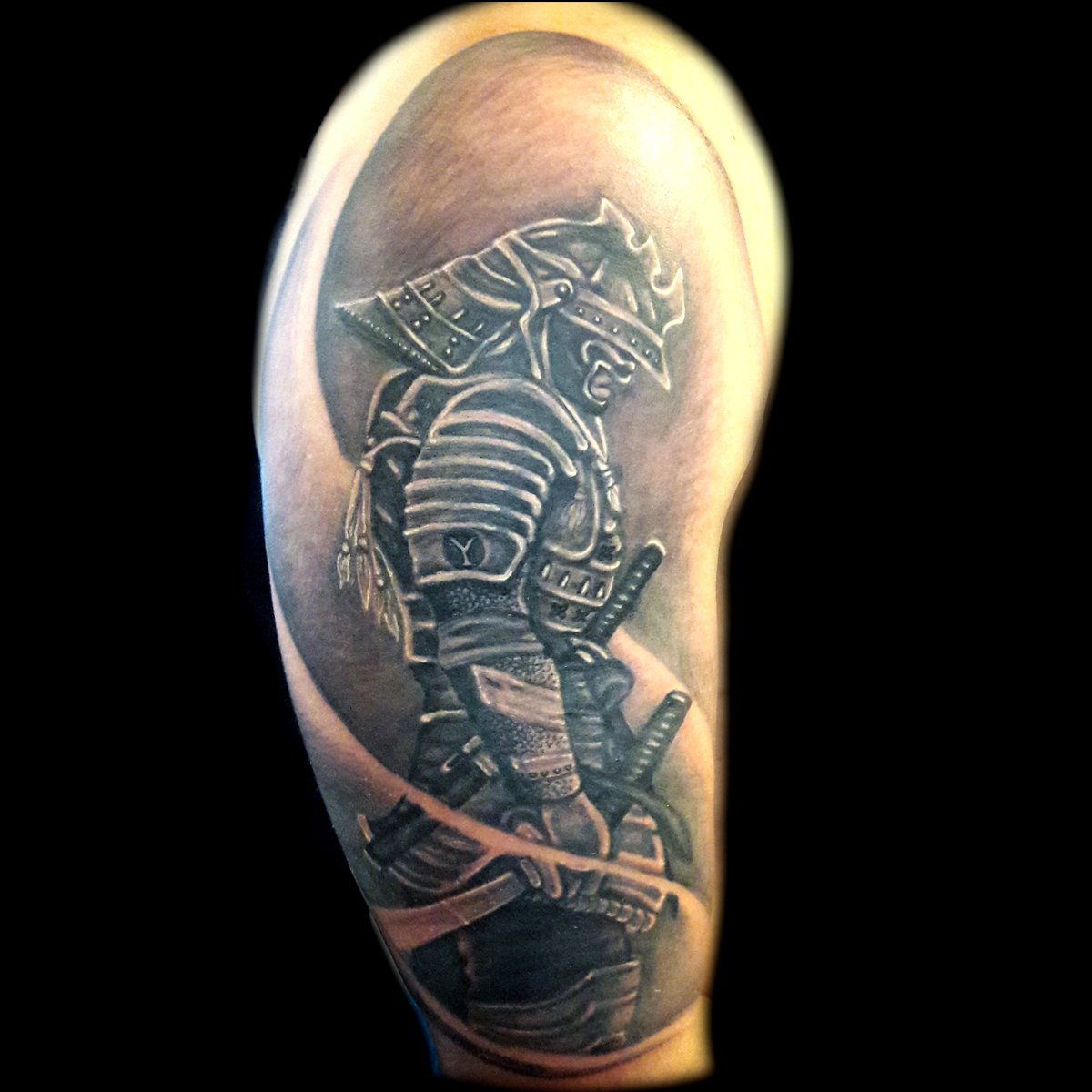
Samurai Warrior Tattoo Ideas
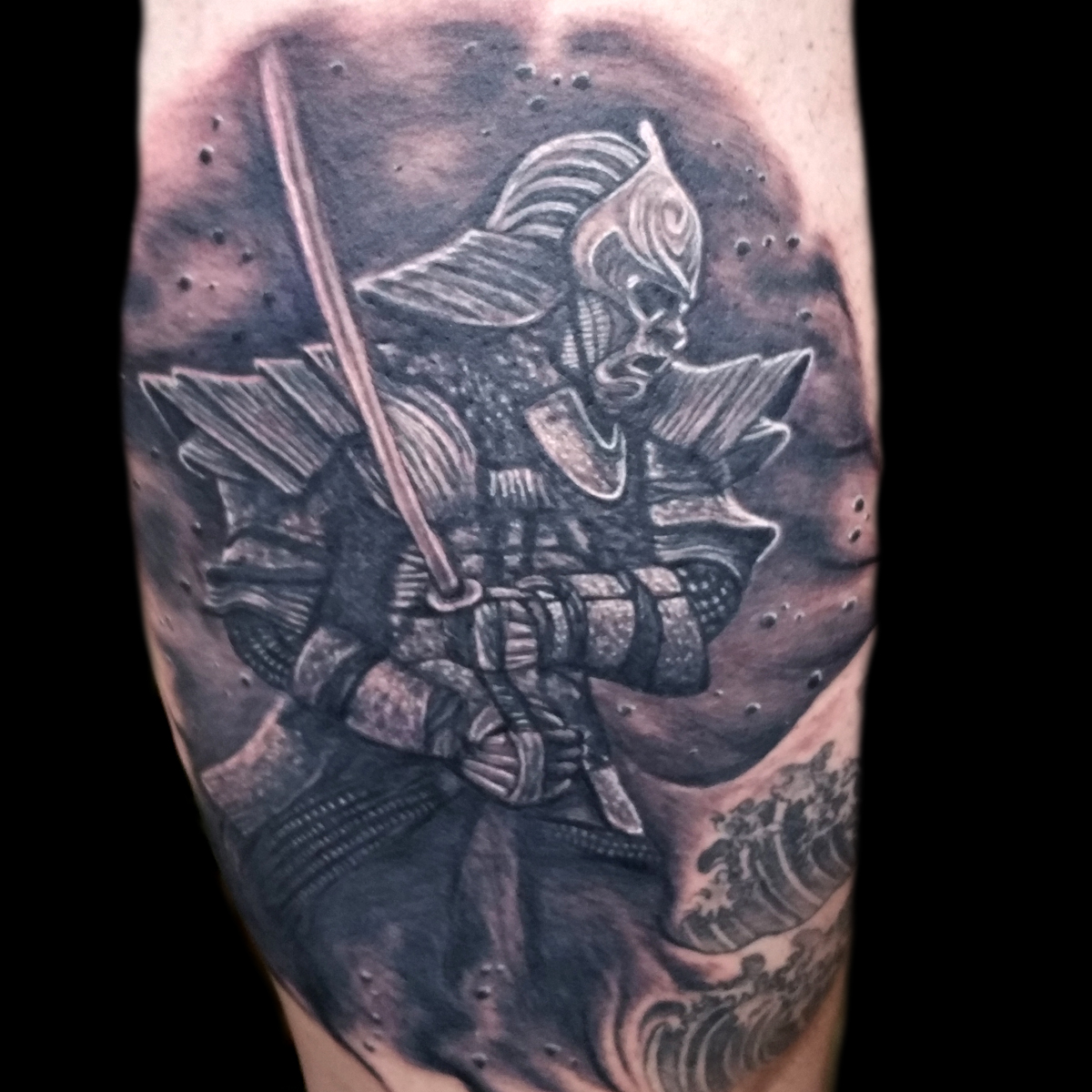
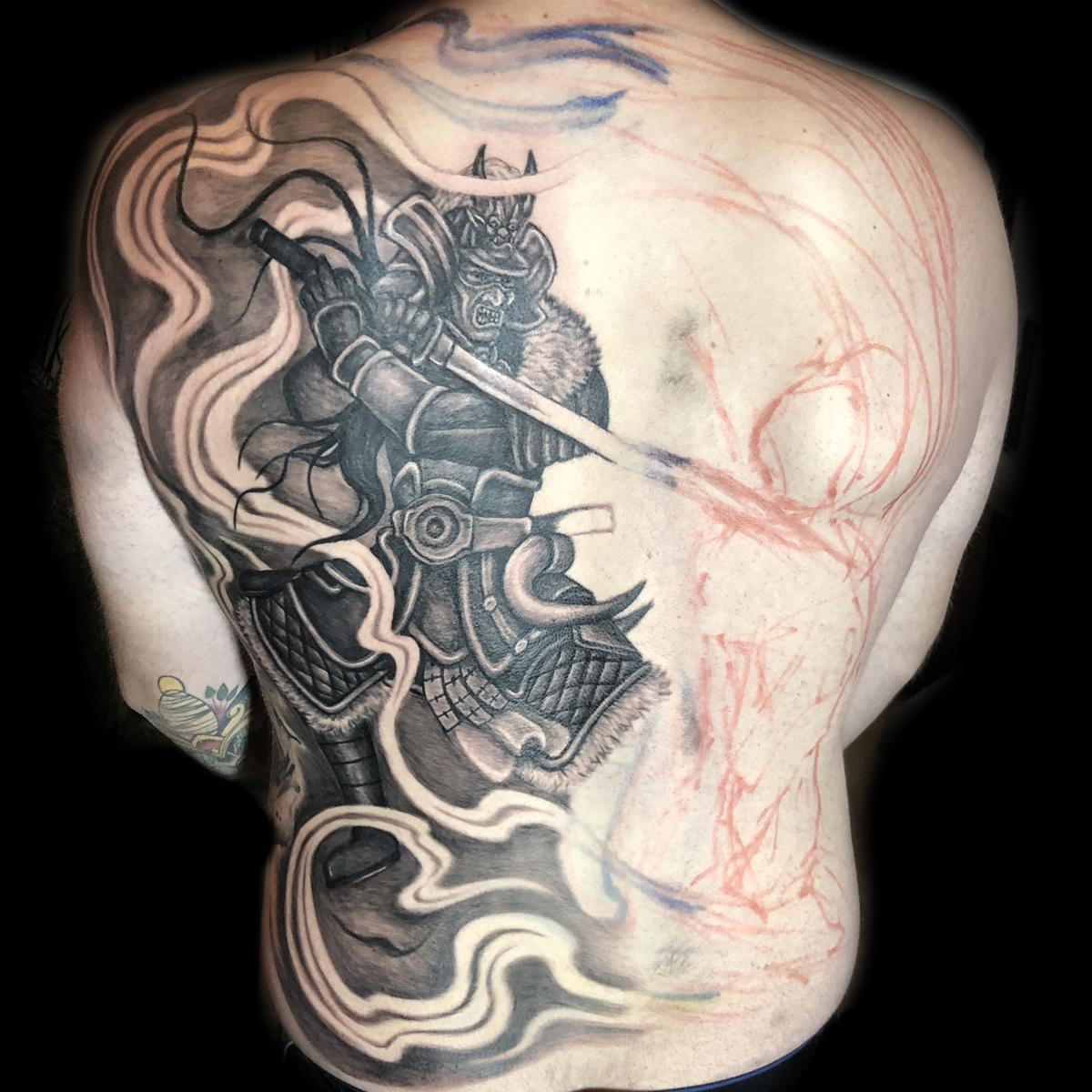
Samurai artwork offers a combination of history, armor, and dramatic character design.
Layered armor creates natural areas for highlights and shadows. A helmet can become the dominant focal point, while a katana can establish a strong visual direction.
Japanese-inspired scenery can also expand the concept.
Cherry blossoms, mountains, mist, temples, and traditional architecture can surround the character without taking attention away from the warrior.
Therefore, a samurai tattoo can become an entire scene rather than a single figure.
Viking Warrior Tattoos
Viking imagery creates a rugged and powerful appearance.
Weathered skin, long beards, braided hair, shields, helmets, and worn clothing provide plenty of realistic texture.
A Viking warrior might stand against a mountain landscape. Alternatively, the character could appear surrounded by storm clouds or mist.
For a larger composition, ships and Nordic-inspired scenery can help establish the environment.
Because of the strong textures involved, Viking designs work particularly well with realistic black and gray tattooing.
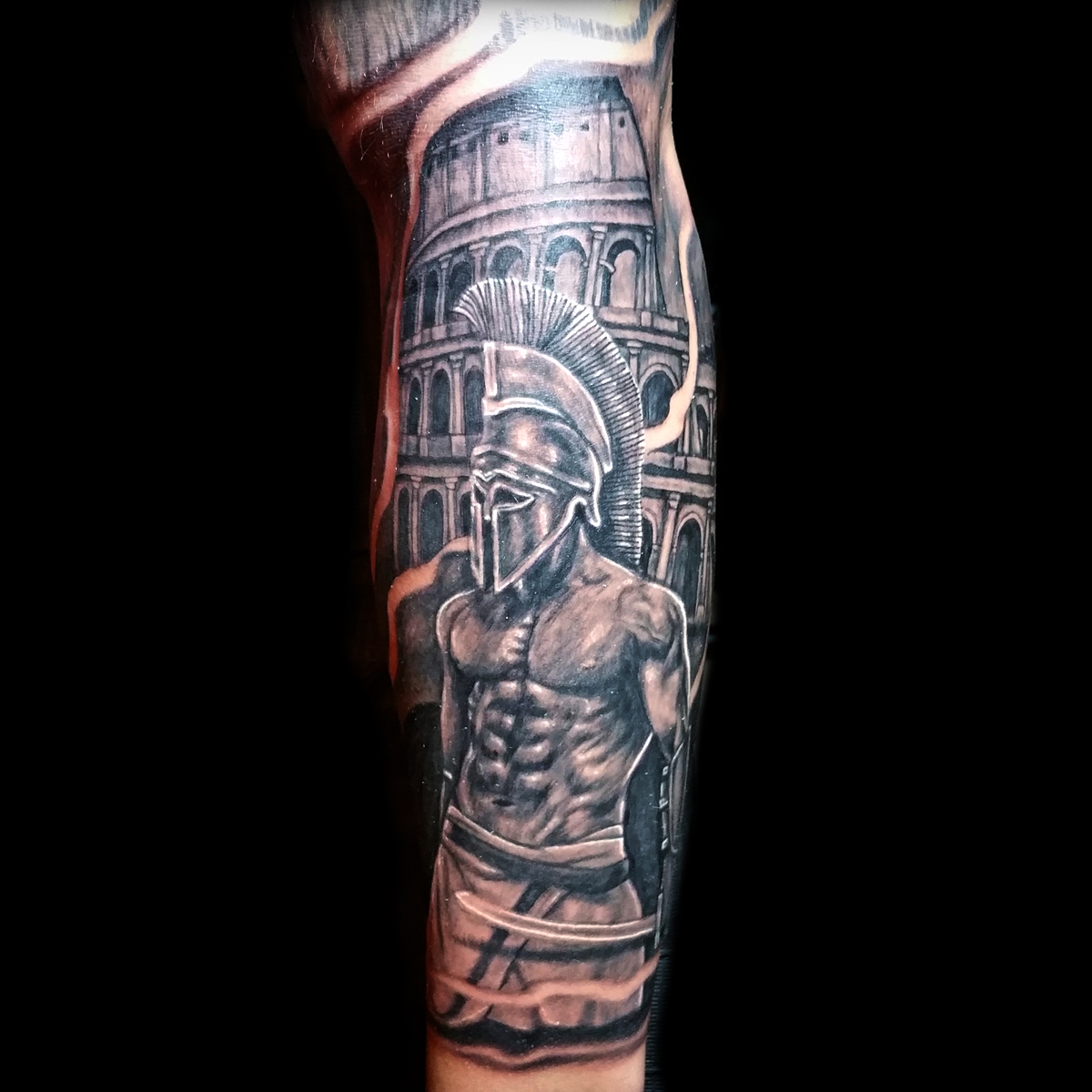
Gladiator Tattoos
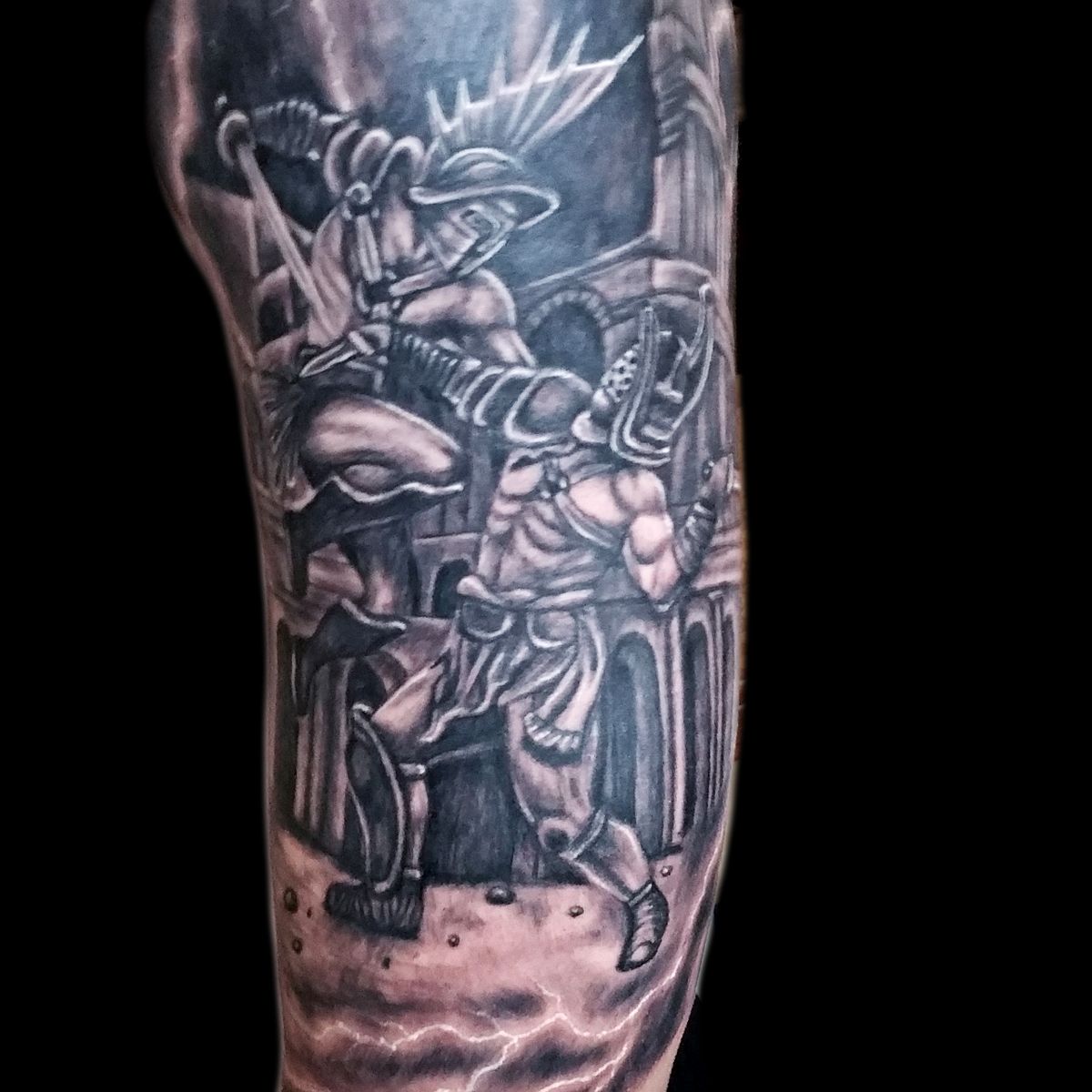
Roman gladiators bring a distinctly historical quality to tattoo artwork.
Metal armor can be rendered with scratches, dents, reflections, and shadows. Leather straps add another type of texture, while the shield can create a strong shape within the composition.
The expression is equally important.
Determination, exhaustion, anger, or focus can each tell a different story.
A colosseum-inspired background may establish the setting. On the other hand, a close-up portrait can keep the focus entirely on the gladiator.
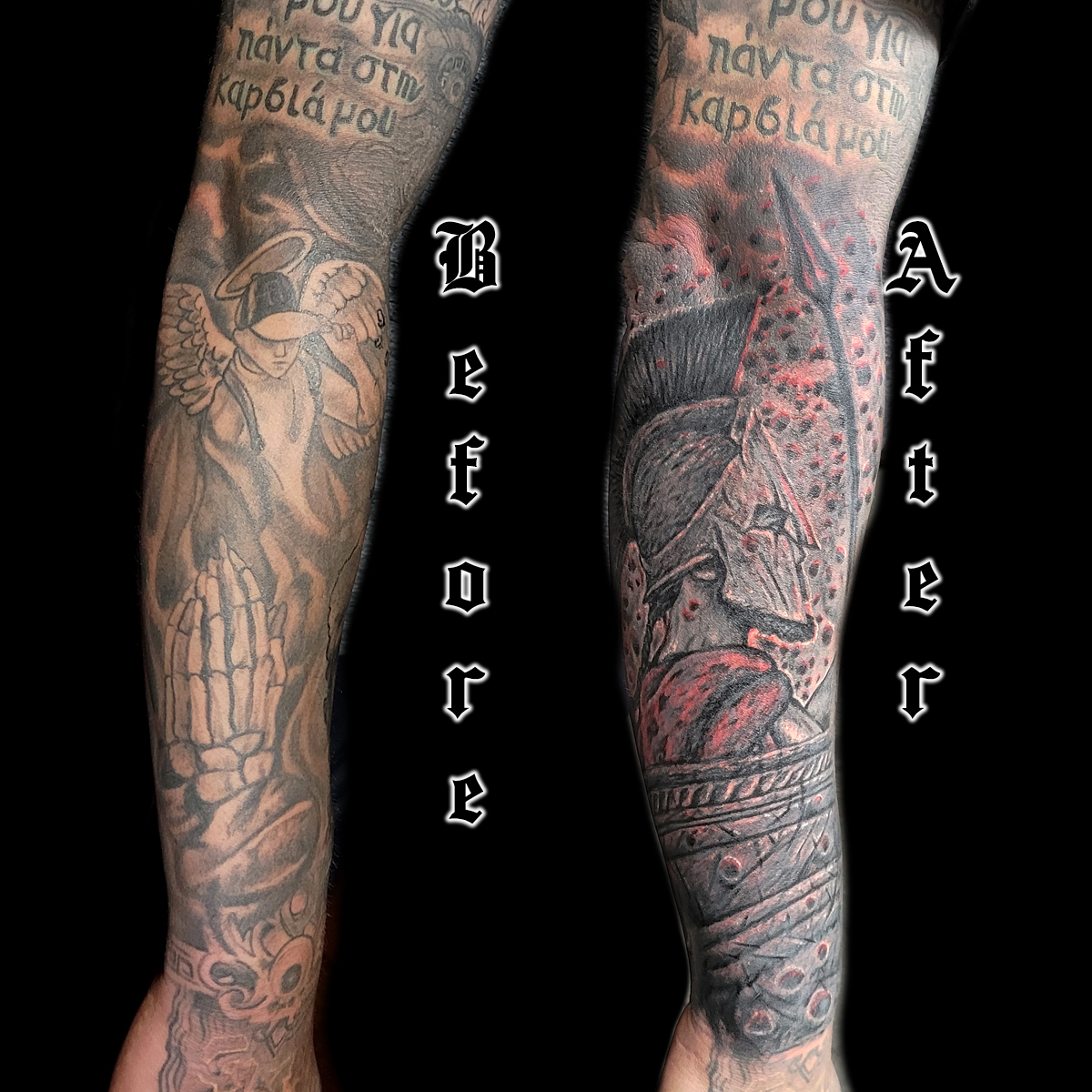
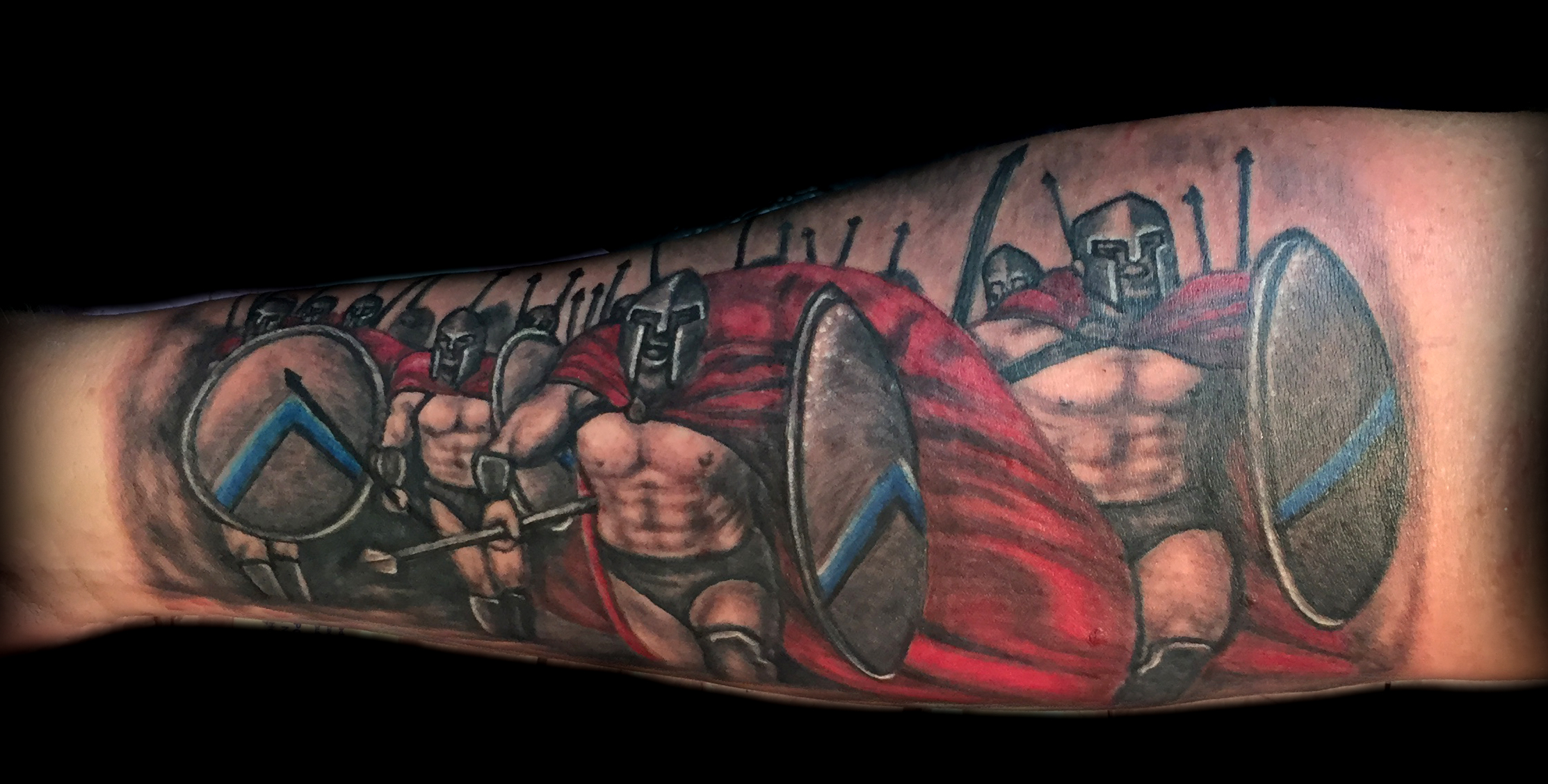
Spartan Warrior Designs
Spartan warriors are often associated with courage and discipline.
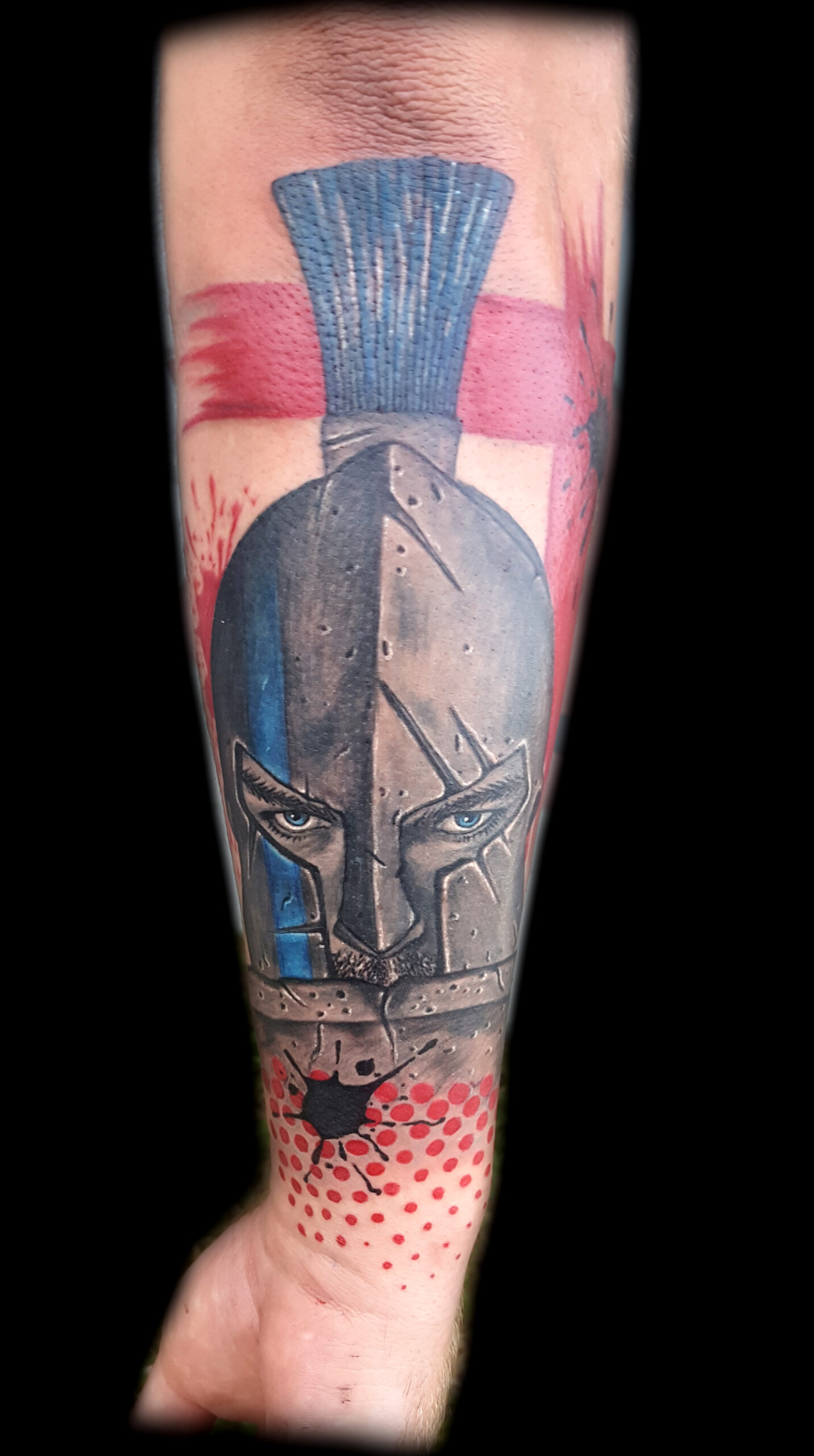
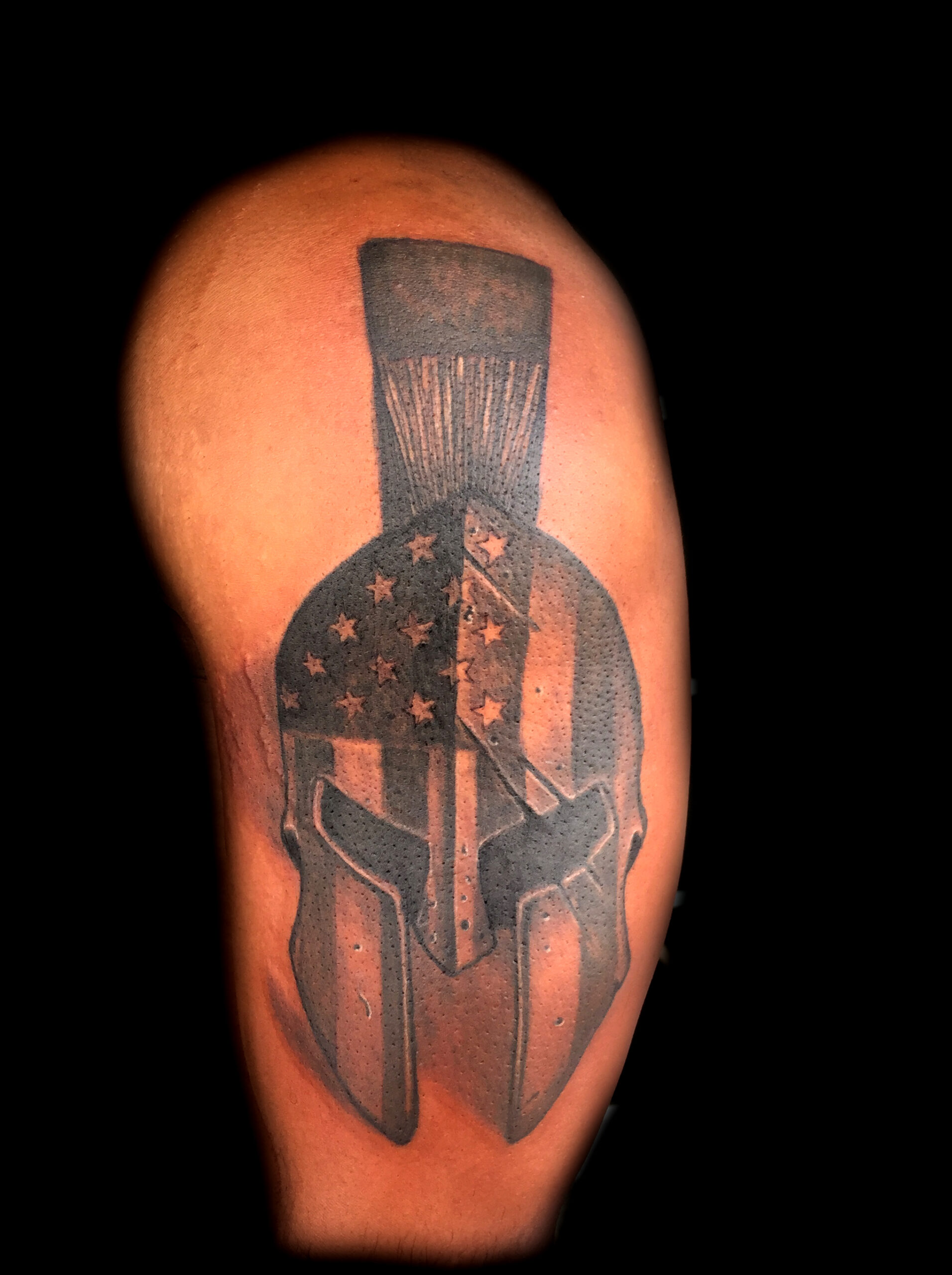
The iconic helmet can provide an immediately recognizable focal point. Spears, shields, armor, and battlefield scenery can then build around it.
Black and gray values are particularly effective for this subject.
However, selective color can create an interesting alternative. A muted red accent, for instance, can draw attention to a shield or piece of clothing.
The final palette should support the mood rather than compete with the character.
Medieval Knight Tattoos
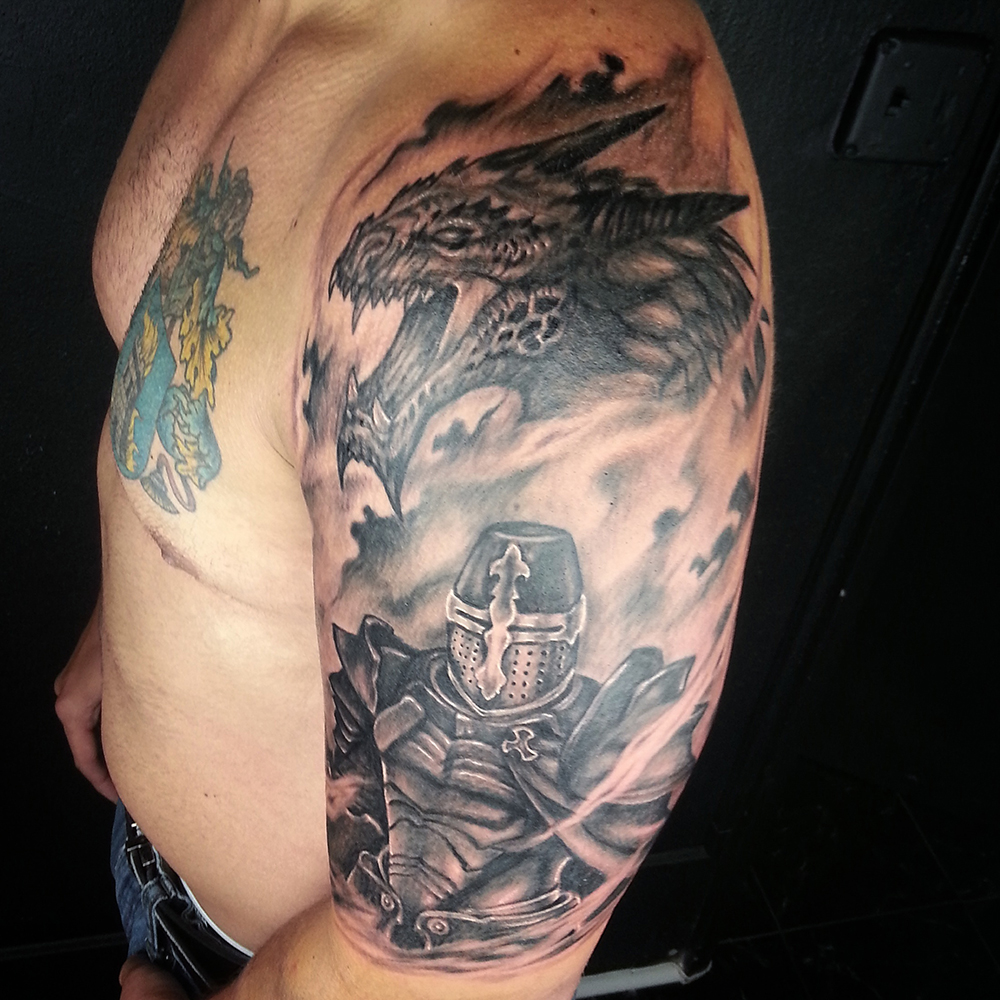
Knights provide another strong option for realistic warrior artwork.
Armor offers countless reflective surfaces. A sword can create a vertical element, while a shield can balance the composition.
Beyond the character itself, castles, forests, ruins, and stormy skies can establish a medieval atmosphere.
Battle damage can make the armor look older and more authentic.
Meanwhile, carefully controlled highlights can keep the metal from appearing flat.
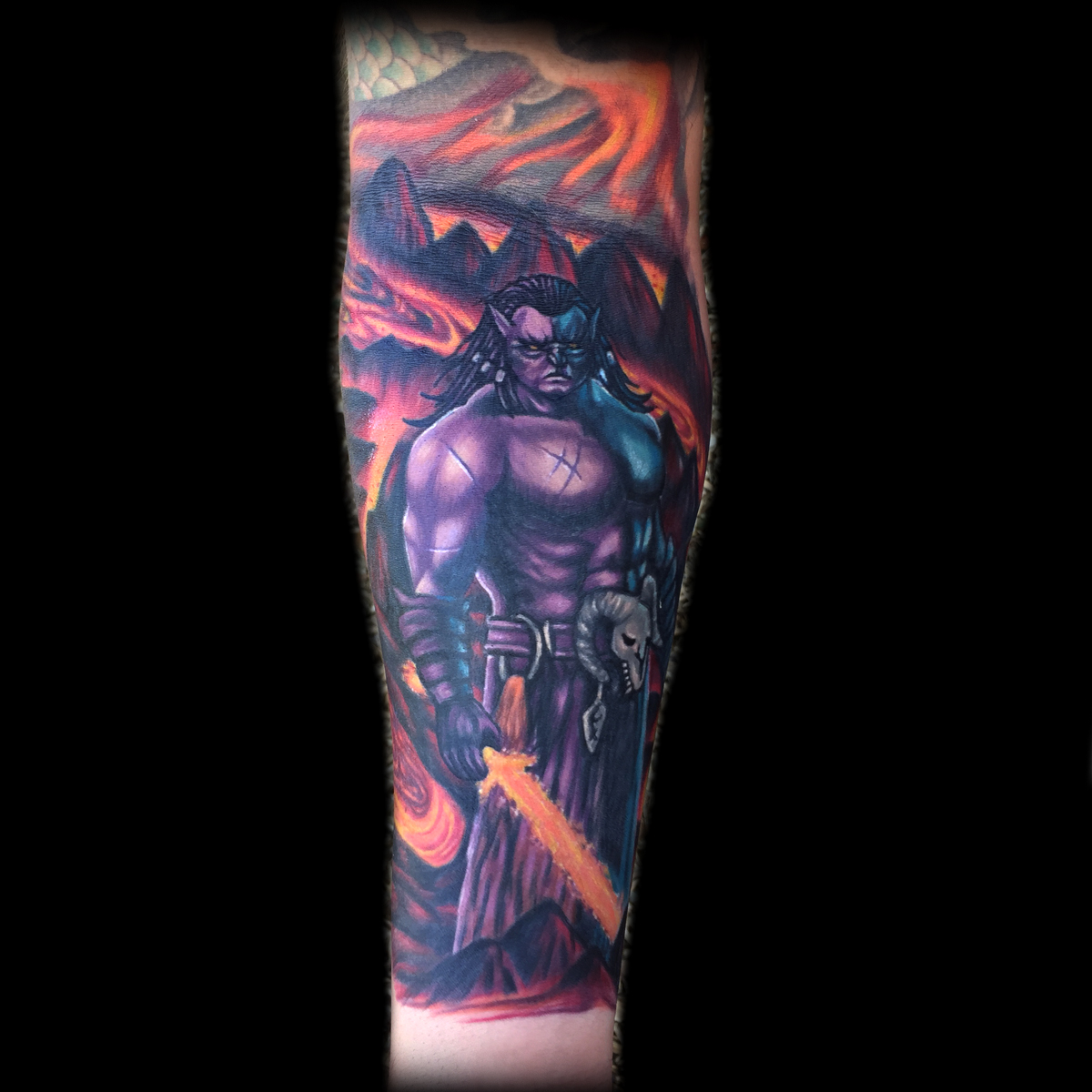
Fantasy Warrior Tattoos
A realistic tattoo does not have to depict a historical warrior.
Fantasy characters can combine realistic anatomy with imaginative armor, weapons, creatures, and environments.
For example, a warrior could stand beside a dragon. Another concept might show a mysterious character emerging from a dark forest.
Surrealistic elements can make the composition even more unusual.
Despite the fantasy subject, realistic skin, lighting, and textures can keep the character believable.
That combination gives clients plenty of freedom to create something that does not resemble a standard warrior tattoo.
Warrior Tattoos With Animals
Animal imagery can add meaning and visual balance.
A wolf beside a warrior can represent loyalty and strength. An eagle may suggest freedom or vision. A bear can communicate protection and power.
The animal can remain a separate subject.
Alternatively, it can become part of the background or blend into the overall composition.
For instance, a warrior portrait might transition into a realistic wolf through shadows and surrounding textures.
Explore the realistic animal tattoo collection for additional ideas.
Warrior and Skull Tattoos
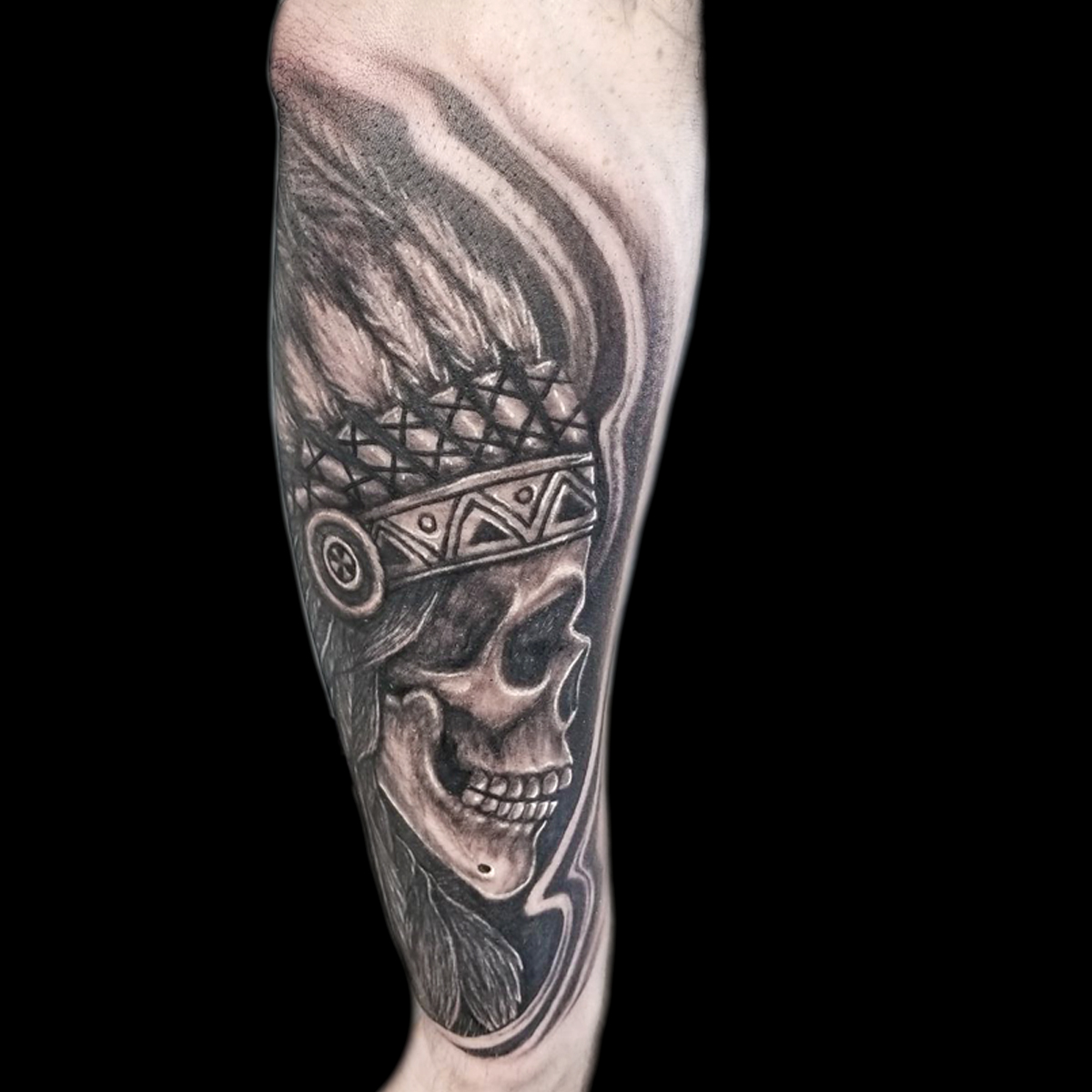
Skulls can introduce a darker atmosphere.
A realistic skull might appear beside the warrior. Another option places it behind the character as part of the background.
Deep eye sockets naturally provide dark areas. Cracks and bone texture can add smaller details.
Smoke, shadows, and atmospheric elements can then connect the skull with the rest of the tattoo.
For more dark realism inspiration, visit the skull tattoo collection.
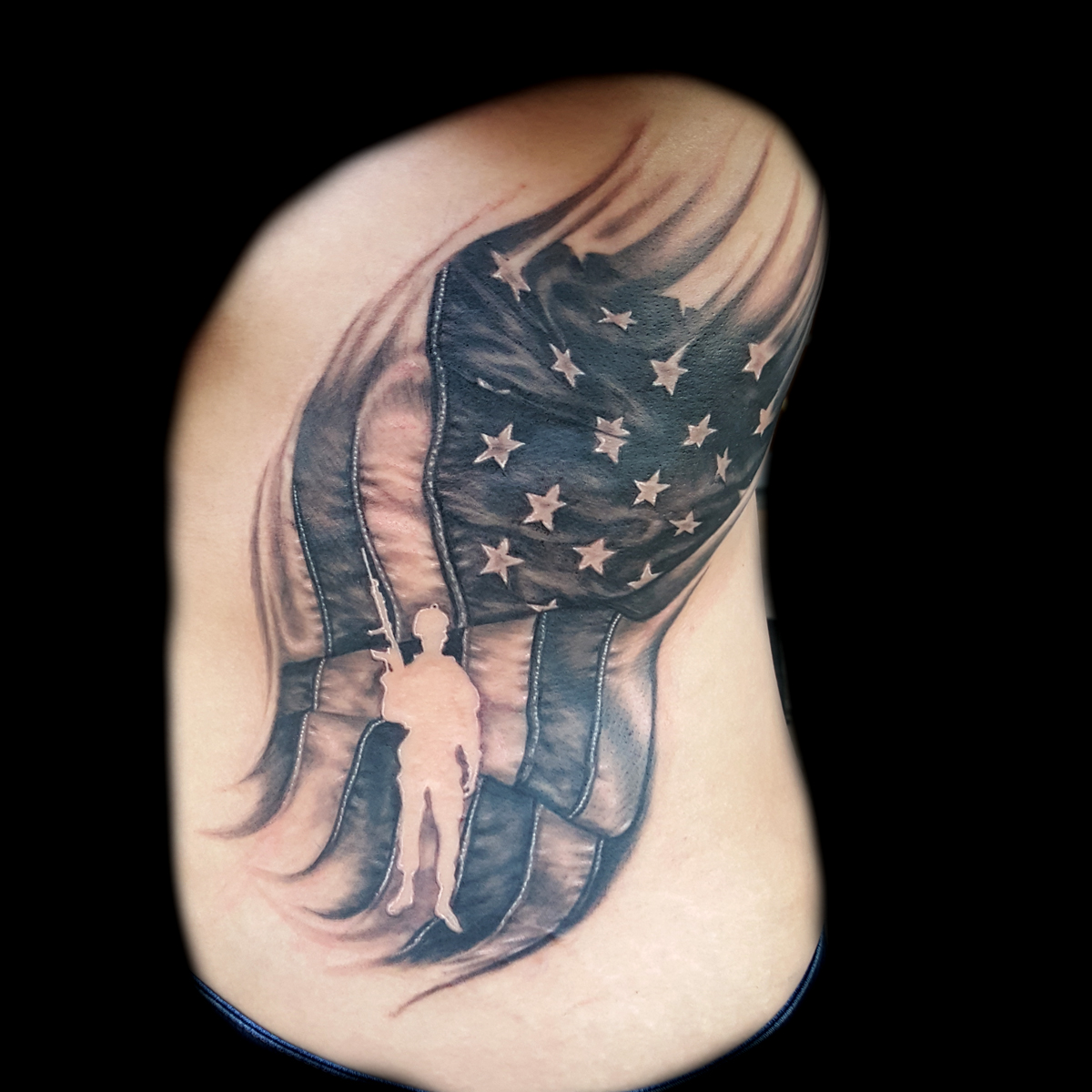
Black and Gray Warrior Tattoos
Black and gray realism is an excellent choice for dramatic warrior designs.
Deep blacks establish the darkest portions of the image. Gray gradients create form across skin, armor, stone, and fabric.
Highlights then complete the lighting effect.
Because there is no bright color competing for attention, texture becomes especially important.
Metal should look different from leather. Skin should contrast with armor. Stone needs its own surface quality.
Consequently, a monochromatic warrior tattoo can still contain tremendous visual depth.
Color Warrior Tattoos
Color changes the personality of a warrior design.
Warm tones can create an intense battlefield atmosphere. Cooler colors may produce a more mysterious mood.
Red can emphasize specific details. Blue and gray can suggest cold environments. Skin tones can add warmth against dark armor.
Nevertheless, the palette should remain controlled.
Too many bright colors can make a complex composition difficult to read. A focused palette often produces a more sophisticated result.
3D Realistic Warrior Tattoos
Three-dimensional techniques can make warrior elements appear to rise from the skin.
A strong shadow beneath a shield creates separation. Highlights along a blade can suggest polished metal.
Similarly, carefully placed shadows can make a helmet look closer to the viewer.
These techniques are especially effective on larger pieces.
Explore the 3D tattoo artist page to see more examples of dimensional realism.
Warrior Sleeve Tattoos
A full sleeve can tell an entire warrior story.
The shoulder might feature the main portrait. Armor can flow toward the elbow, while weapons and environmental details continue down the arm.
Connecting elements are important here.
Smoke can transition between subjects. Clouds can fill open areas. Dark shading can separate different sections while keeping the sleeve visually unified.
As a result, several individual elements can feel like one continuous scene.
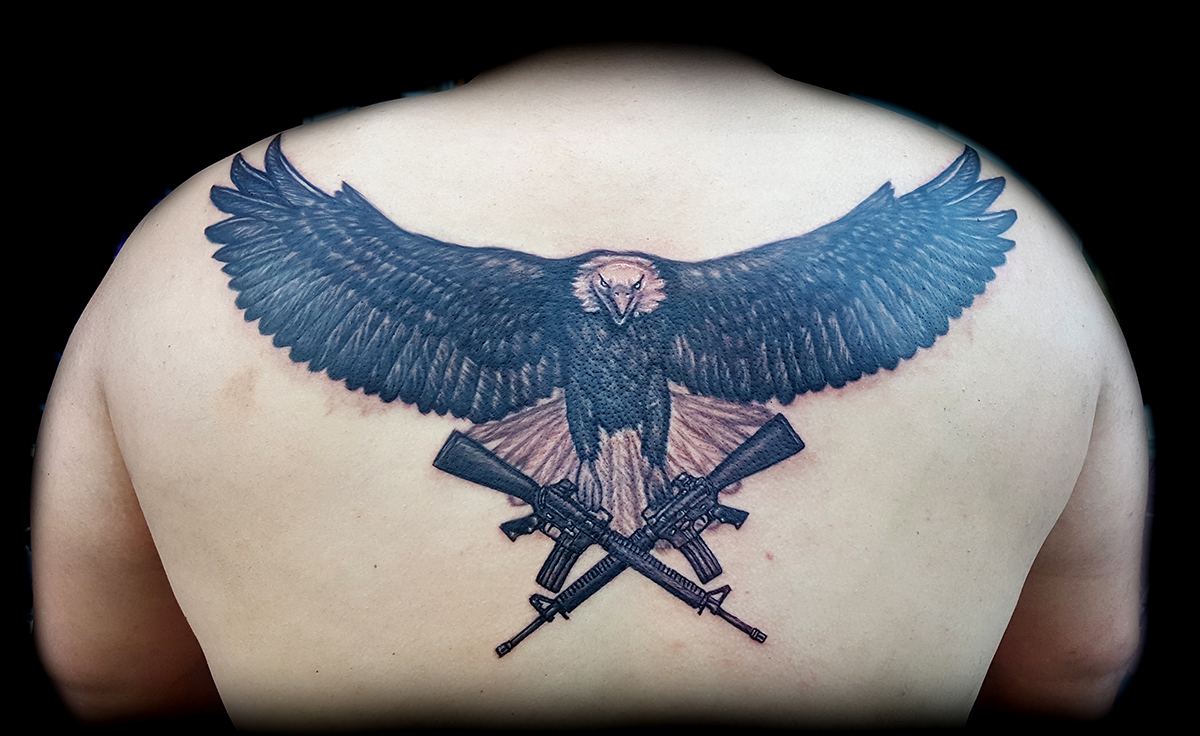
Warrior Backpiece Tattoos
The back provides enough room for a highly detailed warrior composition.
A large central character can establish the focal point. Mountains, ruins, battlefields, animals, or dramatic skies can surround the figure.
There is also more space for subtle detail.
Facial features can be rendered at a larger scale. Armor can contain more texture. Background elements can gradually fade into lighter values.
Therefore, a warrior backpiece can have a cinematic quality without becoming visually crowded.
Chest and Shoulder Warrior Tattoos
Body placement should influence the design from the beginning.
The shoulder provides a natural curve for portraits and helmets. Chest artwork can spread horizontally across the body.
Weapons can follow the body’s natural direction. Armor can also be shaped to complement muscle structure.
Because of this, a custom design usually works better than simply shrinking an existing drawing to fit the area.
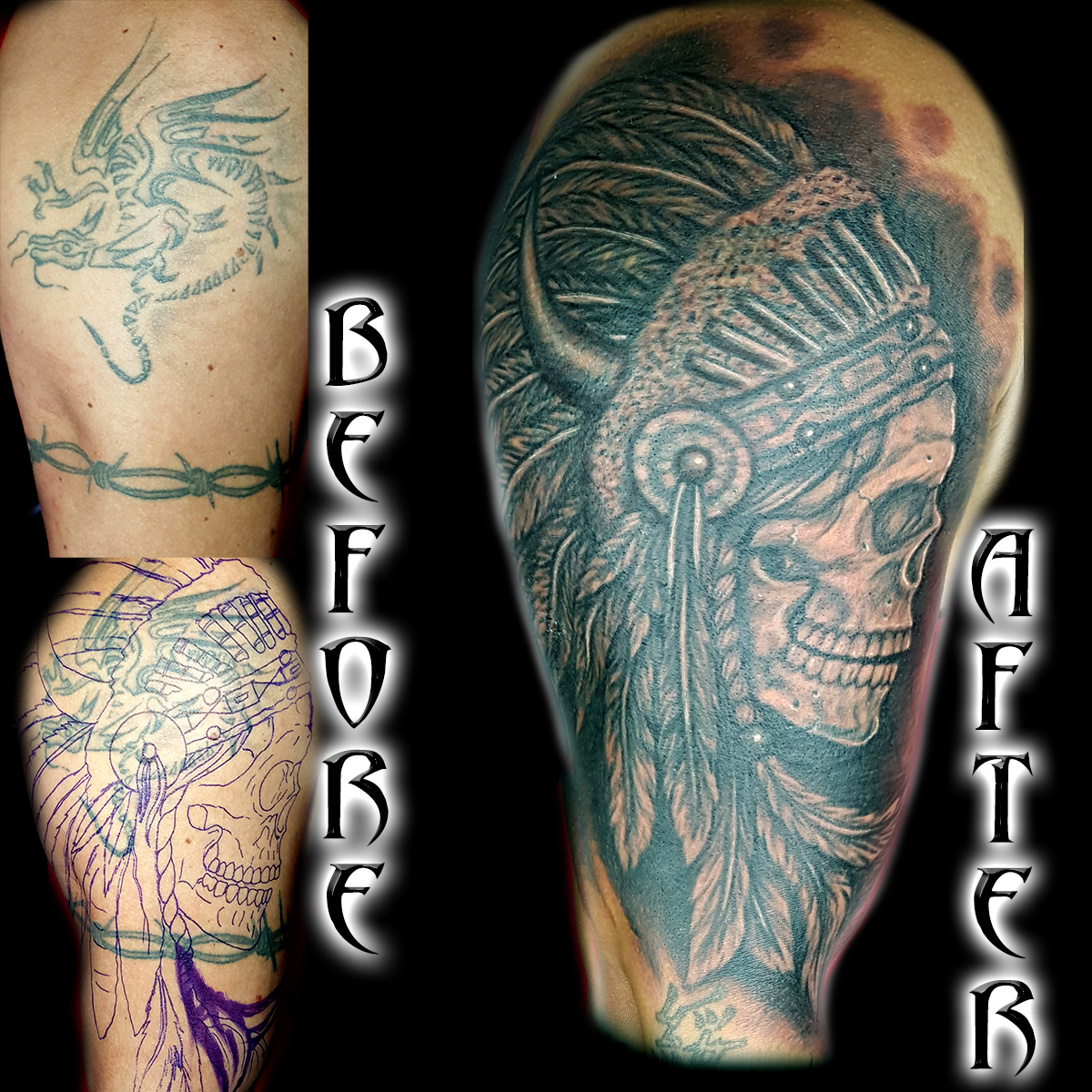
Warrior Cover-Up Tattoos
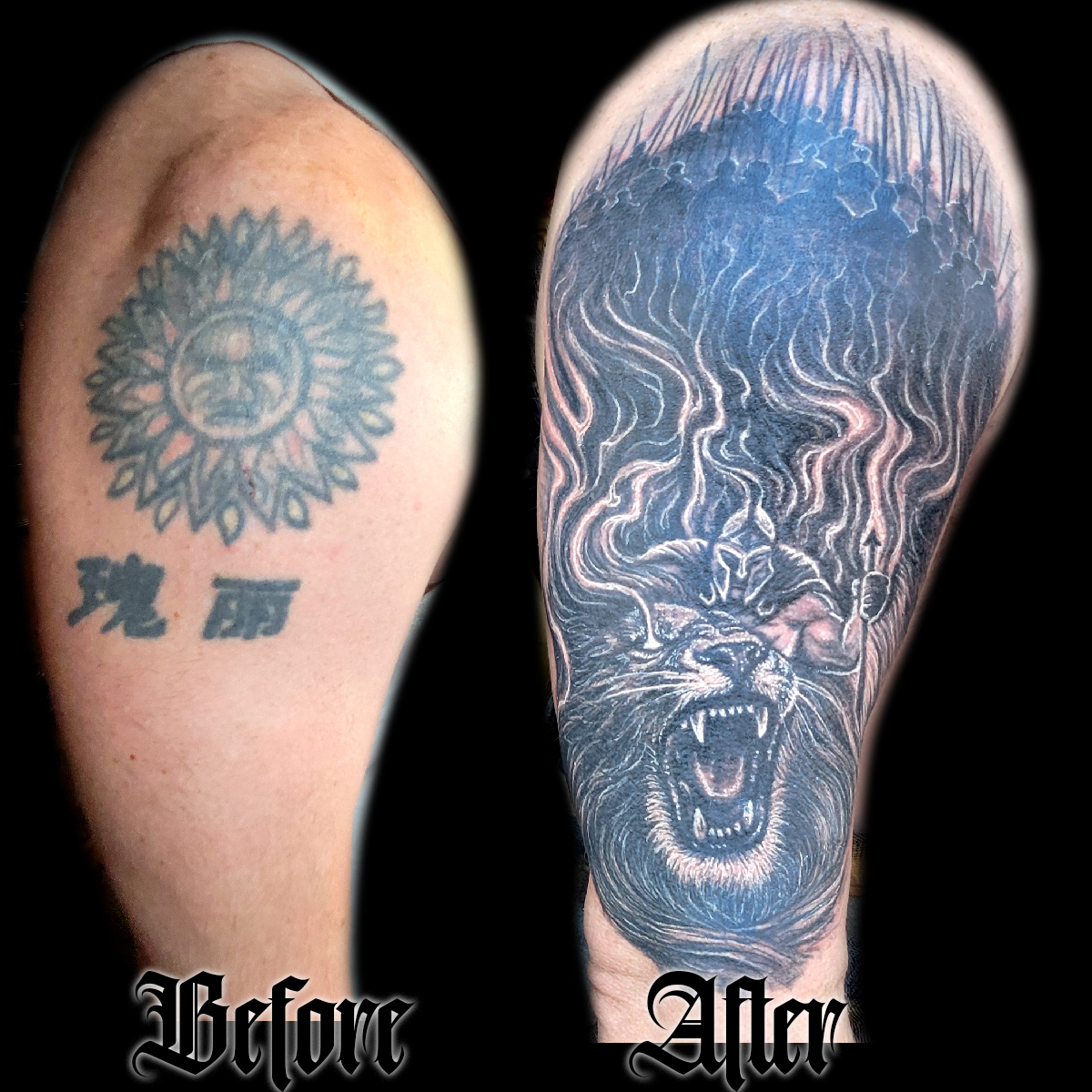
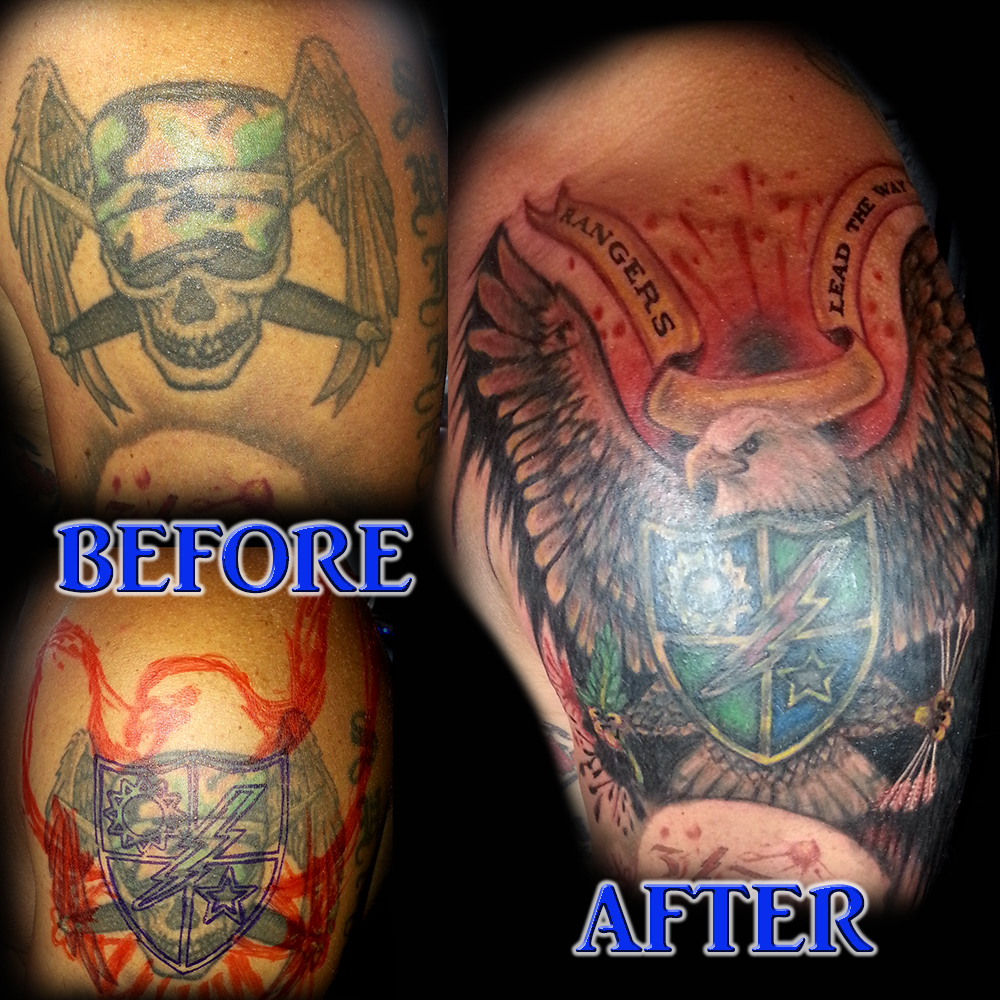
Warrior imagery can sometimes provide a creative solution for an unwanted tattoo.
Dark armor, helmets, shields, weapons, and backgrounds can create areas of strong coverage.
Existing ink may also be incorporated into darker sections when appropriate.
However, every cover-up is different.
The original tattoo’s size, color, age, and saturation all influence what can be achieved.
For more information, explore the cover-up tattoo collection.
Building the Background
A warrior does not always need an elaborate environment.
Sometimes, a dark atmospheric background creates the strongest result.
Other concepts benefit from mountains, castles, ruins, smoke, clouds, or battlefield scenery.
The main subject should remain dominant.
For that reason, background elements should support the warrior rather than compete with the face or armor.
Custom Warrior Tattoo Concepts
Reference images can help communicate your vision.
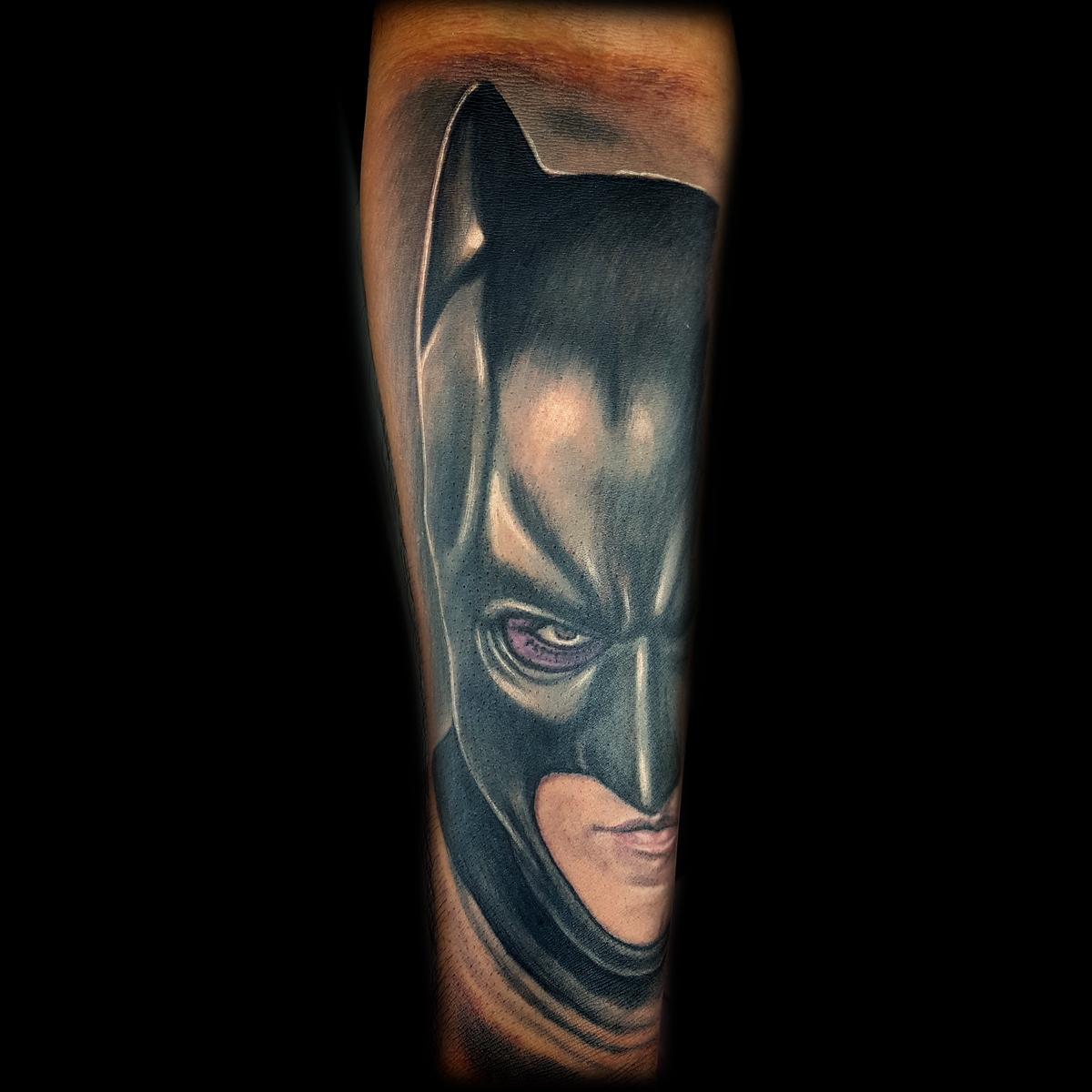
Historical photographs, armor references, sculptures, weapons, landscapes, and movie-inspired imagery can all provide useful starting points.
Still, the finished tattoo does not have to copy any single reference.
Instead, different ideas can be combined into one original composition.
Lighting, proportions, scale, and placement can then be adjusted specifically for your body.
That process allows the final artwork to become unique to you.
Choosing a Warrior Tattoo Style
Your preferred warrior style should match the message behind the tattoo.
Historical subjects may appeal to someone interested in Roman, Greek, Viking, samurai, or medieval imagery.
Fantasy designs provide much more creative freedom.
For a timeless appearance, black and gray realism can be an excellent choice. Color realism offers another option for clients who want stronger visual contrast.
Meanwhile, 3D effects can make the artwork appear to project from the skin.
What Makes Realism Effective?
Realism depends on more than detail.
Light direction must make sense. Shadows need to create believable depth. Textures should match the surfaces being represented.
For example, polished metal reflects light differently from rough leather.
Likewise, skin does not have the same texture as stone.
When these differences are rendered accurately, the warrior becomes more convincing.
That attention to visual information is what gives realistic tattoo artwork its depth.
Brian Martinez at Masterpiece Tattoos
Brian Martinez is the owner and lead artist of Masterpiece Tattoos in San Francisco.
With more than 17 years of tattooing experience, he specializes in realistic tattoos, portraits, 3D artwork, color realism, black and gray realism, and custom cover-ups.
His approach emphasizes lighting, contrast, texture, and dimensional shading.
Those techniques are especially useful for warrior designs because armor, skin, weapons, fabric, and environmental elements each require different treatment.
Rather than using a standard template, the composition can be developed around the client’s concept and body placement.
Explore the Brian Martinez tattoo portfolio to see examples of his realistic work.
Find a Realistic Warrior Tattoo Artist in San Francisco Bay Area
Finding the right artist involves more than searching for someone who can draw a warrior.
Look closely at the artist’s realism portfolio. Facial expressions, hands, armor, weapons, shadows, and textures should all appear convincing.
Next, consider how the artist handles larger compositions.
A warrior tattoo can contain many elements, so strong composition is essential.
At Masterpiece Tattoos, Brian Martinez creates custom warrior artwork for clients looking for samurai, Vikings, gladiators, Spartans, knights, and fantasy characters.
Designs can be created in black and gray or developed with realistic color. Animals, skulls, landscapes, weapons, architecture, and atmospheric backgrounds can also become part of the composition.
Explore the realistic tattoo artist page, 3D tattoo artist page, portrait tattoo page, and cover-up tattoo page before planning your project.
Masterpiece Tattoos is a private tattoo studio in San Francisco, California, and works by appointment.
Bring your reference images, personal story, or even a rough idea.
From there, Brian Martinez can develop a custom realistic warrior tattoo around your placement, style, and vision.