
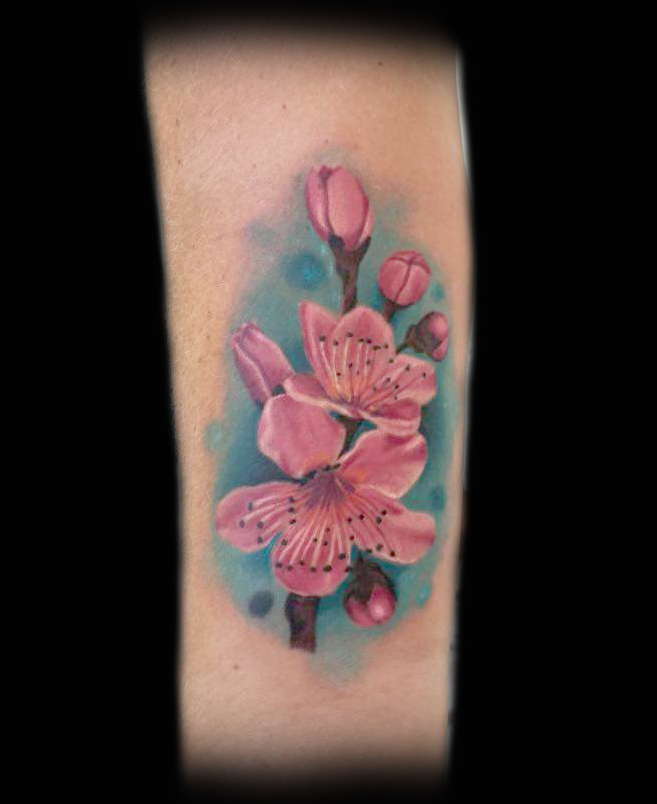
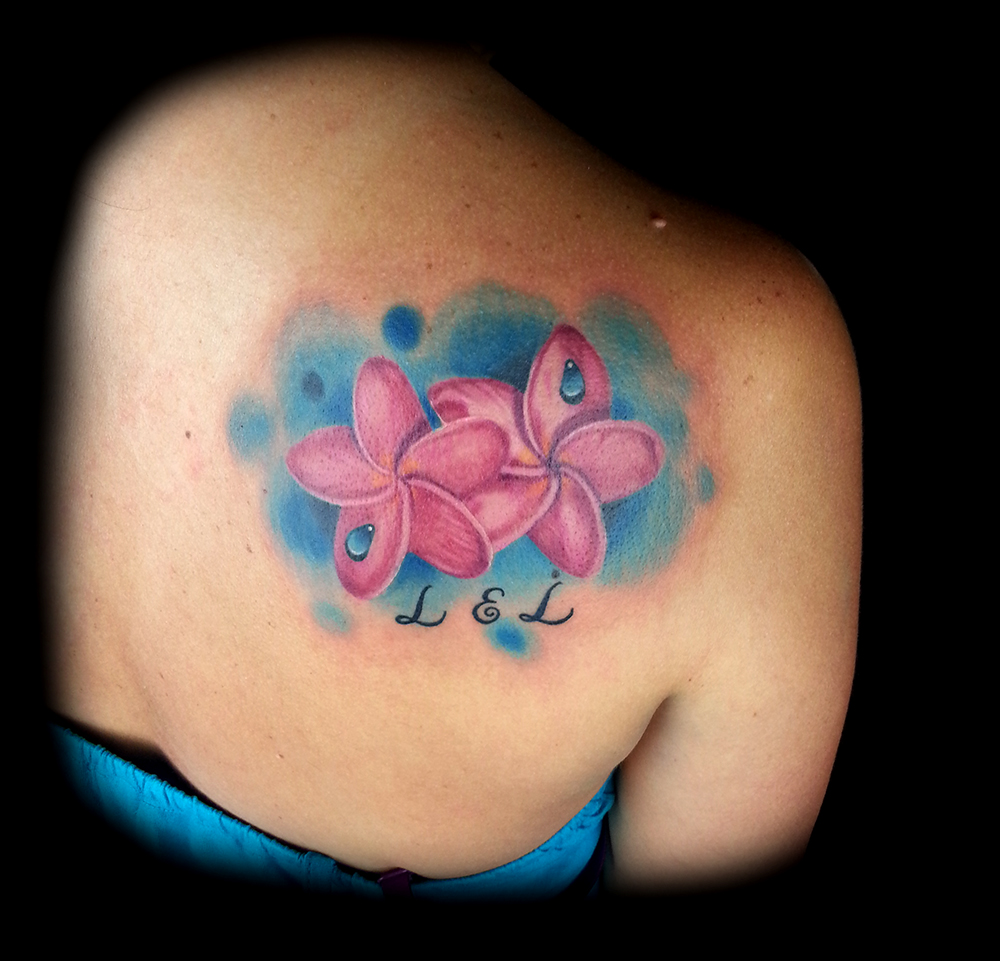
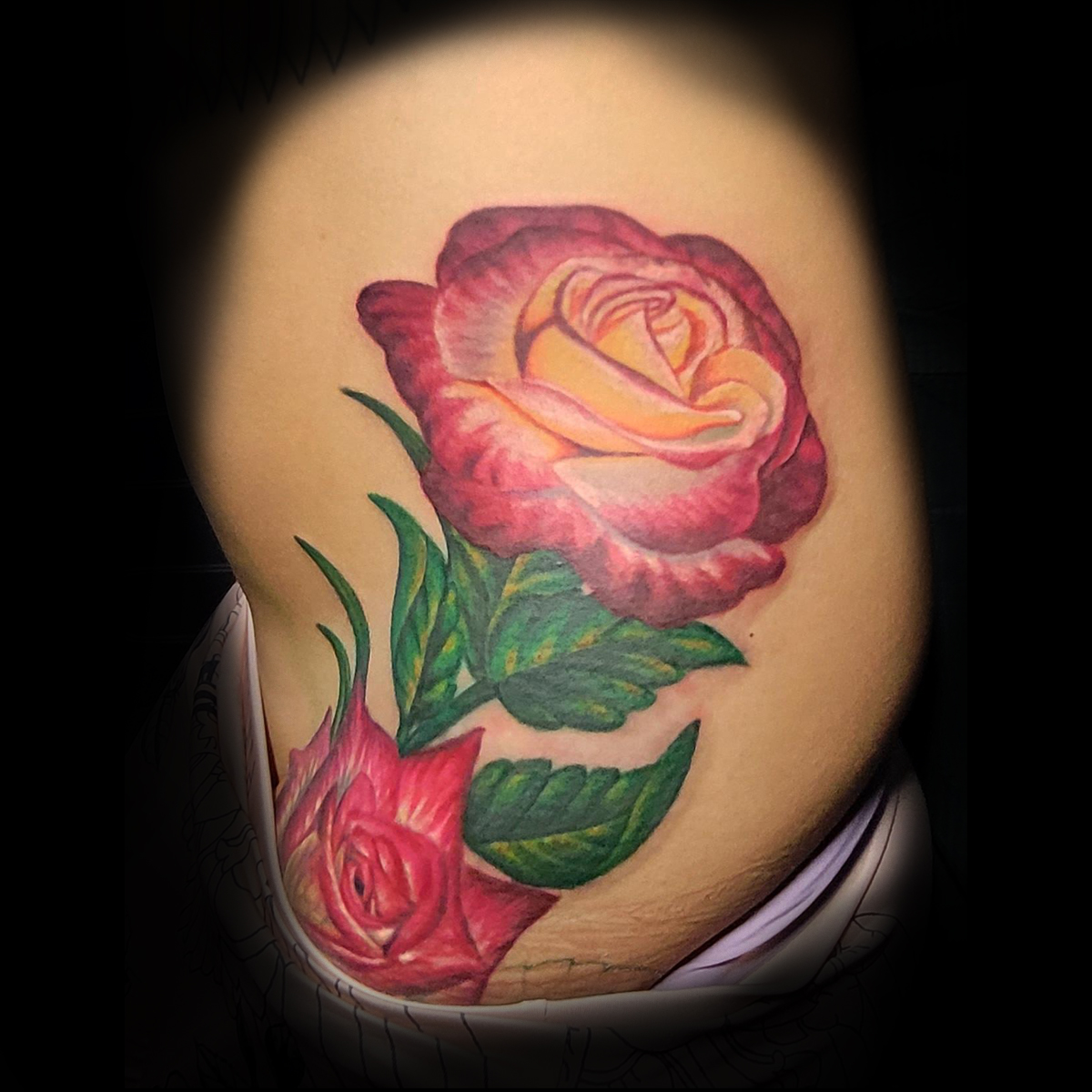
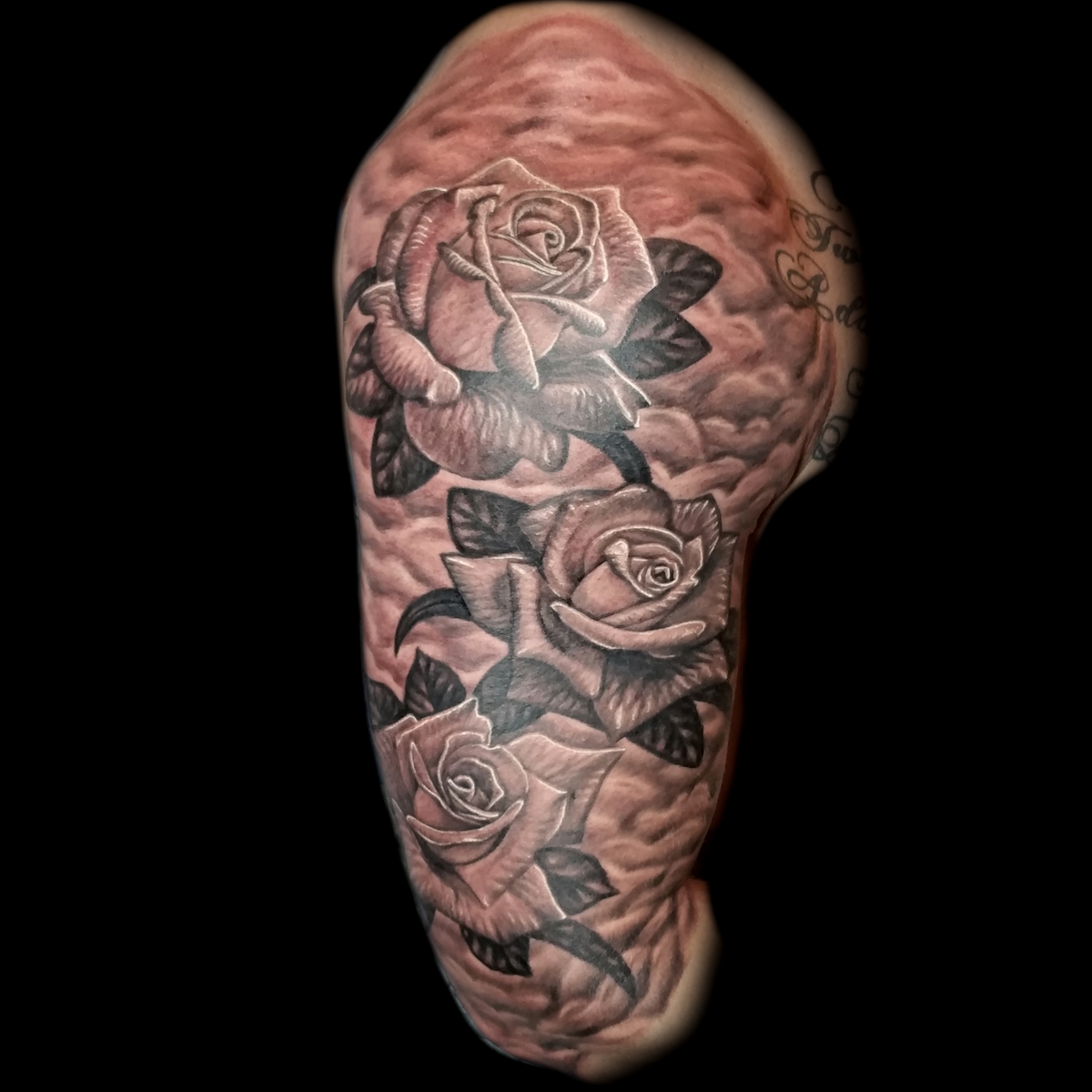
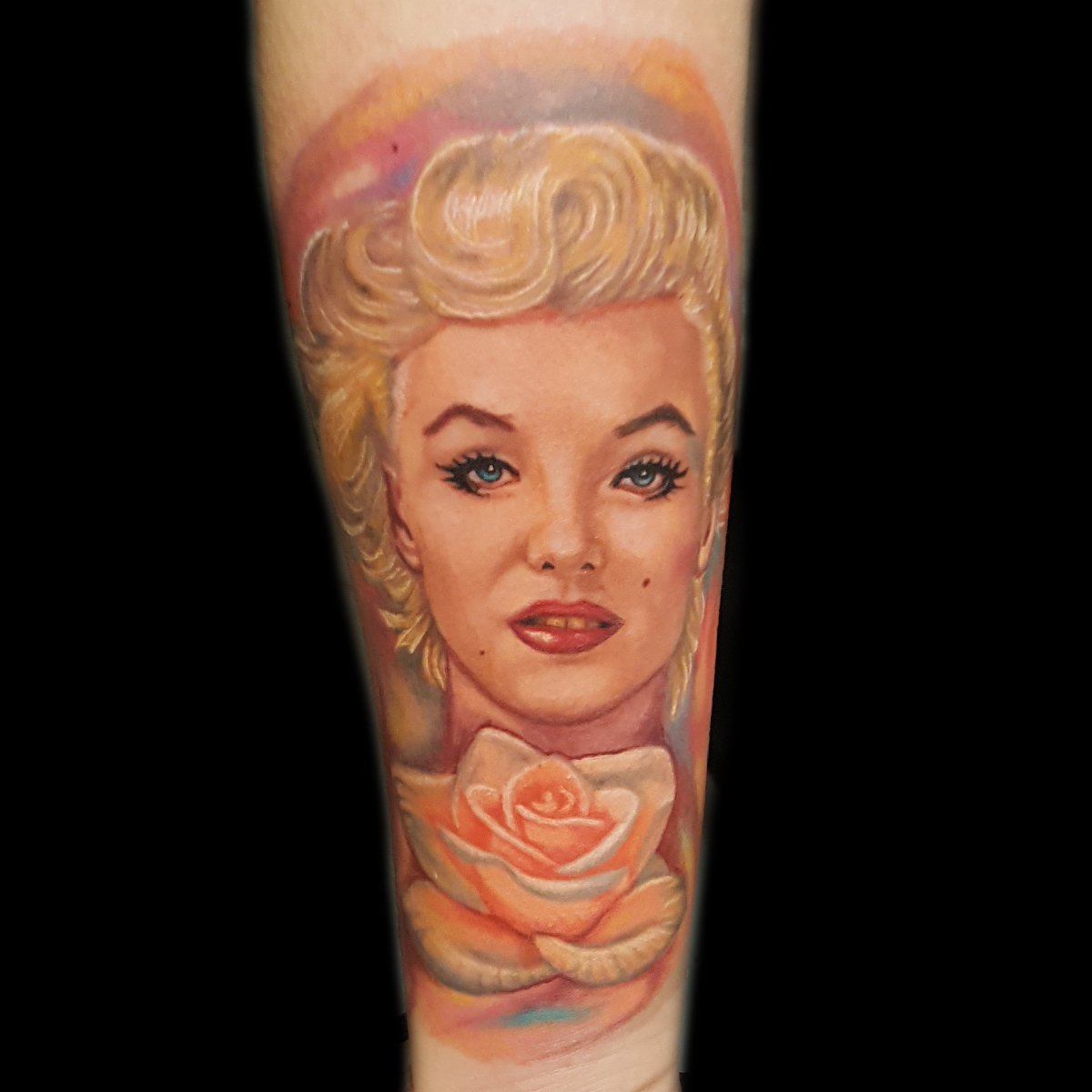
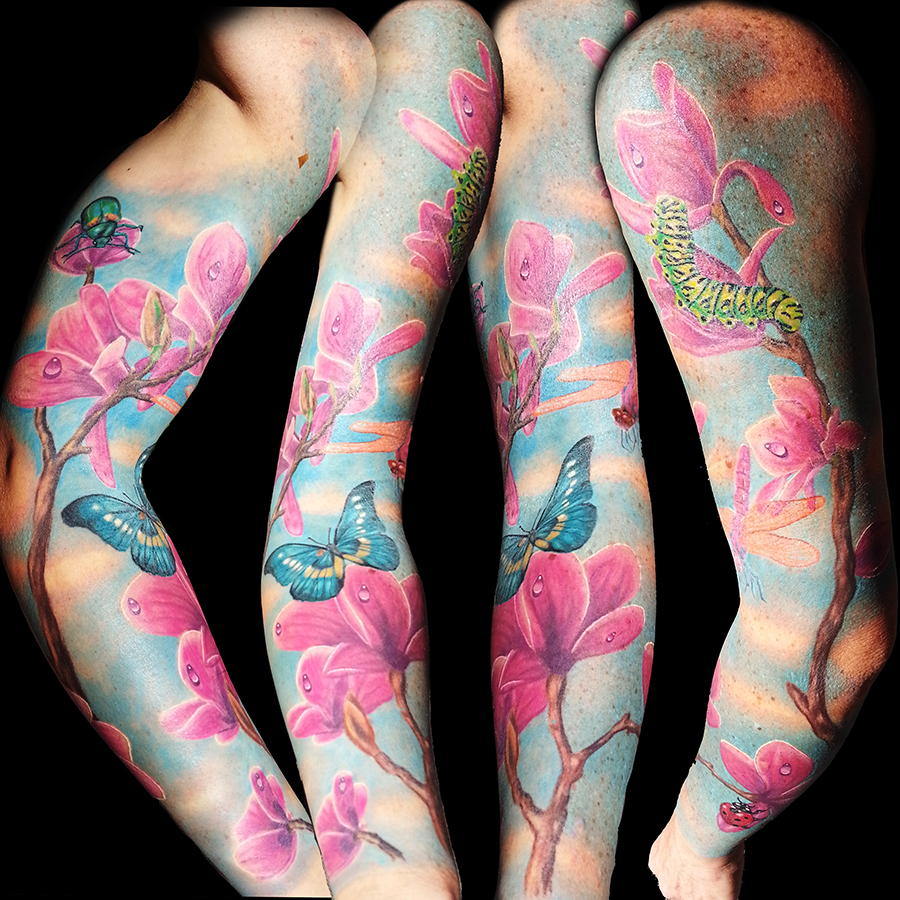
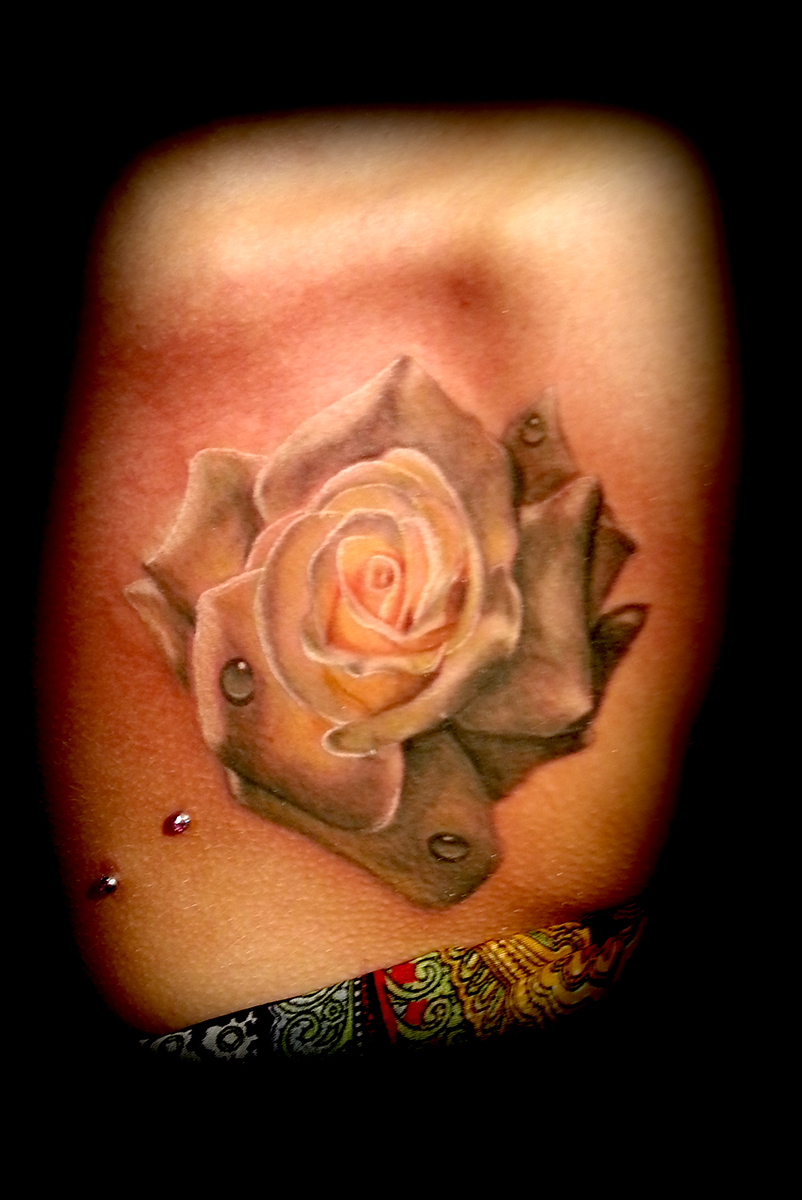
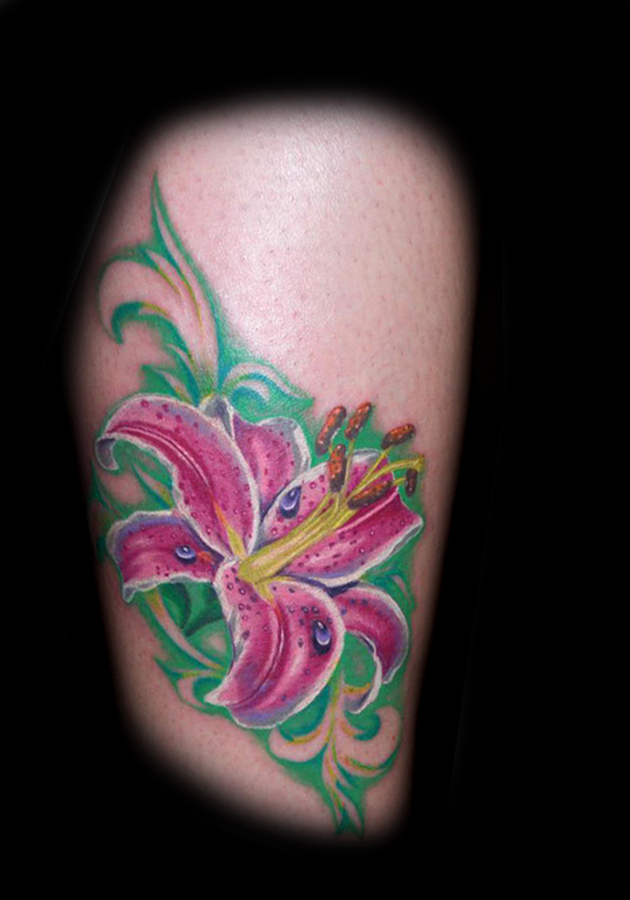
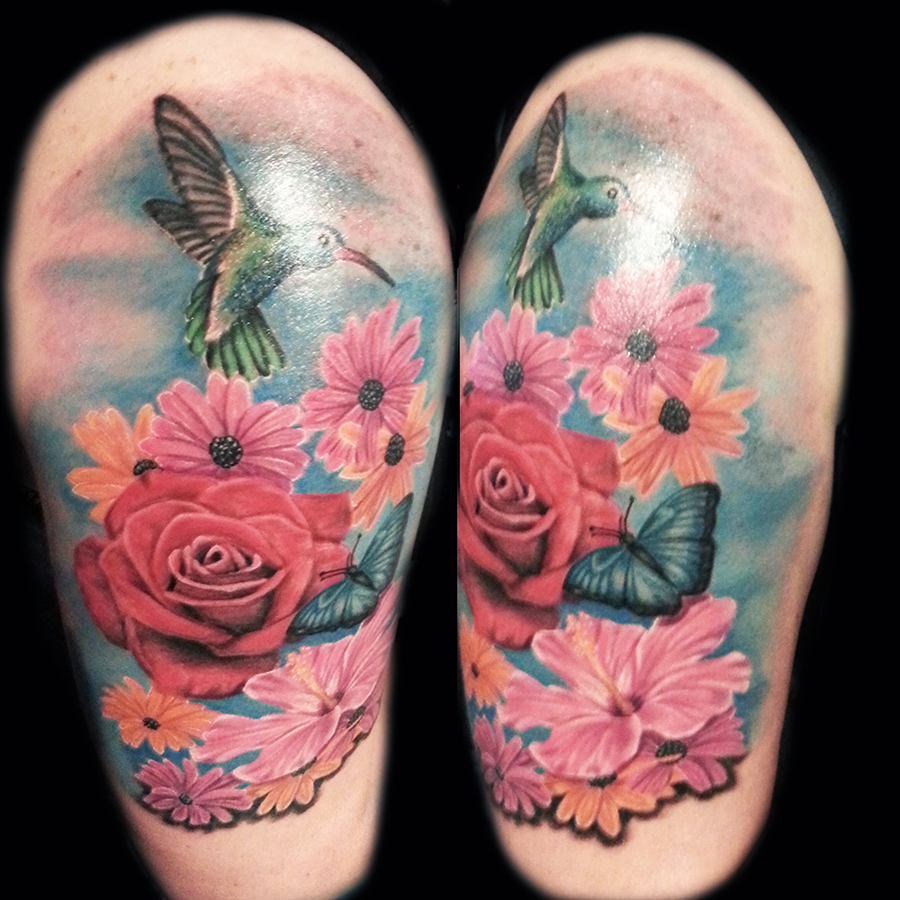
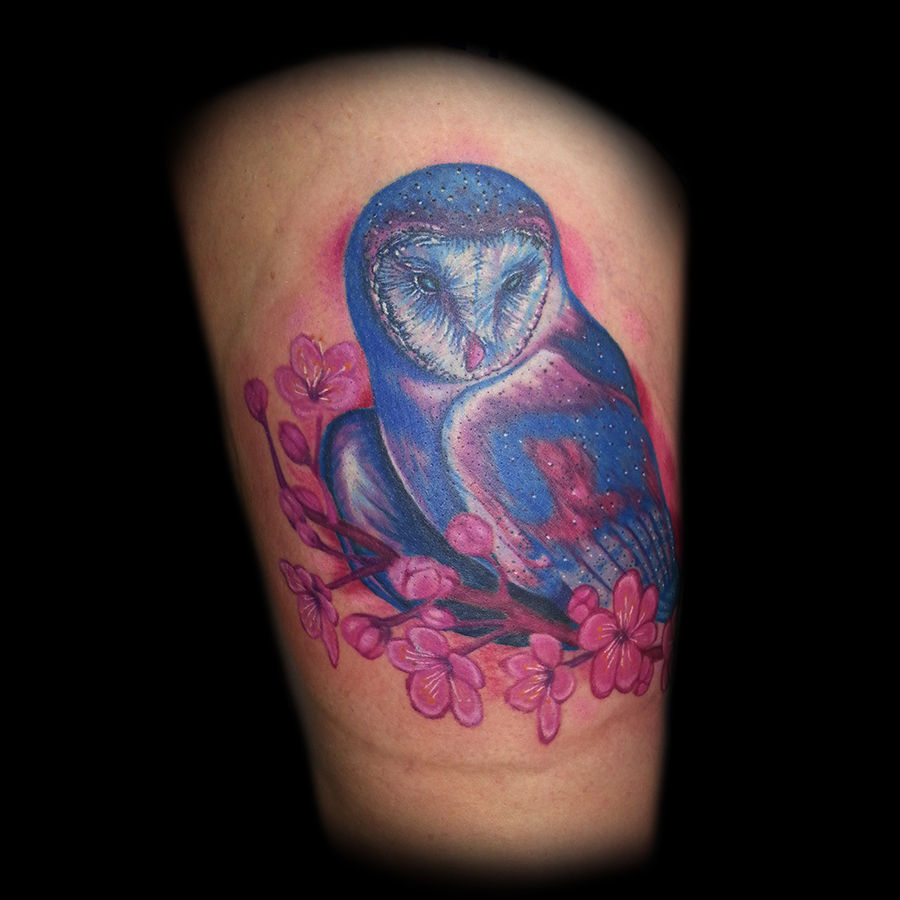
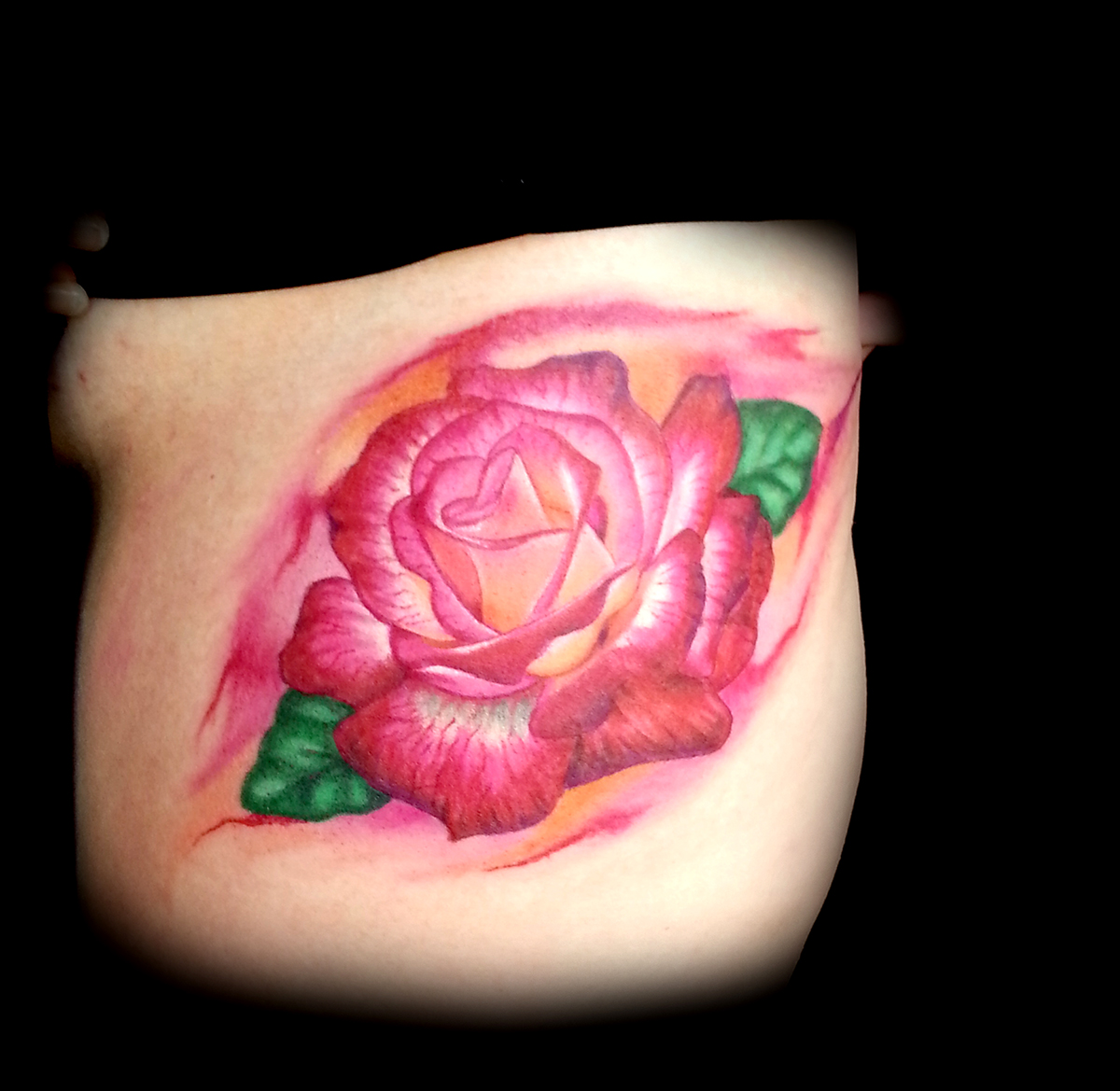
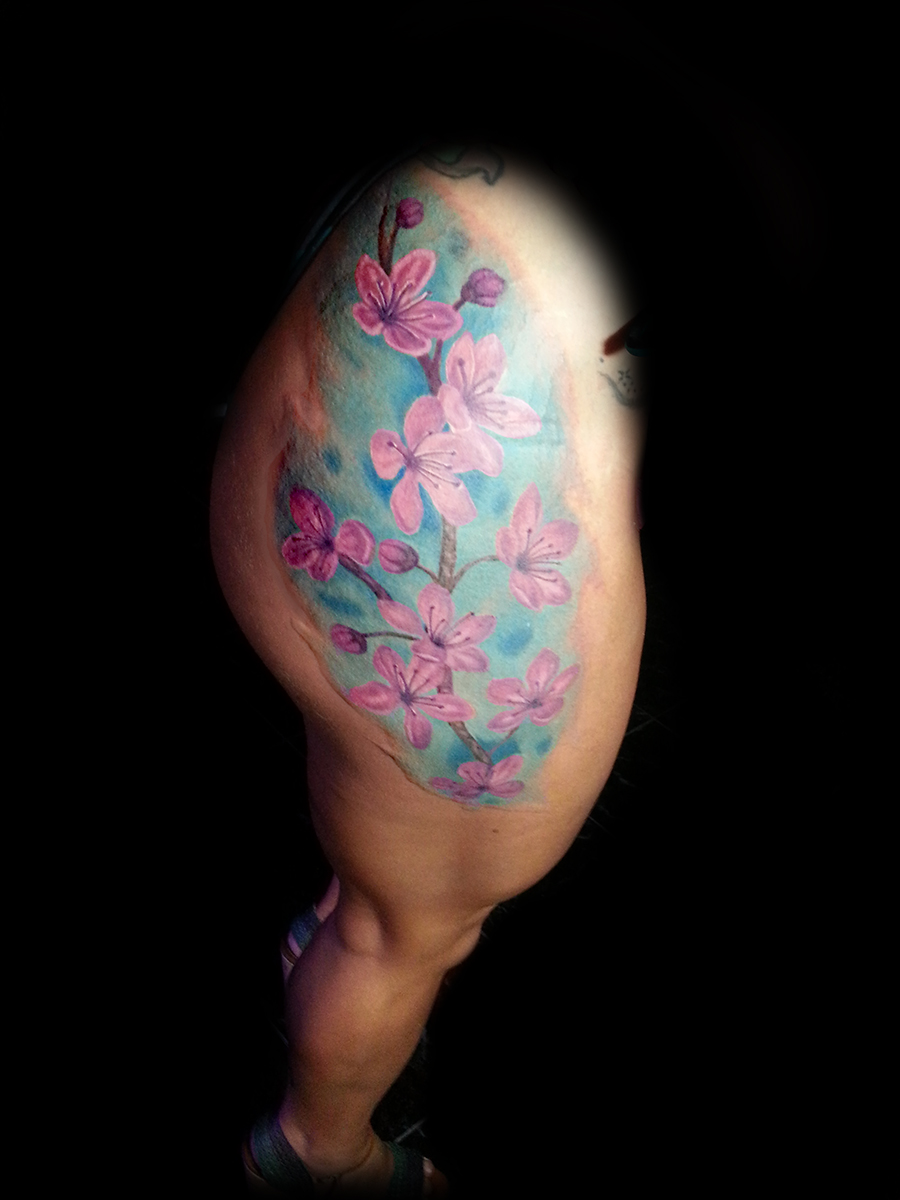
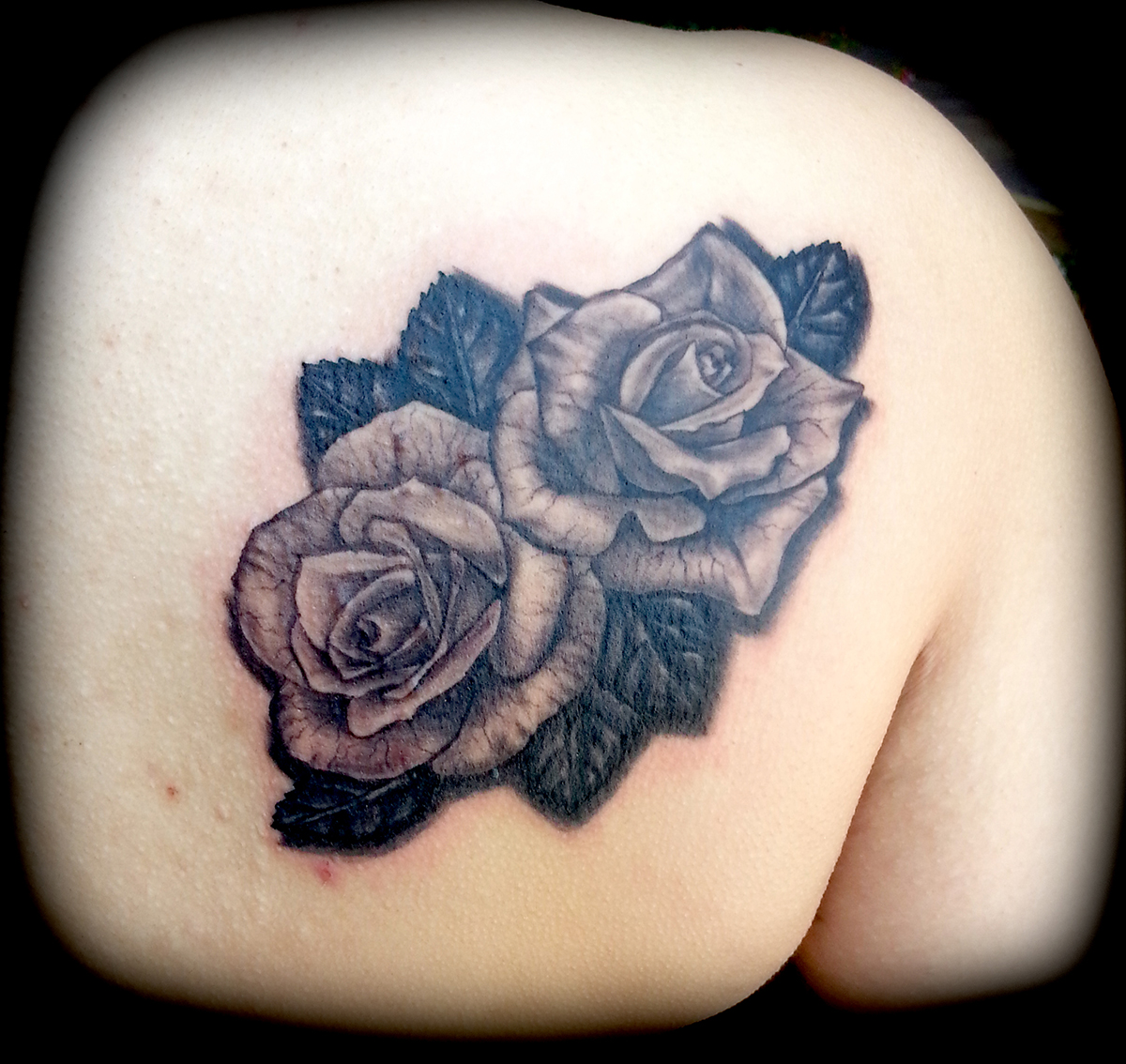
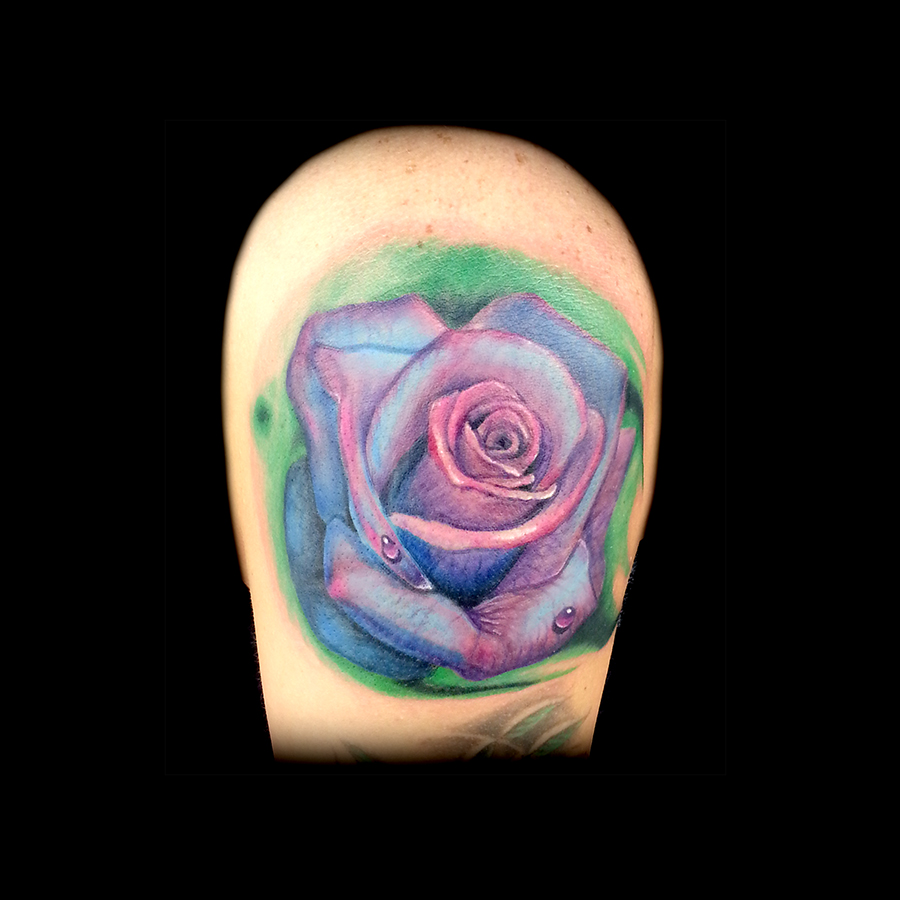
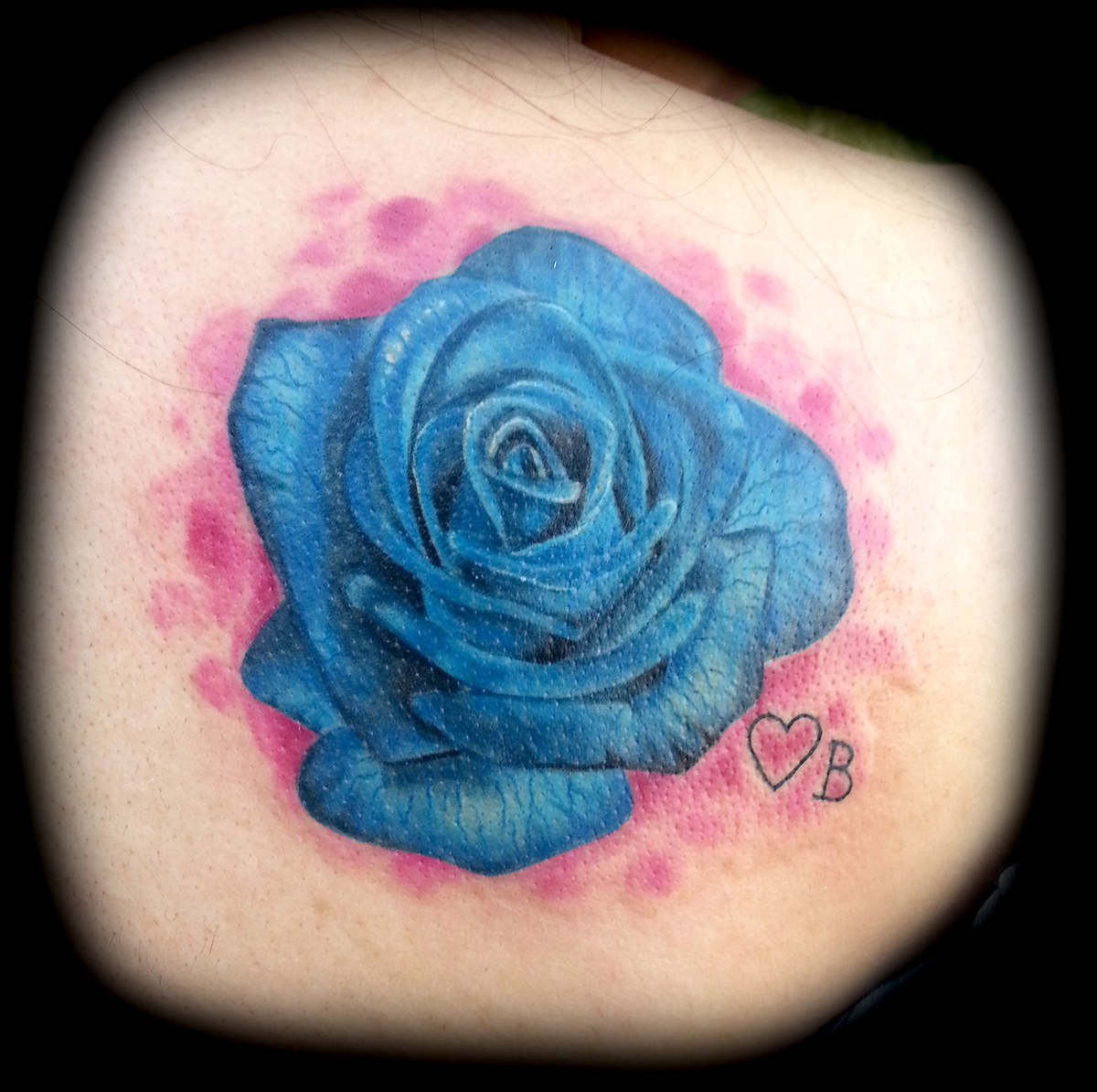
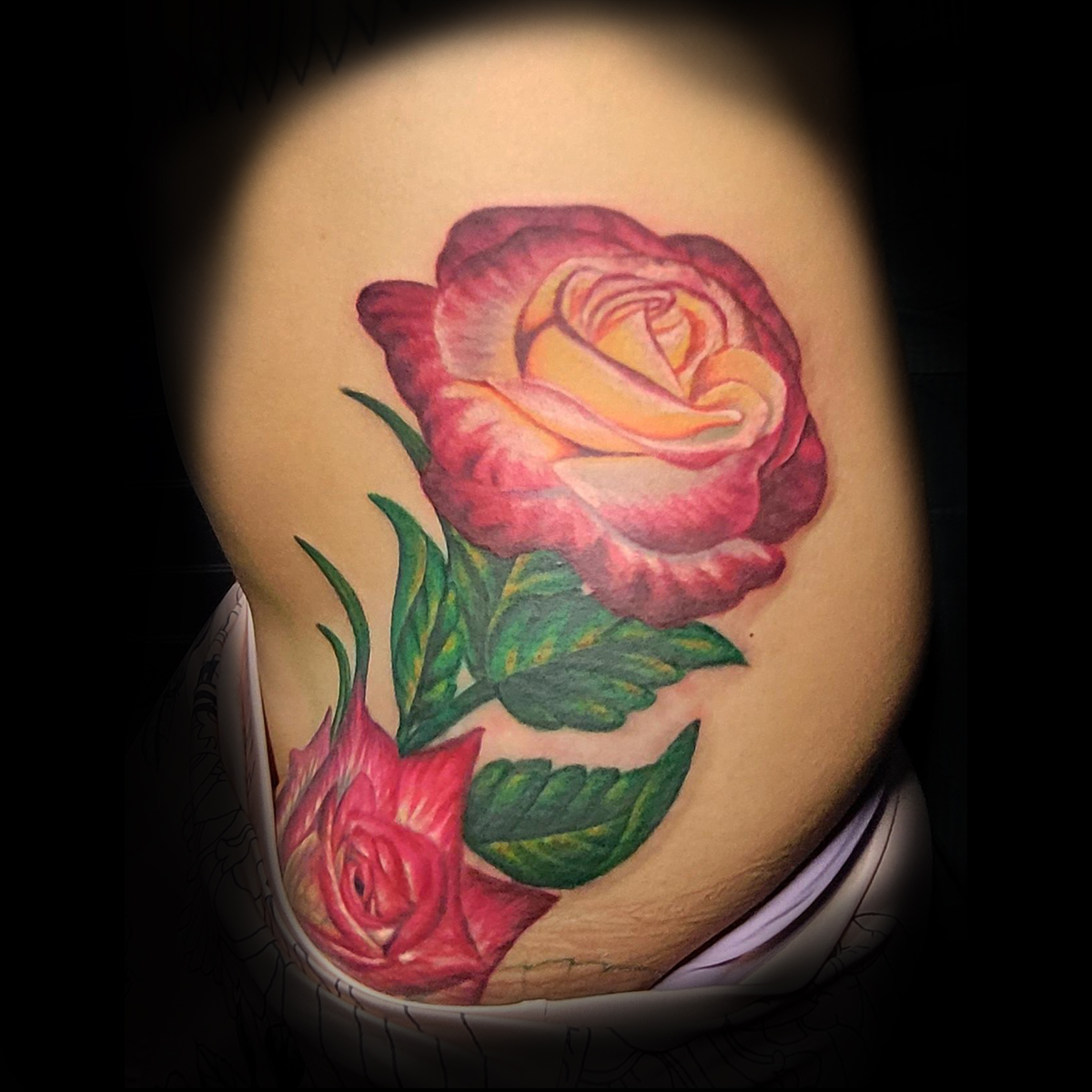
realistic flower tattoos done by Brian Martinez
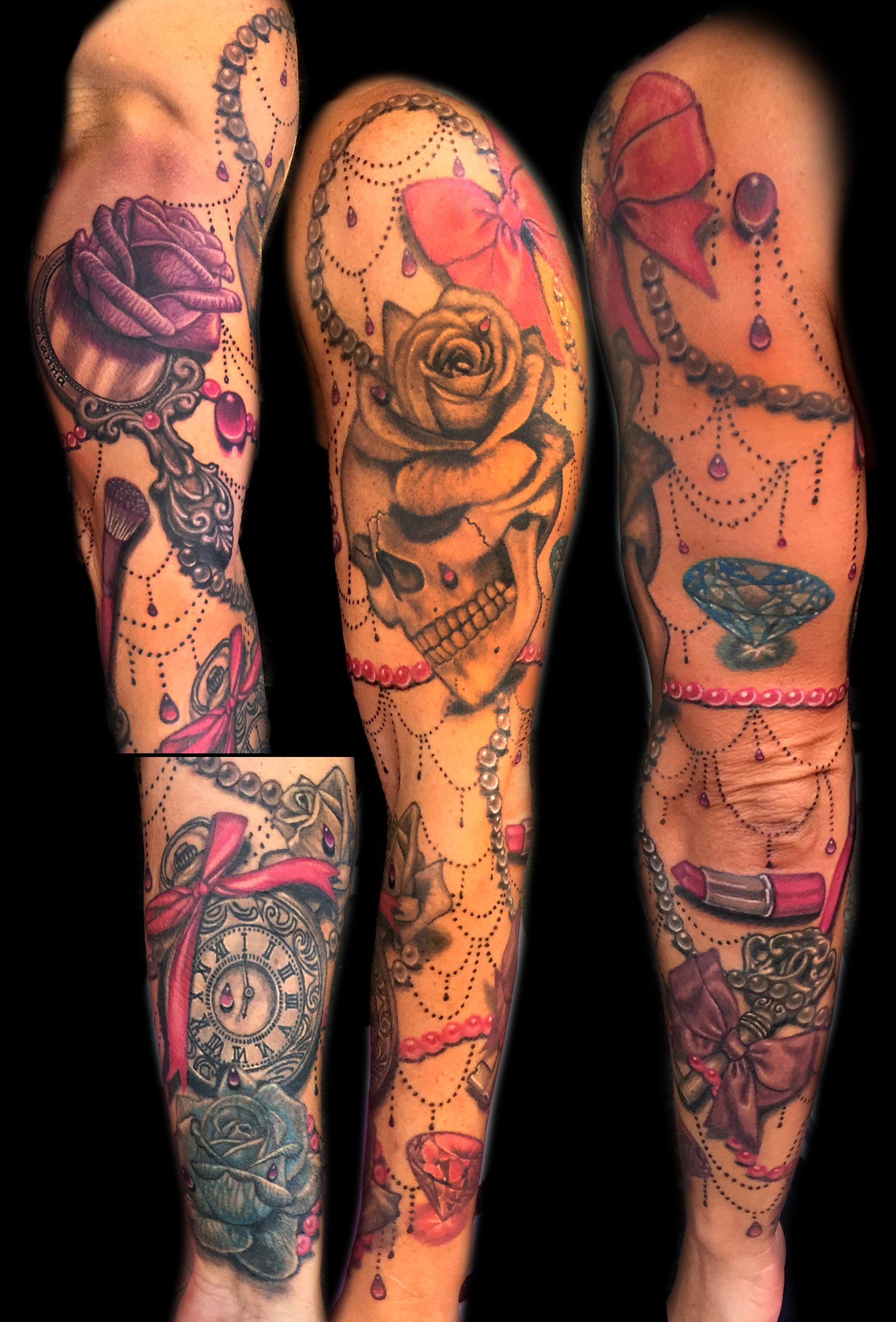
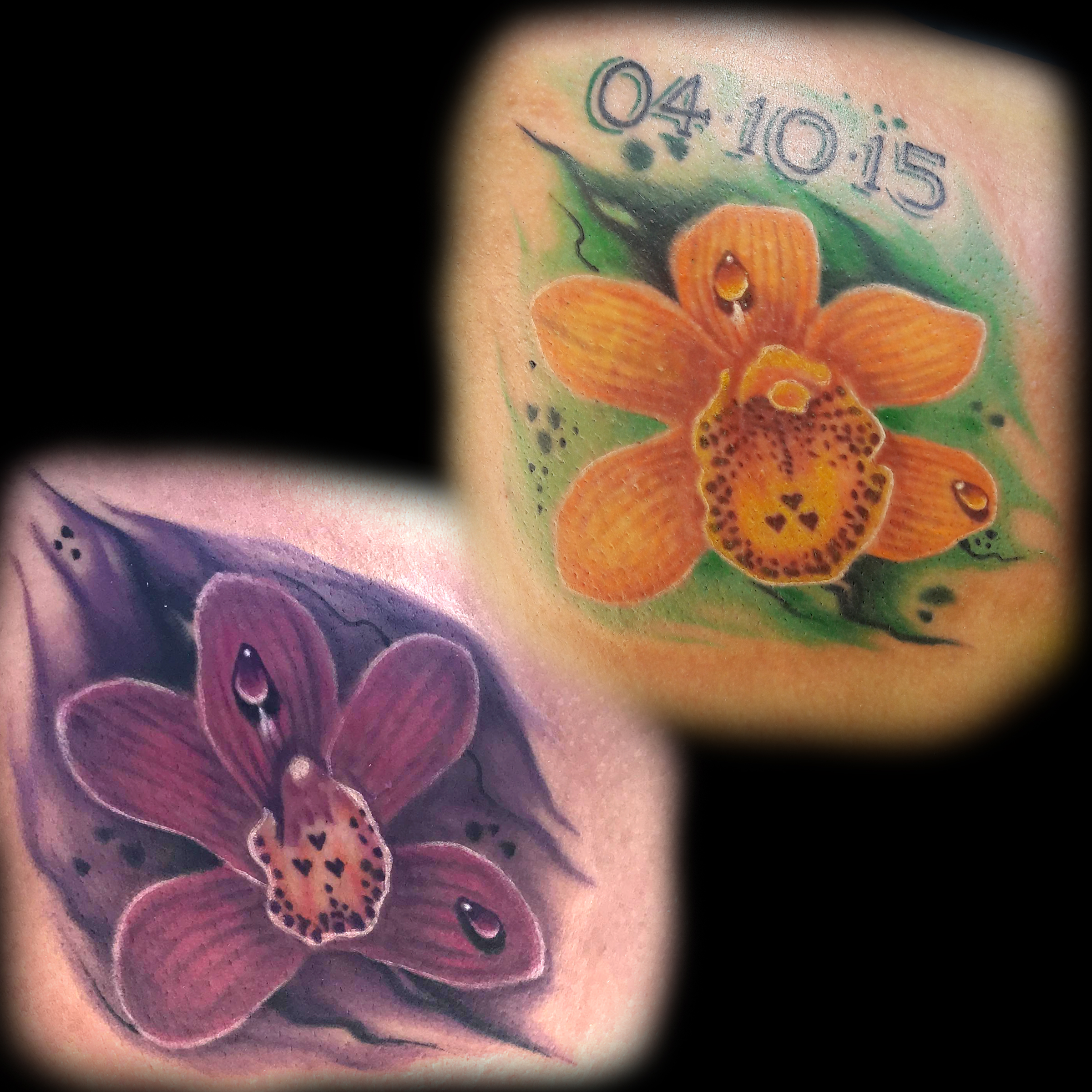
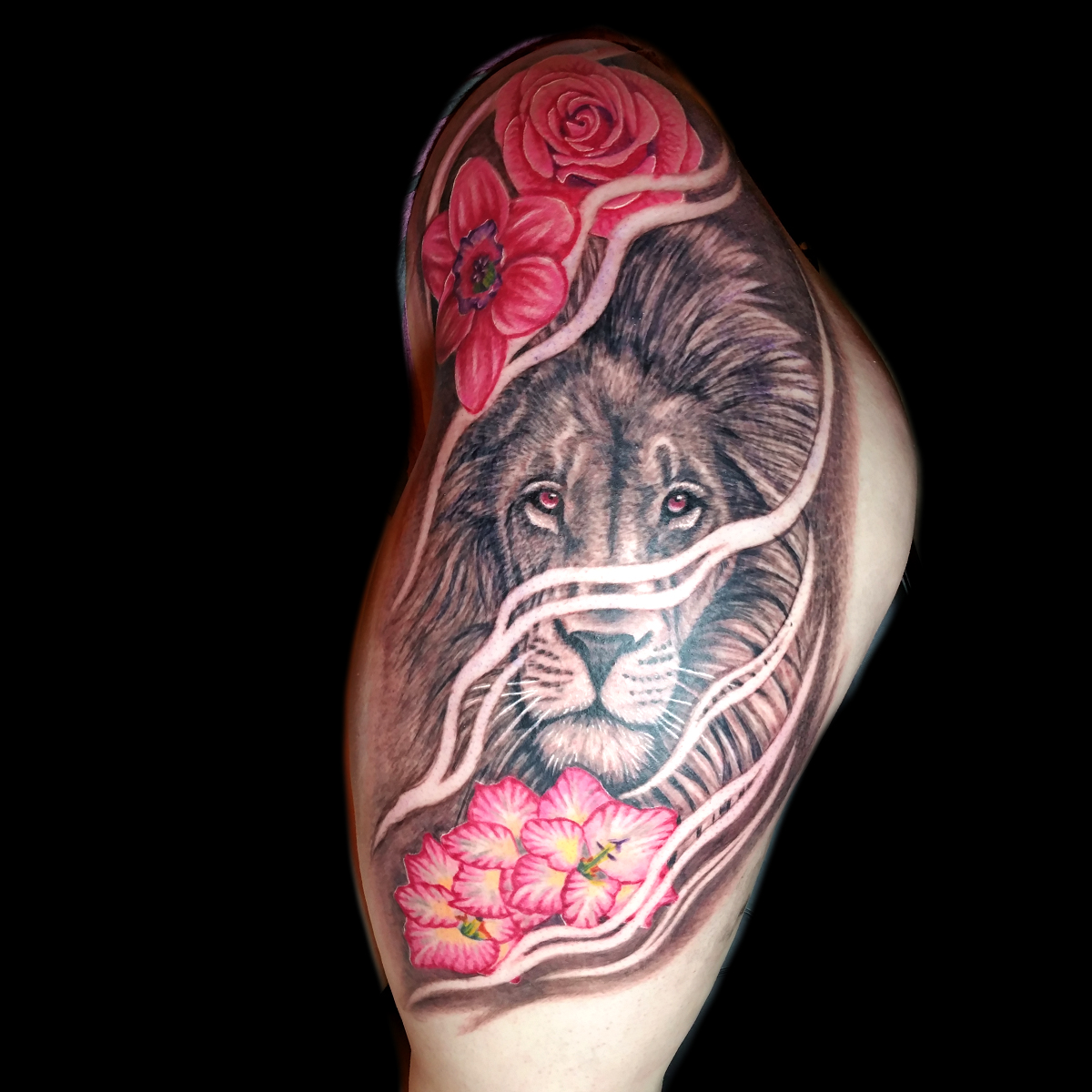
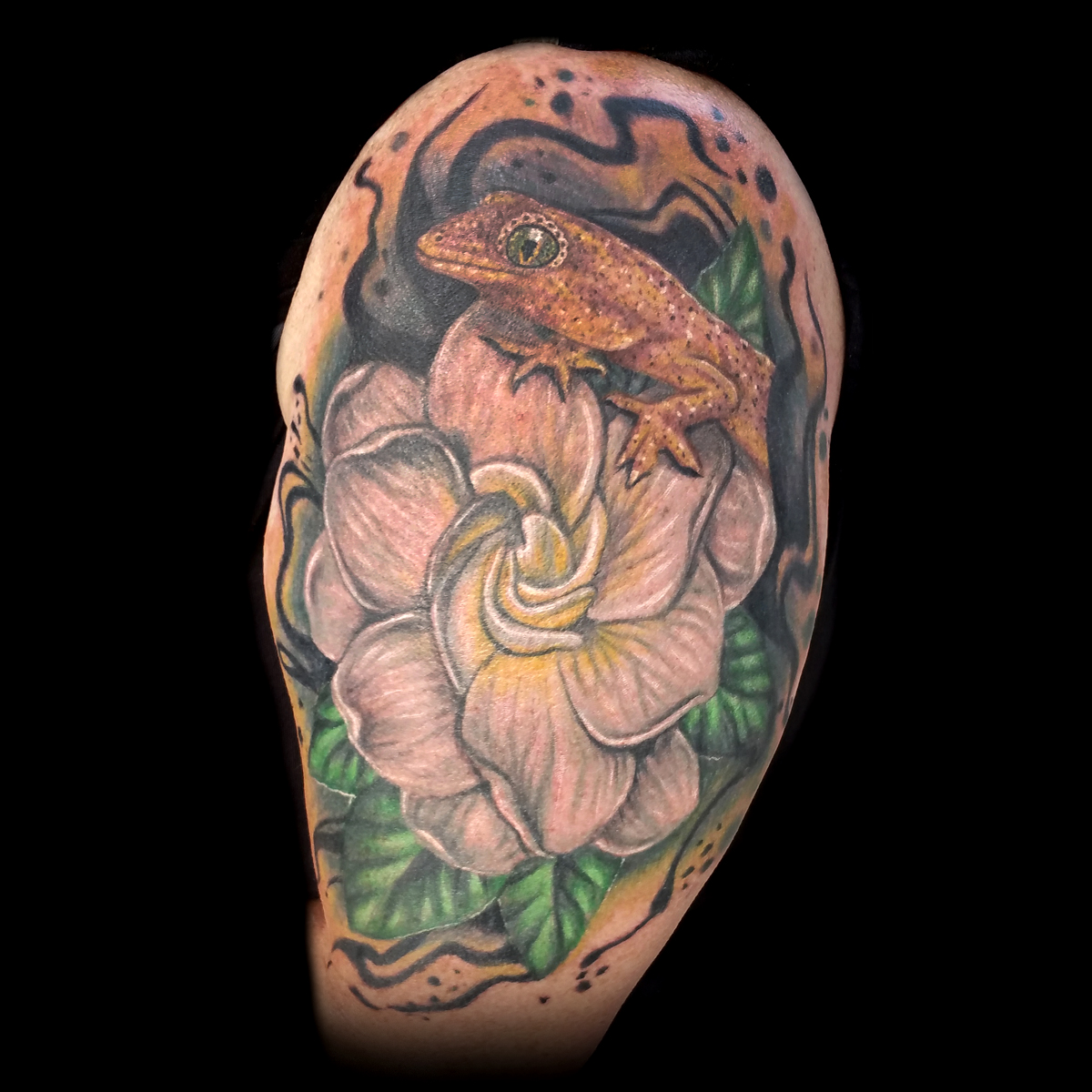
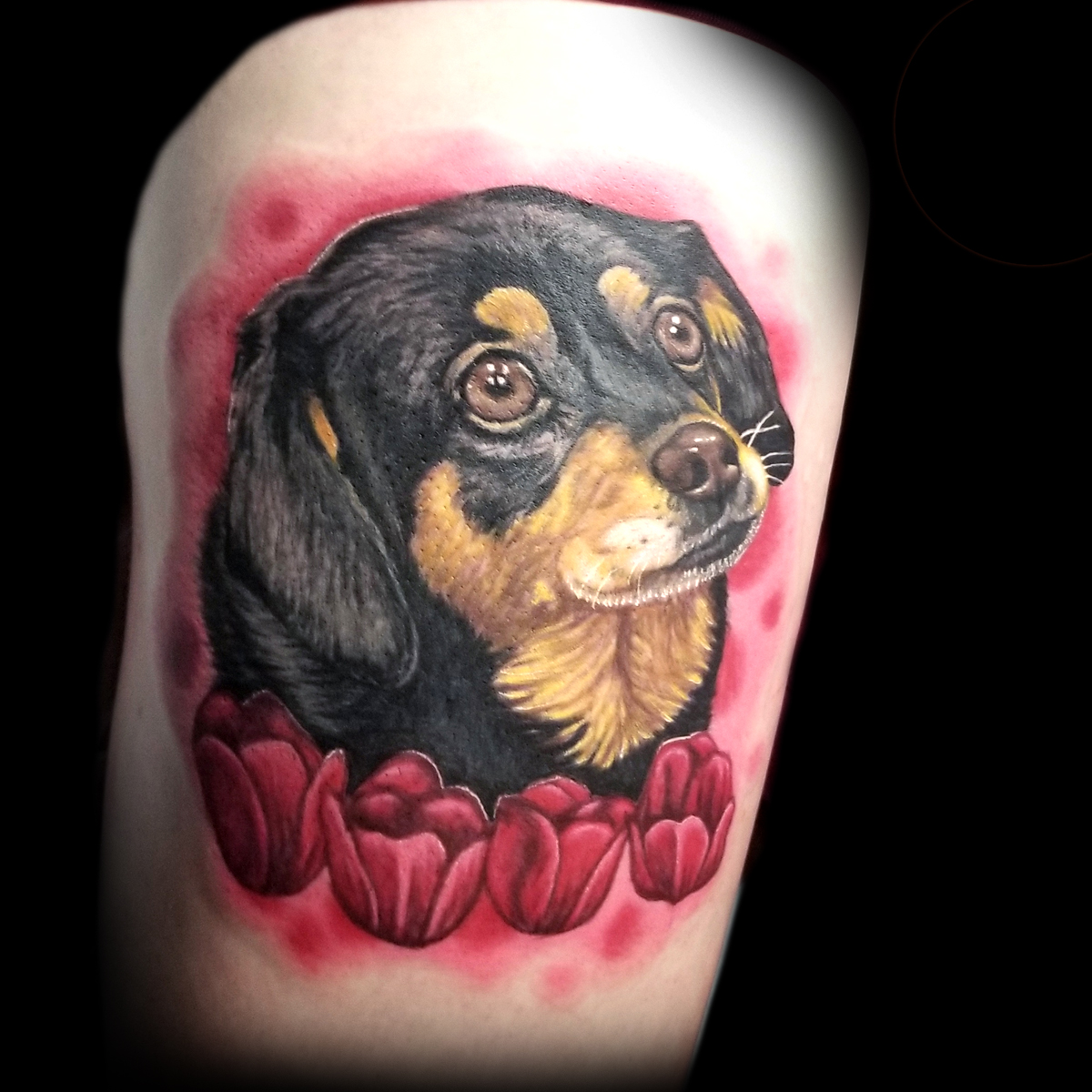
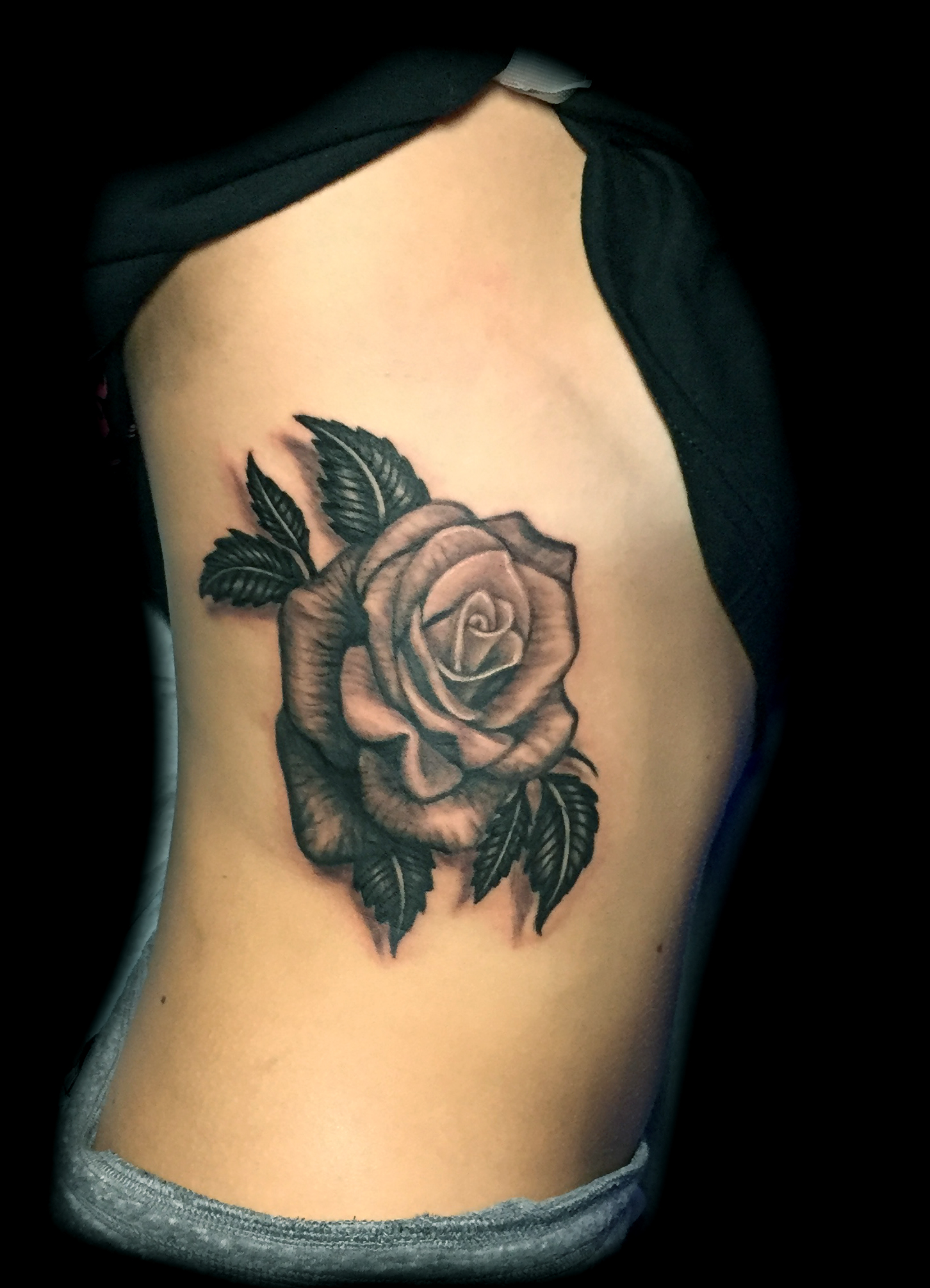
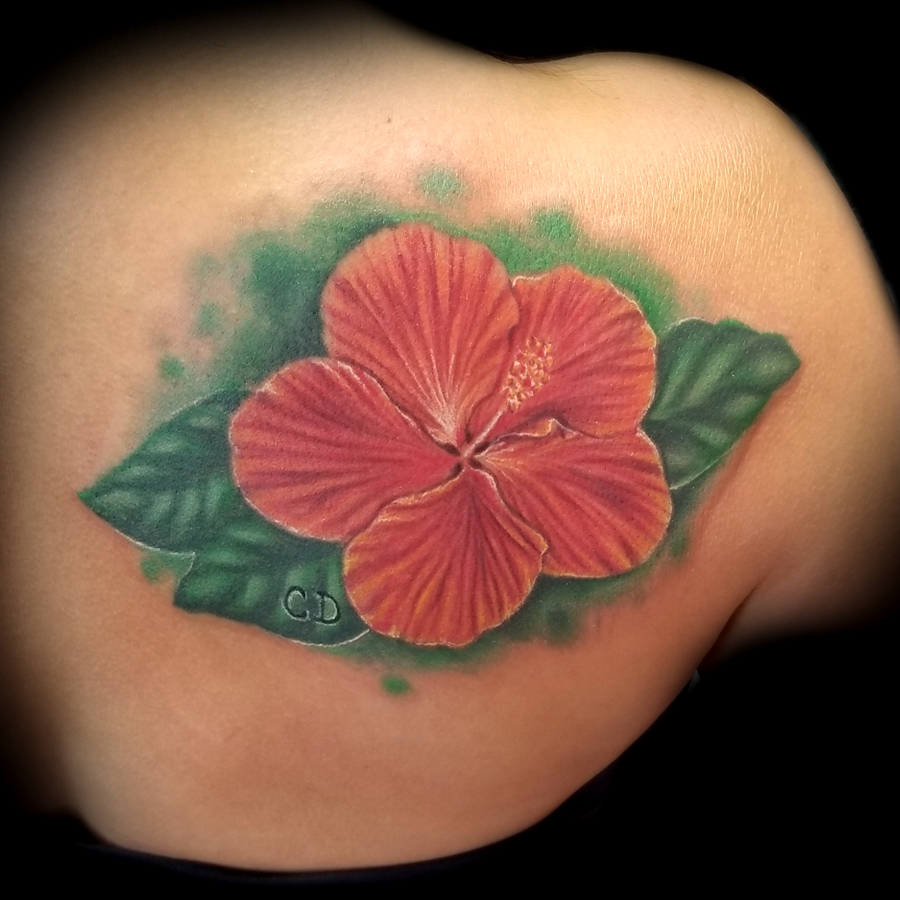
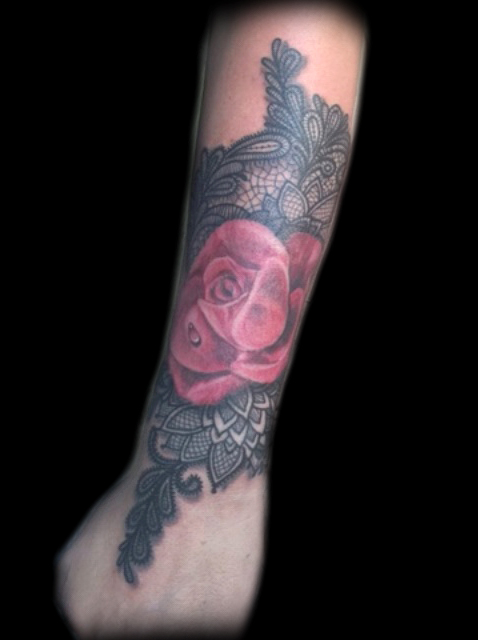
Flower Tattoo Artist San Francisco Bay Area | Realistic Flower Tattoos
A flower tattoo can be delicate, dramatic, meaningful, or completely unexpected. Flowers offer endless possibilities because every species has its own shape, texture, symbolism, and natural character. With realistic tattoo techniques, petals can appear soft and dimensional while leaves, stems, and shadows create a convincing sense of depth.
At Masterpiece Tattoos in San Francisco, Brian Martinez creates custom flower tattoos based on the client’s preferred flowers, placement, size, and artistic direction. Rather than using a generic floral design, the goal is to create artwork that feels connected to the person wearing it.
Why Choose a Flower Tattoo?
Flowers have been part of art and symbolism for centuries.
A rose may represent love, passion, or remembrance. A sunflower can suggest optimism and warmth. Lilies are often associated with purity and renewal, while lotus flowers can represent transformation.
However, symbolism does not have to determine your choice.
Sometimes, a flower is meaningful simply because it reminds someone of a particular person, place, memory, or period of life.
That personal connection can make floral artwork much more significant.
Realistic Flower Tattoo Design
Realism changes the way a floral tattoo looks on the skin.
Instead of depending on simple outlines, realistic flower artwork can use gradual shading, highlights, texture, and contrast to define every petal.
Light direction is especially important.
A petal facing the light may have a bright highlight along its edge. Another petal can remain darker because it sits beneath the flower. Those subtle differences create dimension.
Meanwhile, tiny imperfections can make the flower feel more natural.
The result is a floral design that looks closer to a botanical photograph than a traditional illustration.
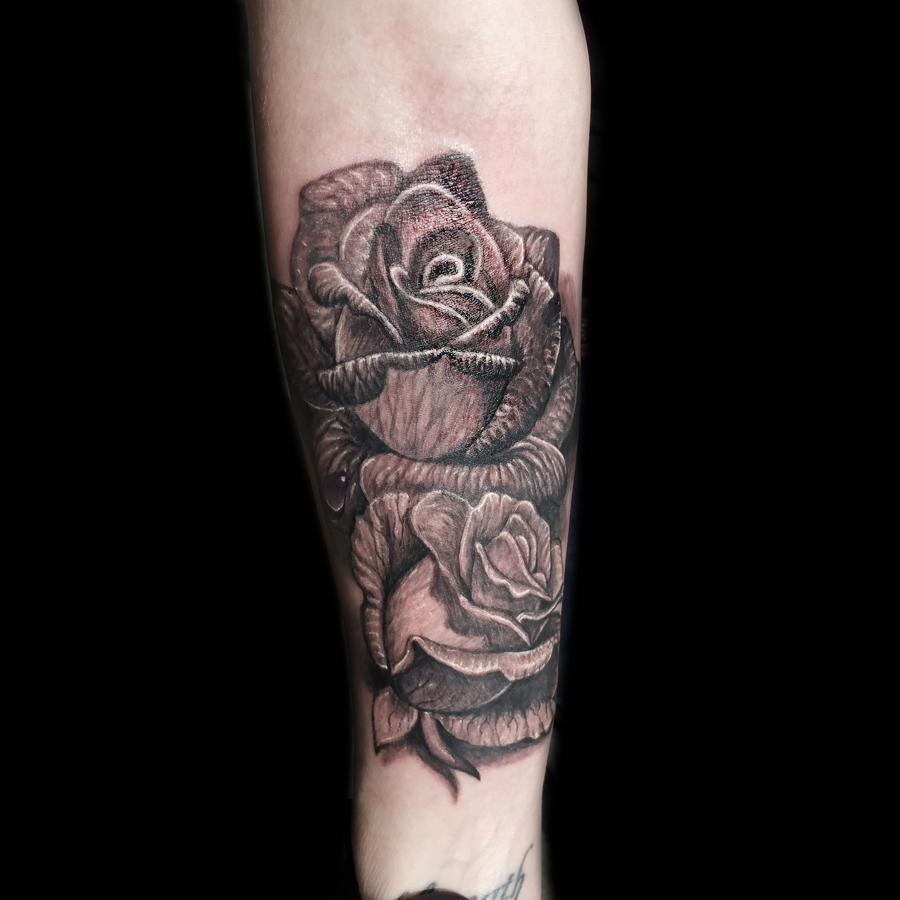
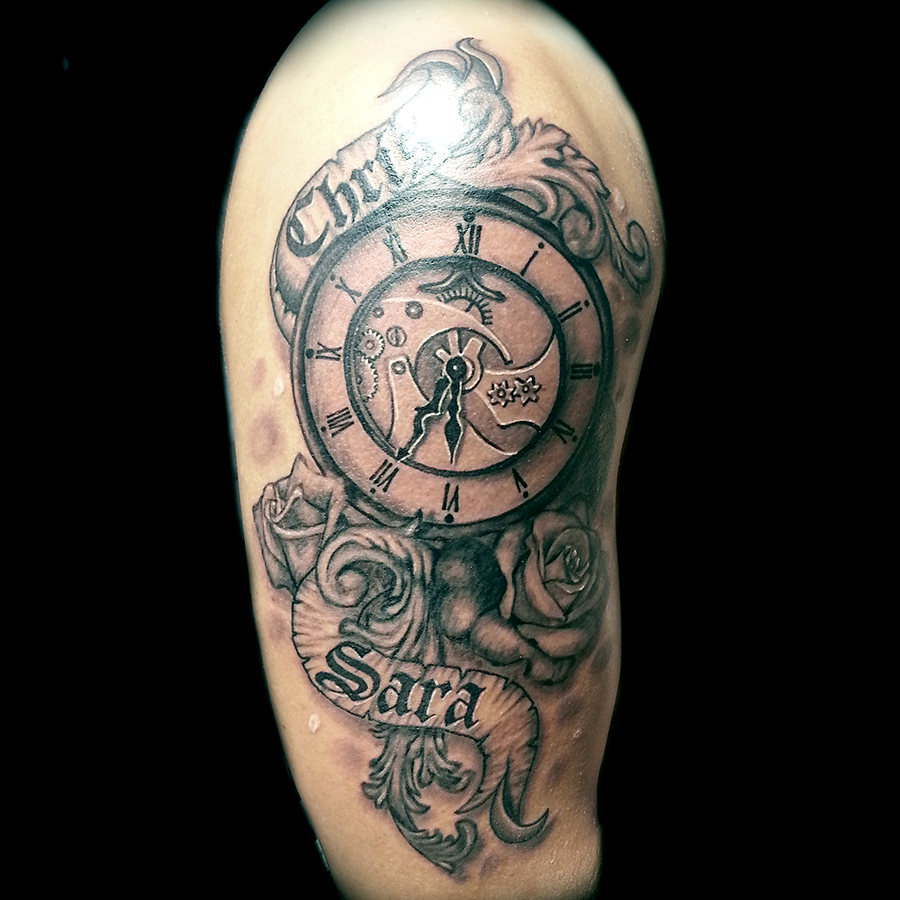
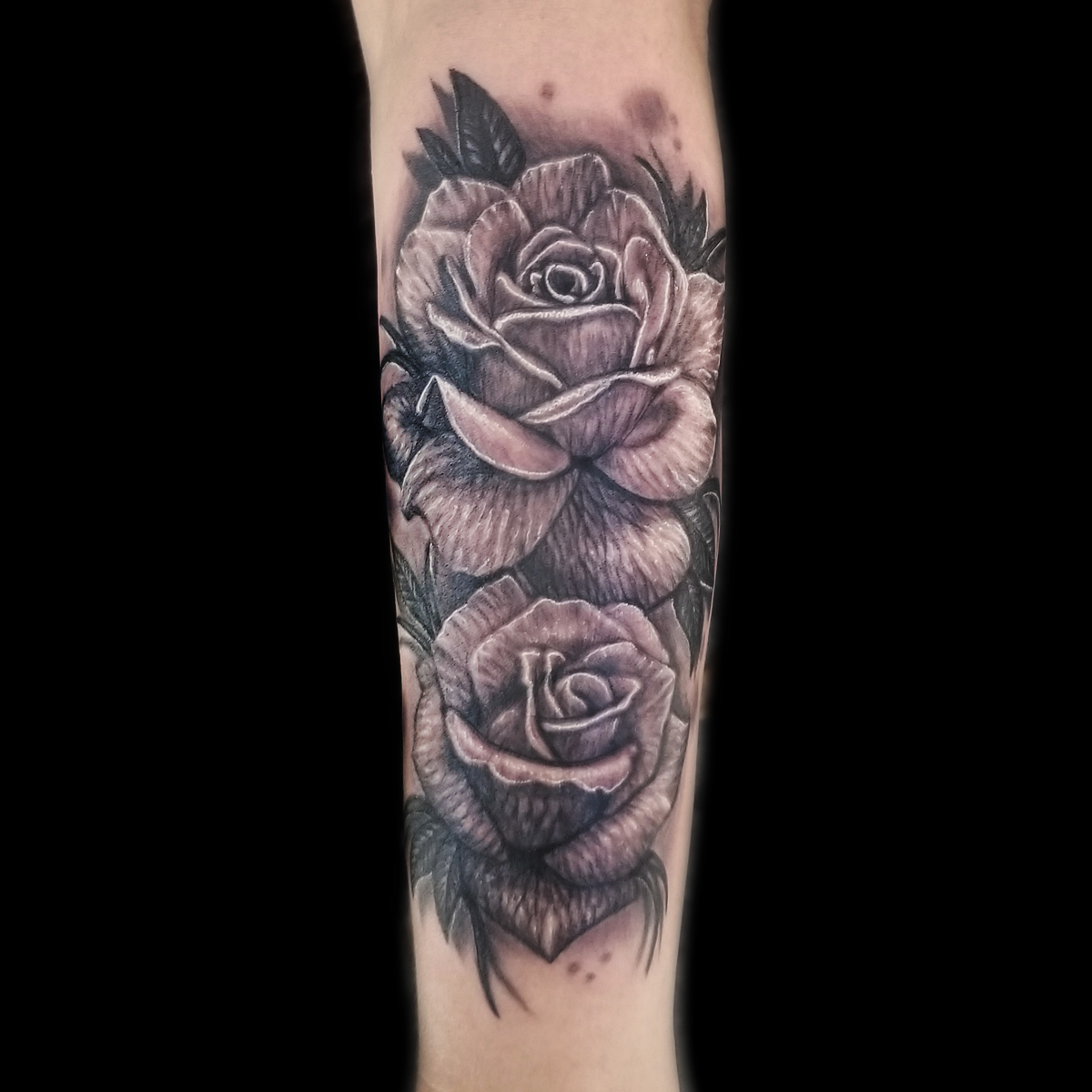
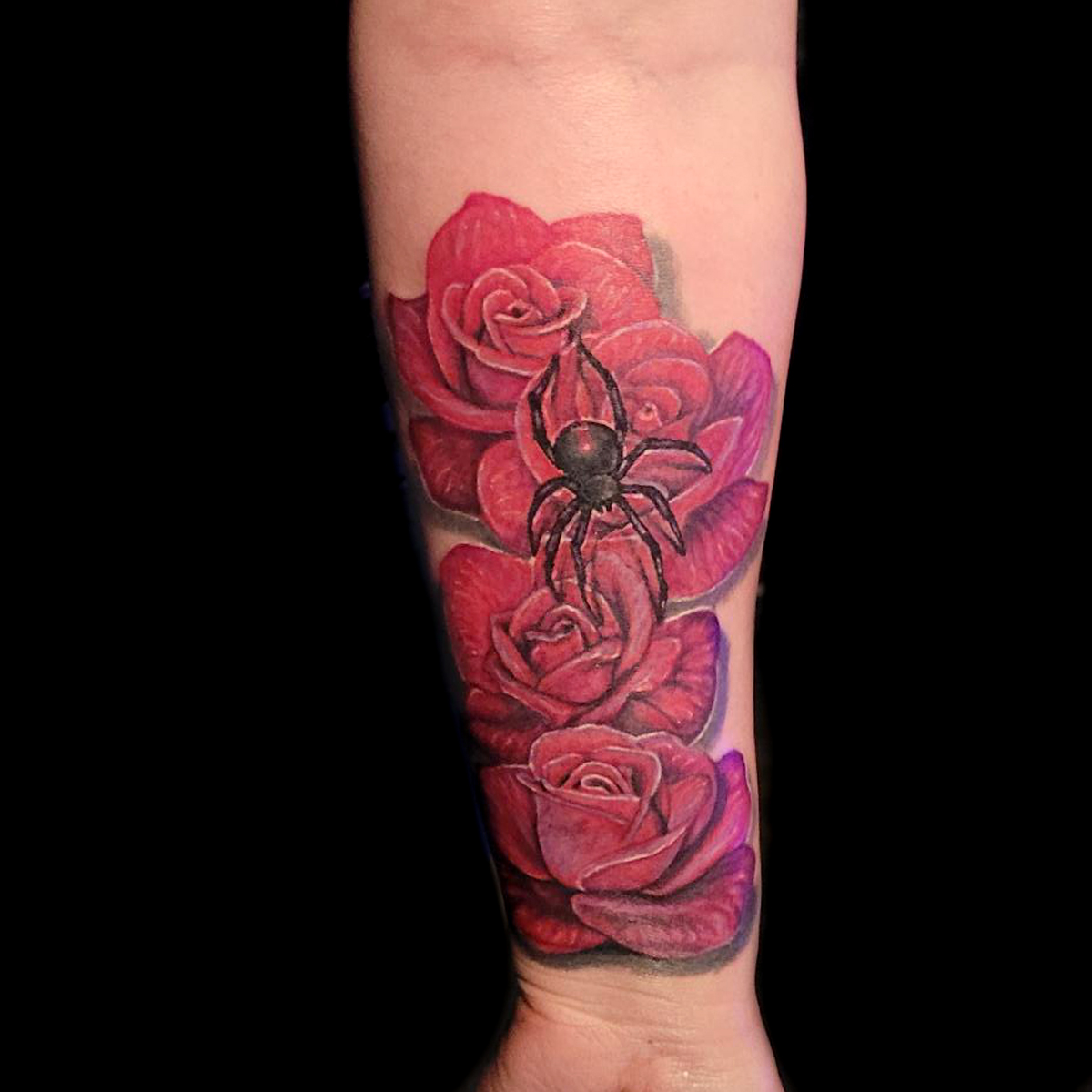
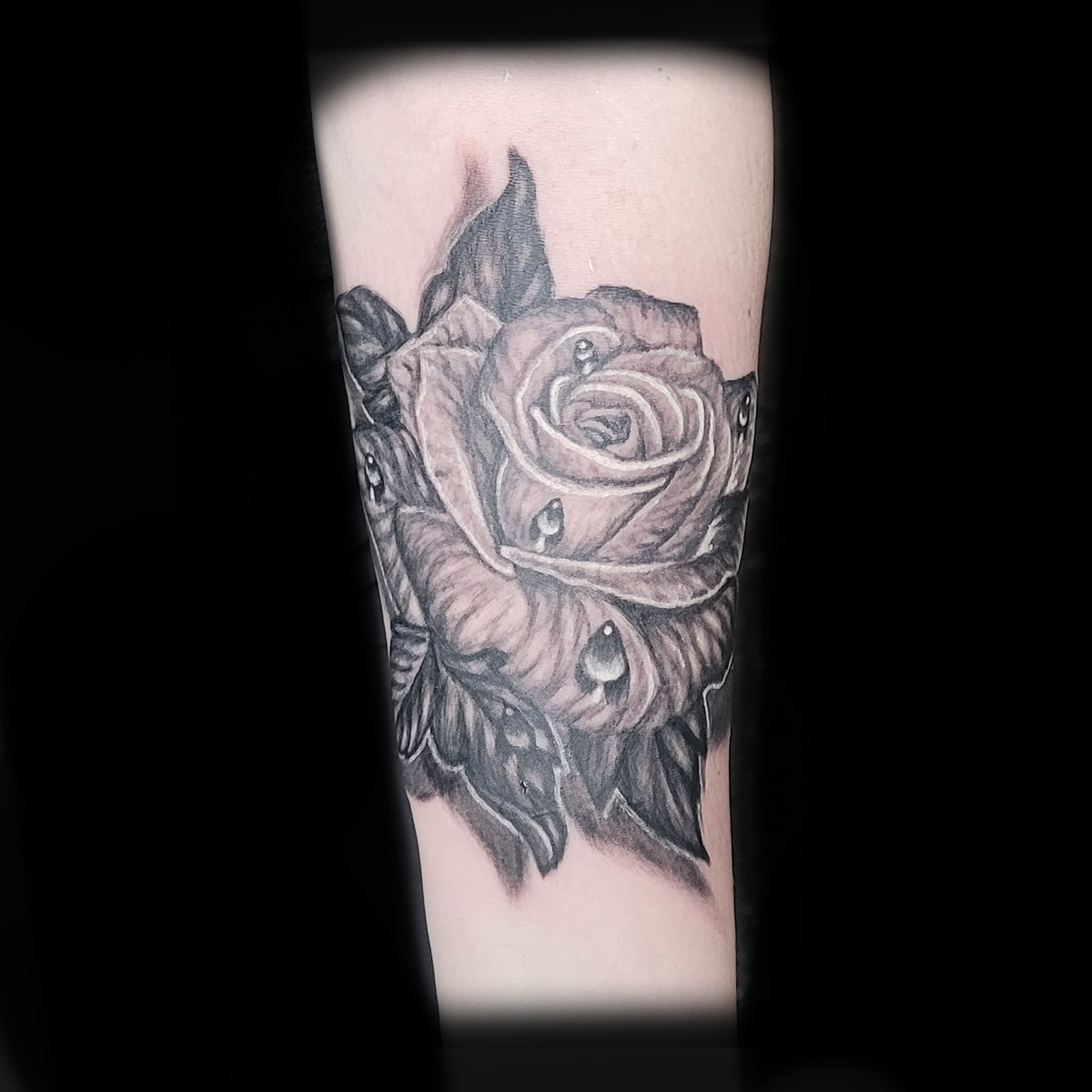
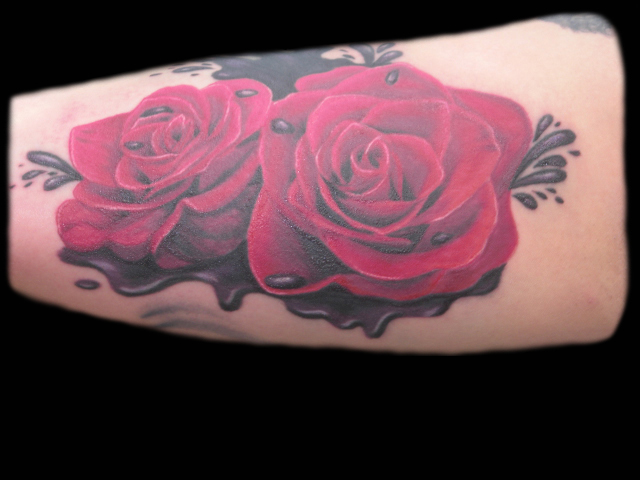
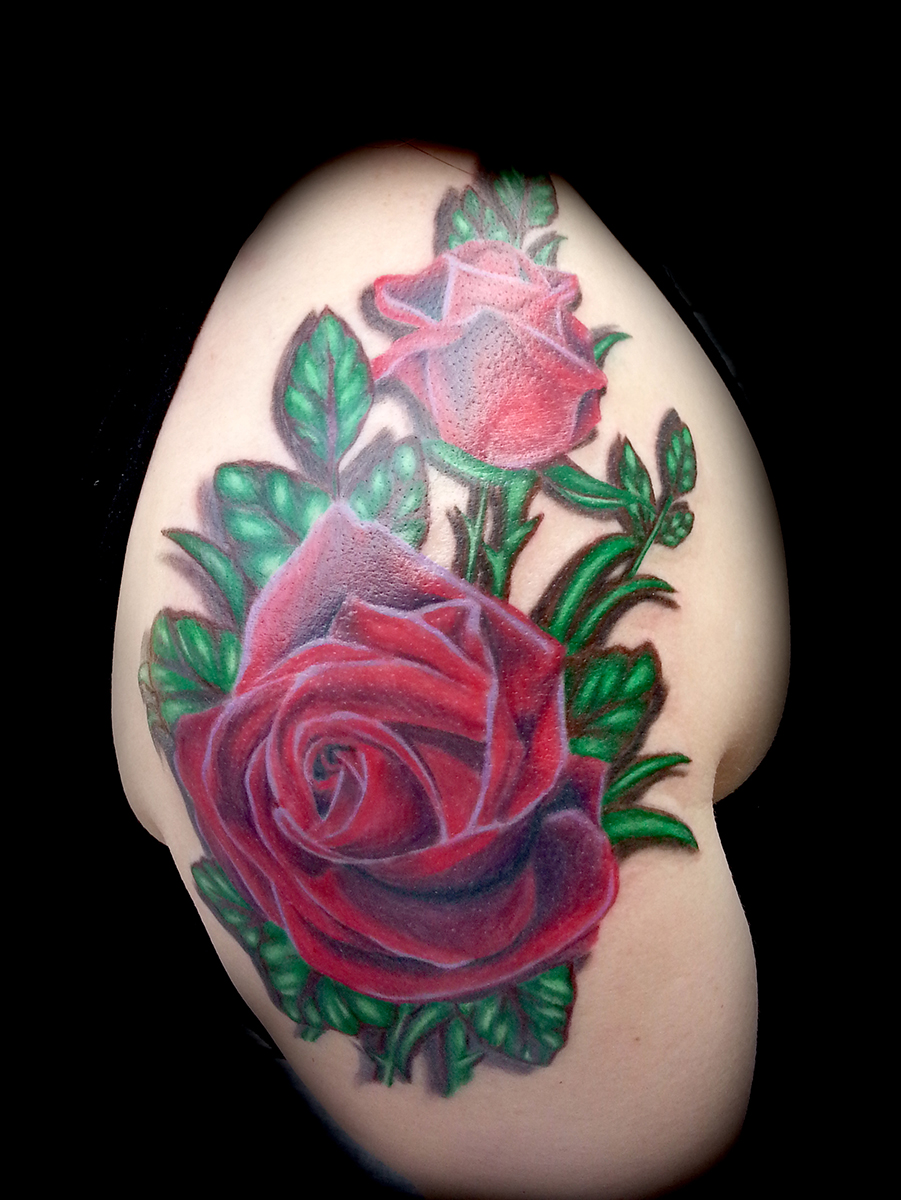
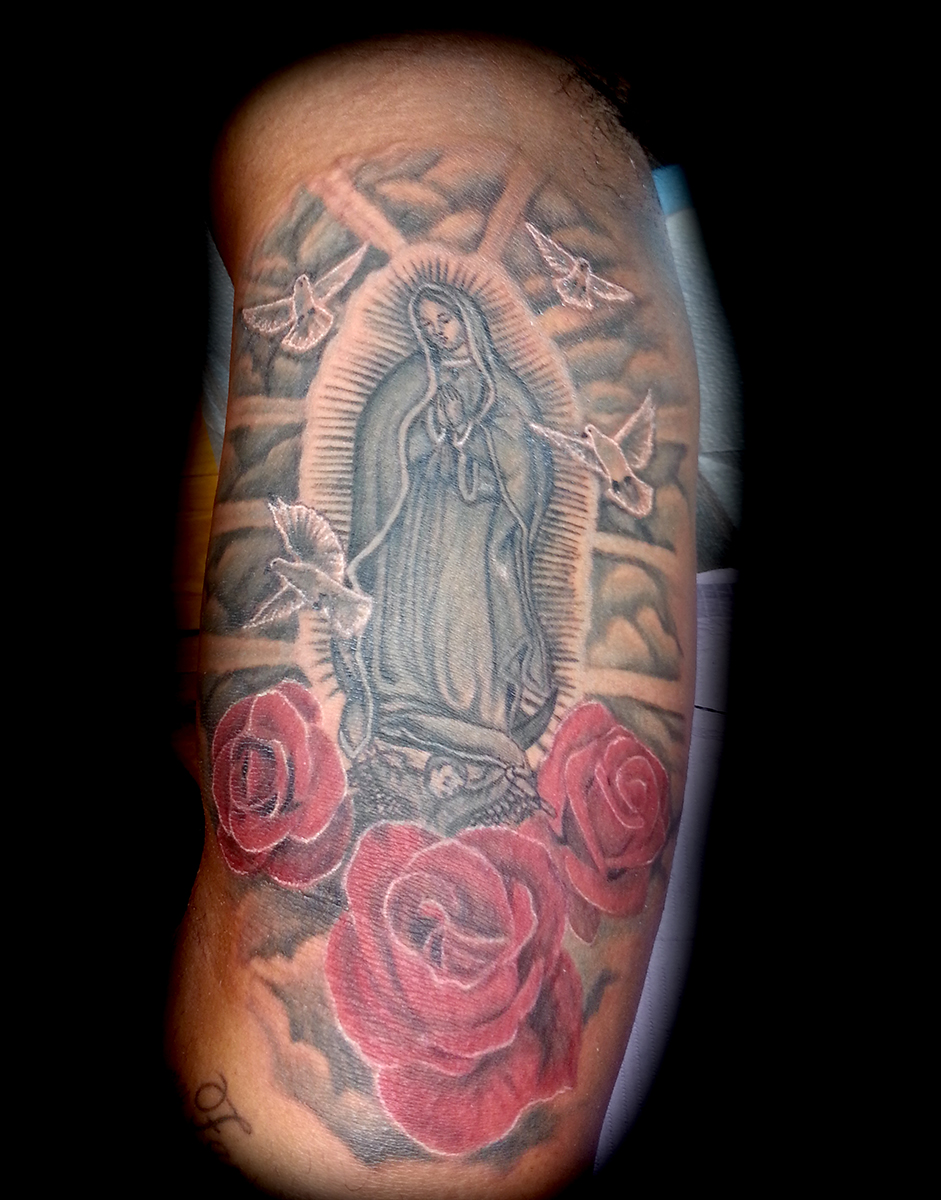
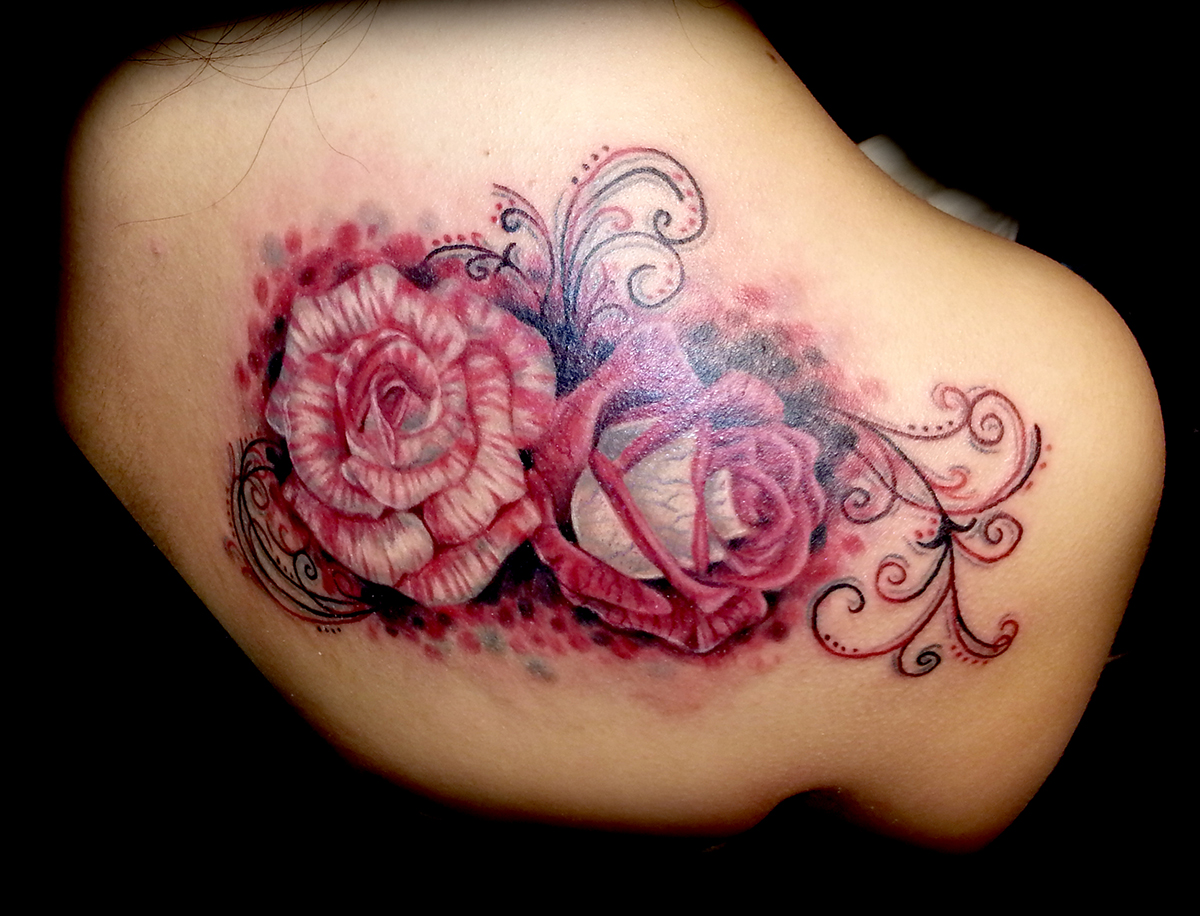
Realistic Rose Tattoos
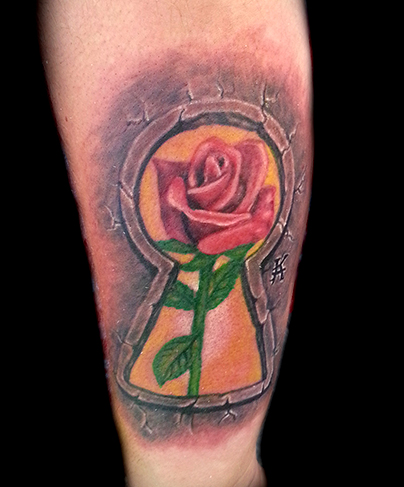
Roses remain one of the most requested floral subjects.
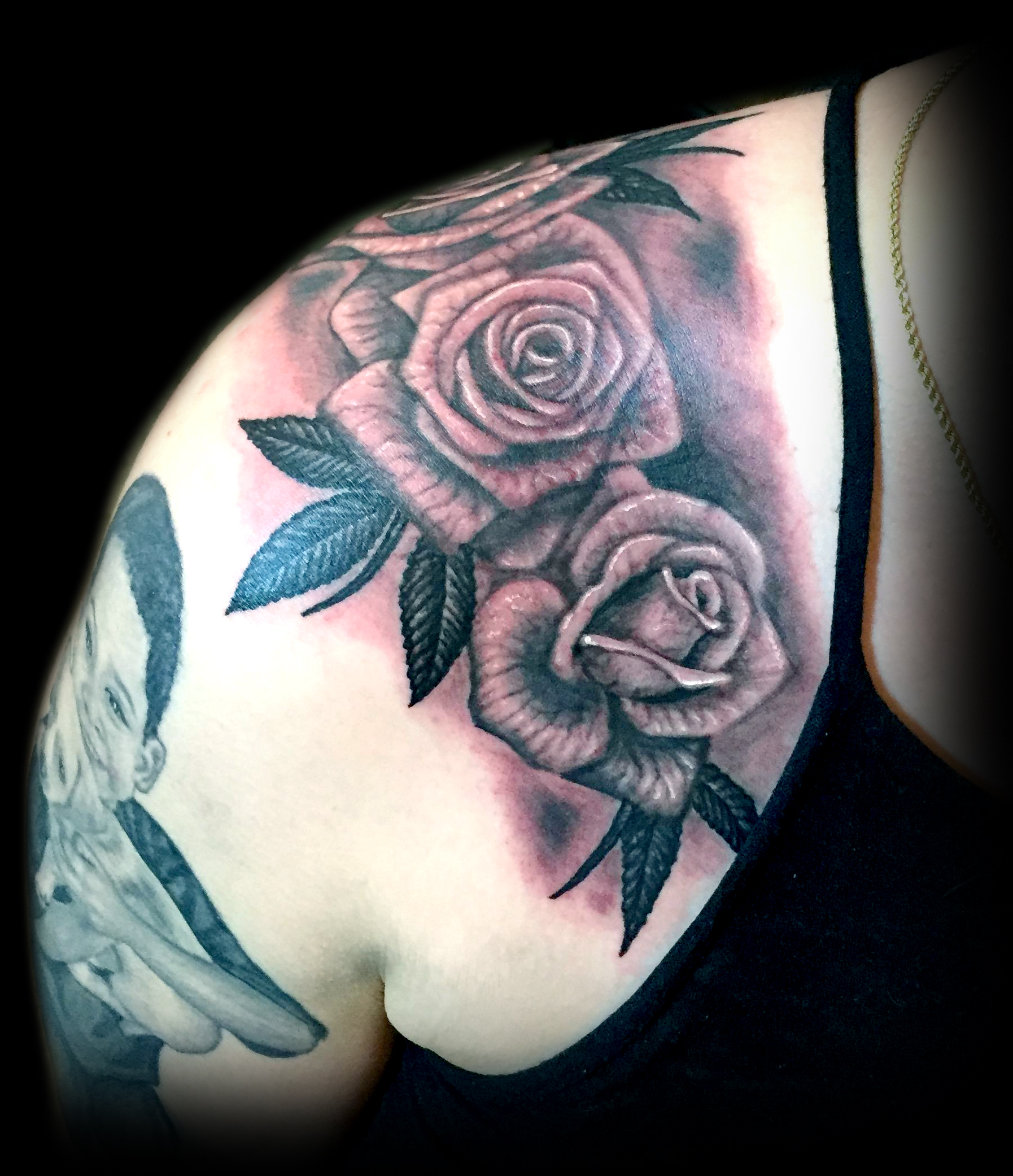
Their layered petals create countless opportunities for realistic shading. A tightly closed rose has a completely different appearance from a fully opened bloom.
Petal direction also matters.
Each fold needs to connect naturally with the next one. Shadows between the petals create depth, while small highlights help define the edges.
A rose can stand alone or become part of a larger composition.
For additional inspiration, explore the realistic rose tattoo collection.
Sunflower Tattoo Ideas
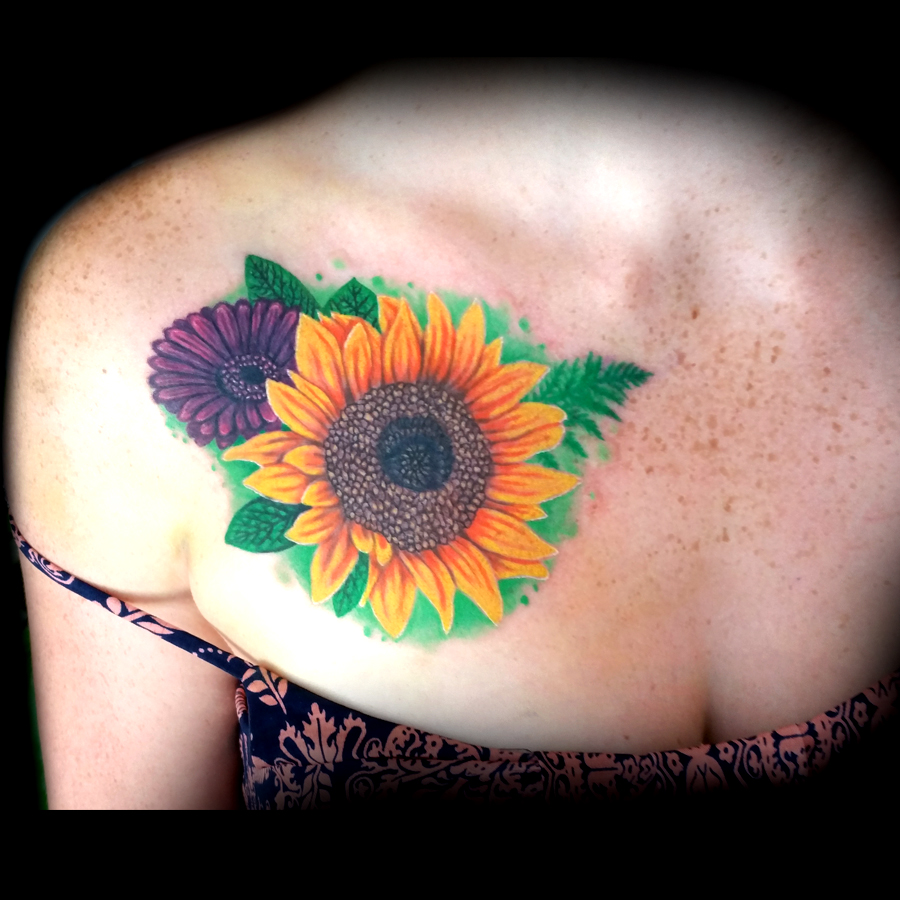
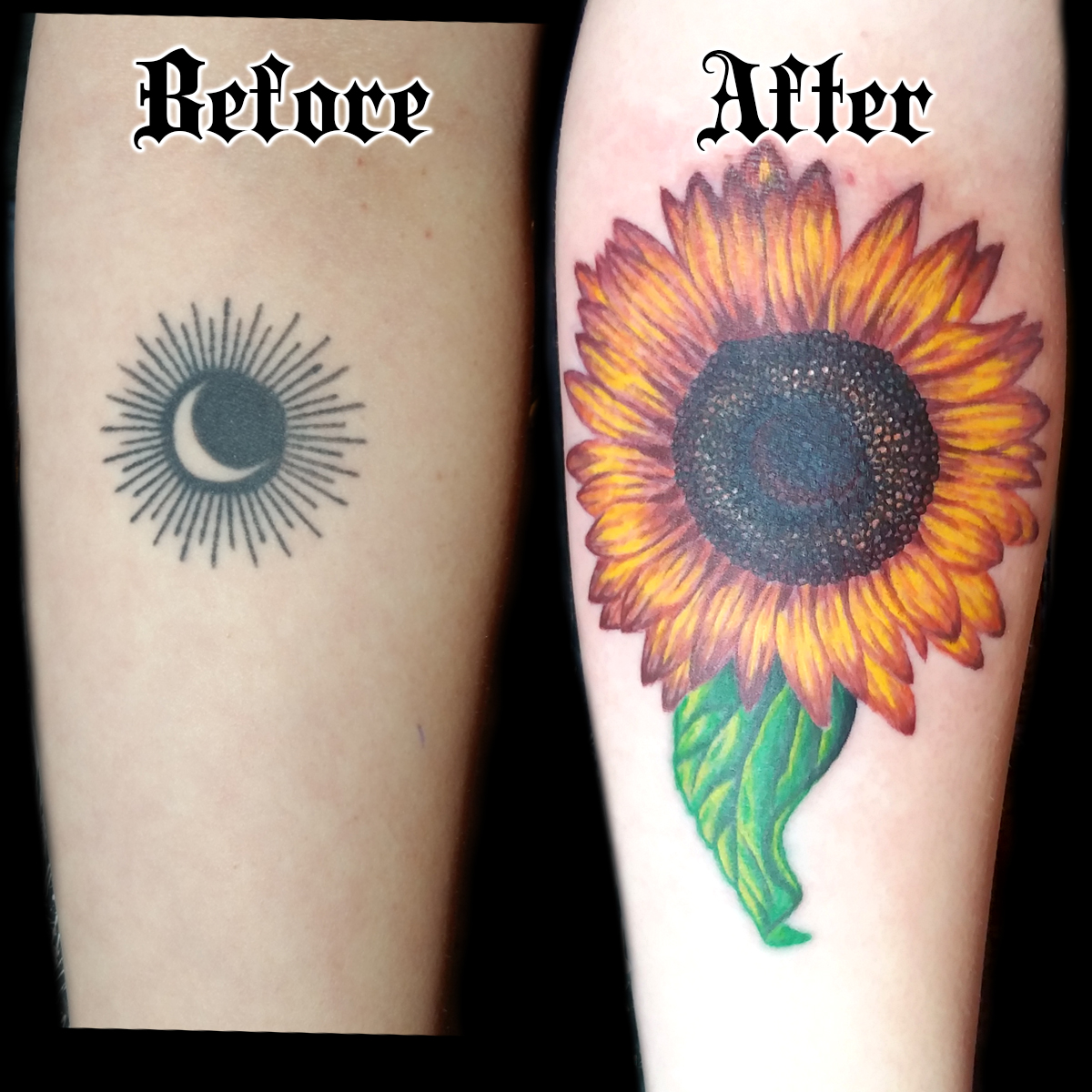
Sunflowers bring a brighter personality to floral tattoo artwork.
The large petals create a recognizable silhouette, while the center provides an interesting area of texture.
Realistic shading can make each petal appear slightly different.
Color can emphasize the flower’s natural warmth. On the other hand, black and gray shading can create a more artistic and timeless interpretation.
Sunflowers also pair well with other subjects.
For example, a sunflower can be combined with a portrait, animal, landscape, butterfly, or meaningful quote.
Lily Tattoos
Lilies offer a more elegant floral appearance.
Their long petals create graceful shapes that can follow the natural curves of the body.
A realistic lily tattoo can be designed with soft shading and subtle highlights. The stem and leaves can then extend the composition.
Placement makes a significant difference.
A lily may flow naturally along the forearm, ribcage, thigh, or side of the body.
Because of the flower’s elongated shape, it can also work well in vertical compositions.
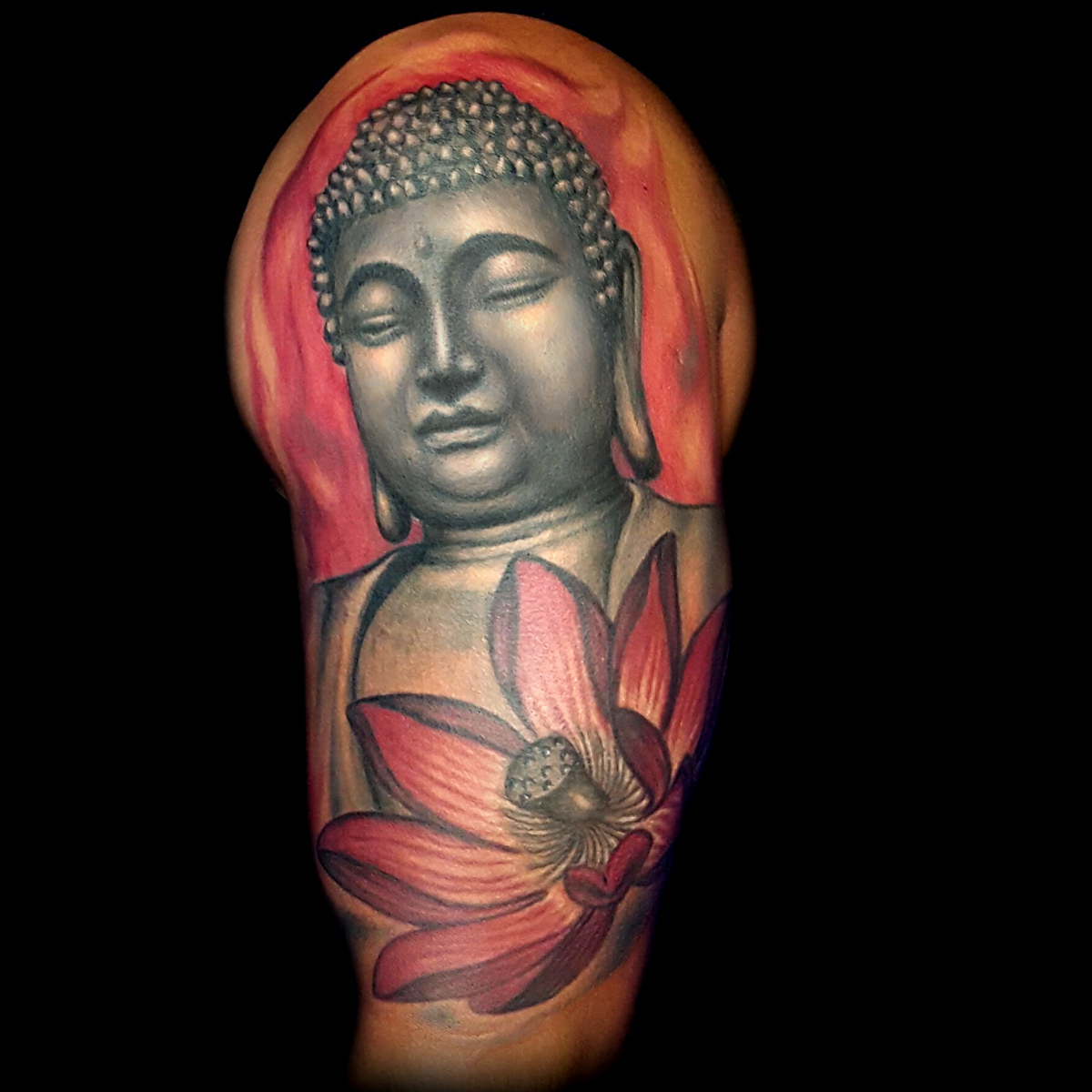
Lotus Flower Tattoos
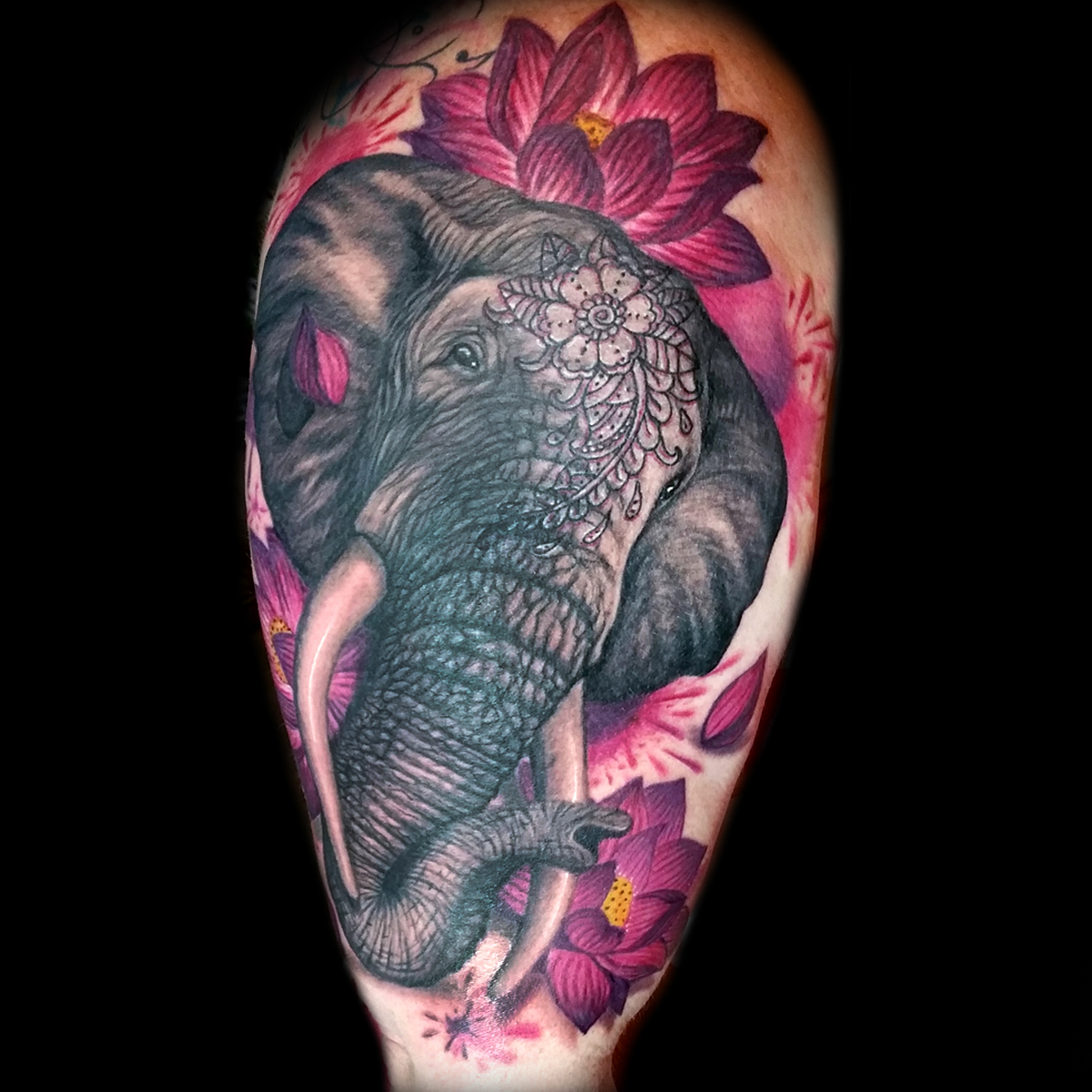
Lotus tattoos often represent growth, transformation, and renewal.
The flower’s layered structure makes it visually interesting from both realistic and artistic perspectives.
A realistic lotus can be rendered with delicate gradients between the petals. Darker values underneath the flower create separation.
Water can also become part of the composition.
Reflections, ripples, and shadows can give the tattoo an environmental setting instead of leaving the flower isolated.
For a more imaginative concept, the lotus can be combined with clouds, smoke, animals, or surrealistic imagery.
Peony Tattoos
Peonies are ideal for clients who want a fuller floral composition.
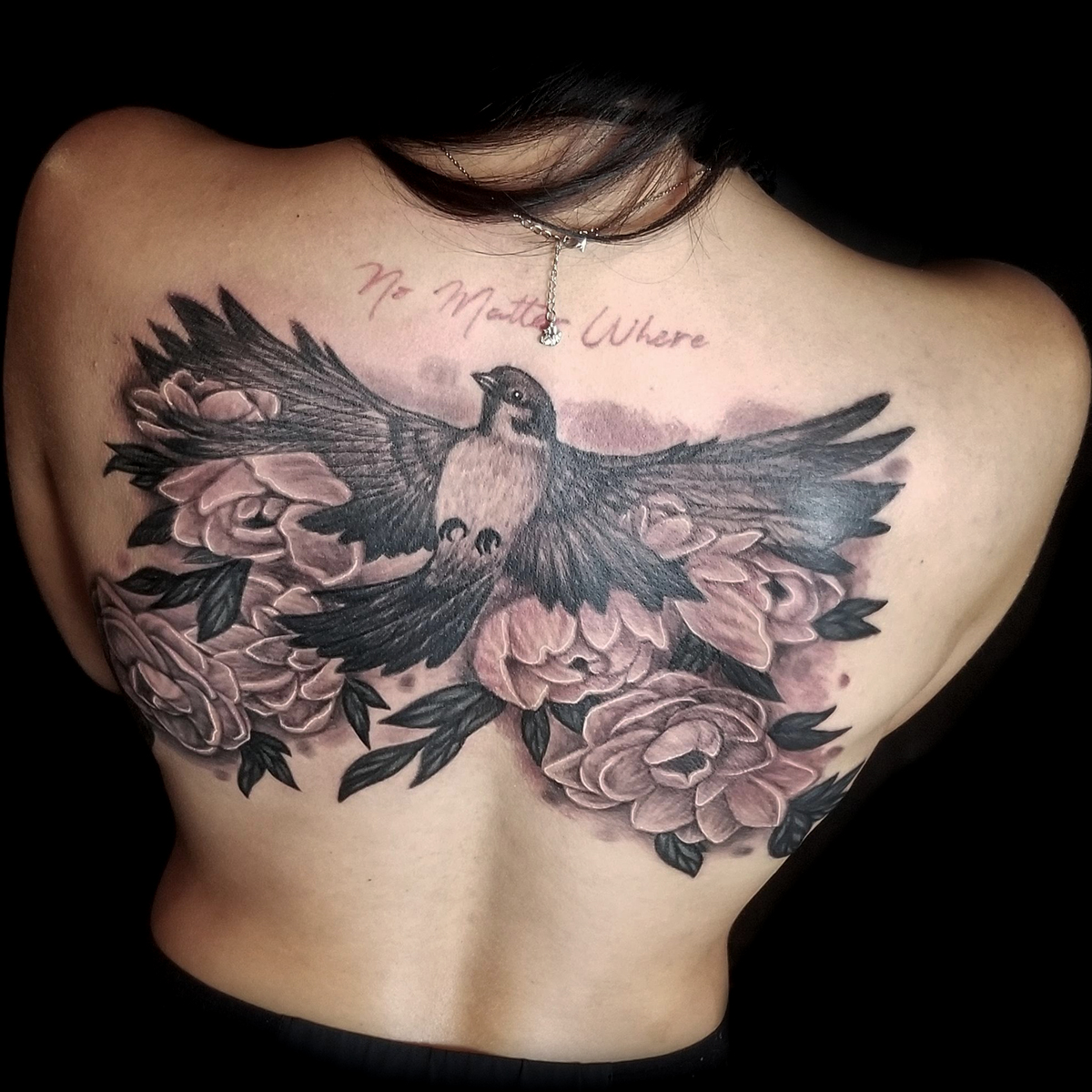
Their numerous overlapping petals create a rich appearance. Several blooms can also be arranged together to create a larger tattoo.
Realistic peony artwork depends heavily on soft transitions.
Hard outlines can make the petals look flat. Instead, gradual changes in value allow each layer to emerge naturally.
Leaves provide additional contrast.
Dark foliage can frame the lighter petals and help the flowers become the focal point.
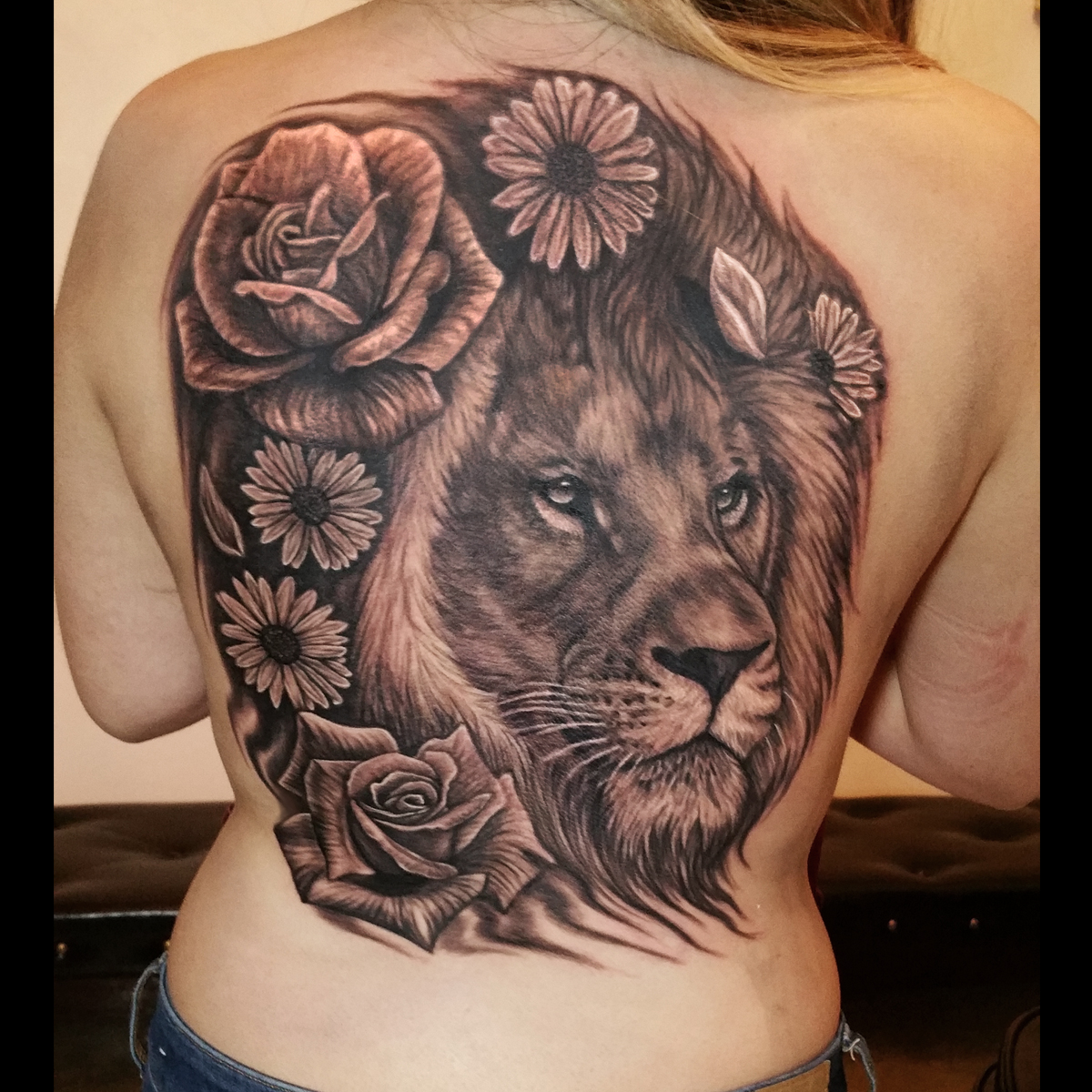
Floral Tattoos With Animals
Flowers and animals can create highly personal combinations.
A butterfly resting on a flower can represent transformation. A hummingbird can introduce movement. An owl surrounded by flowers can create a mysterious composition.
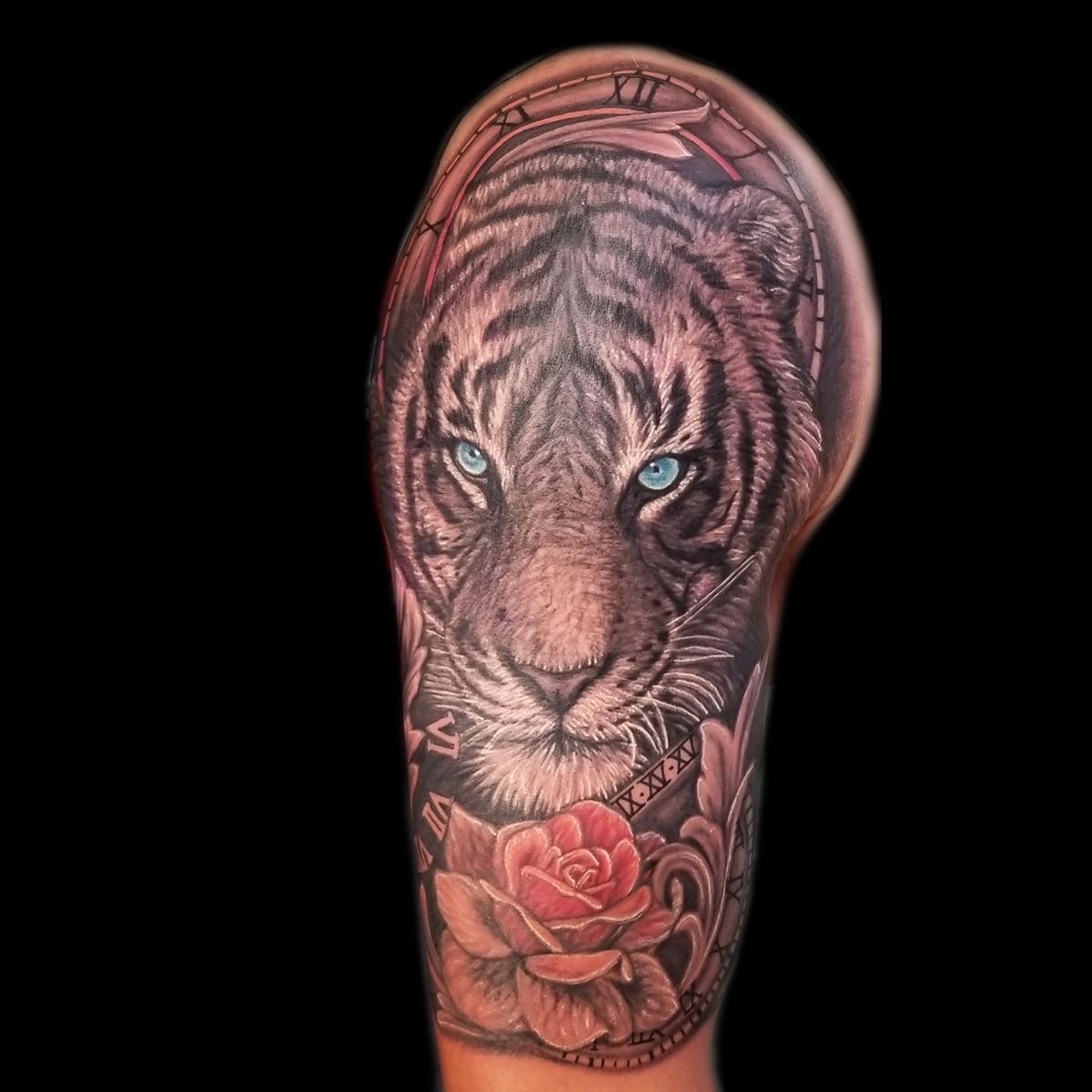
Likewise, realistic flowers can soften the appearance of a larger animal portrait.
The two subjects do not need to compete.
Instead, the flowers can frame the animal and guide the viewer toward its face.
This approach works particularly well for larger tattoos.
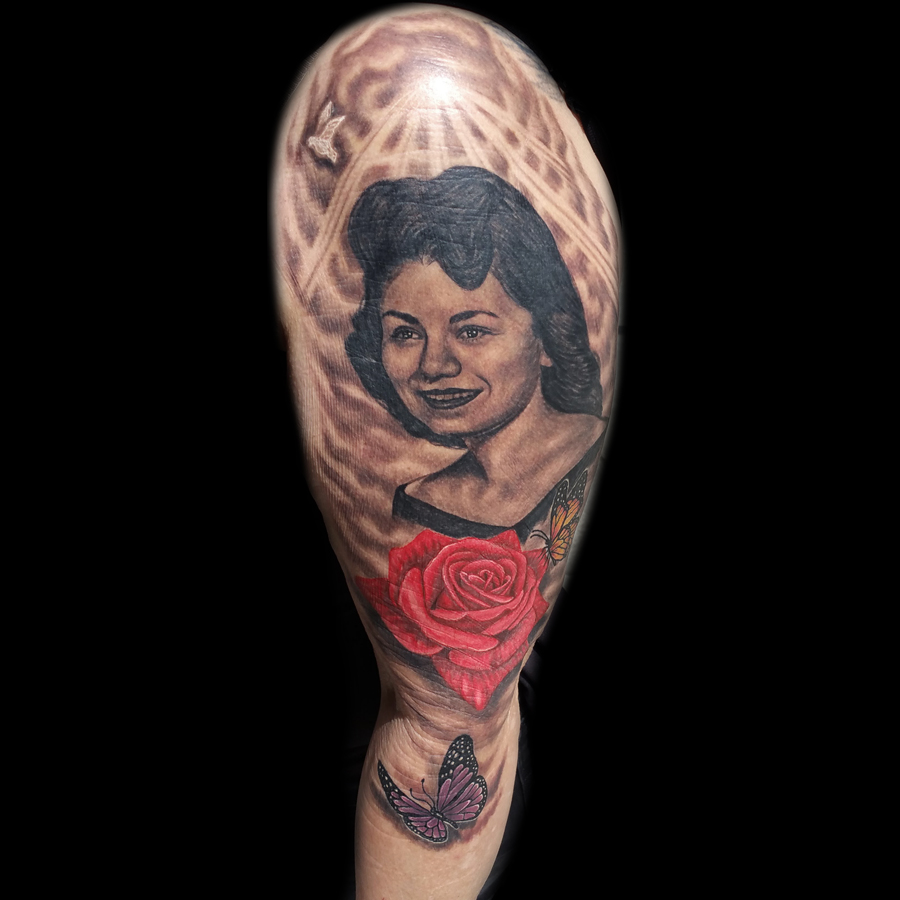
Floral Portrait Tattoos
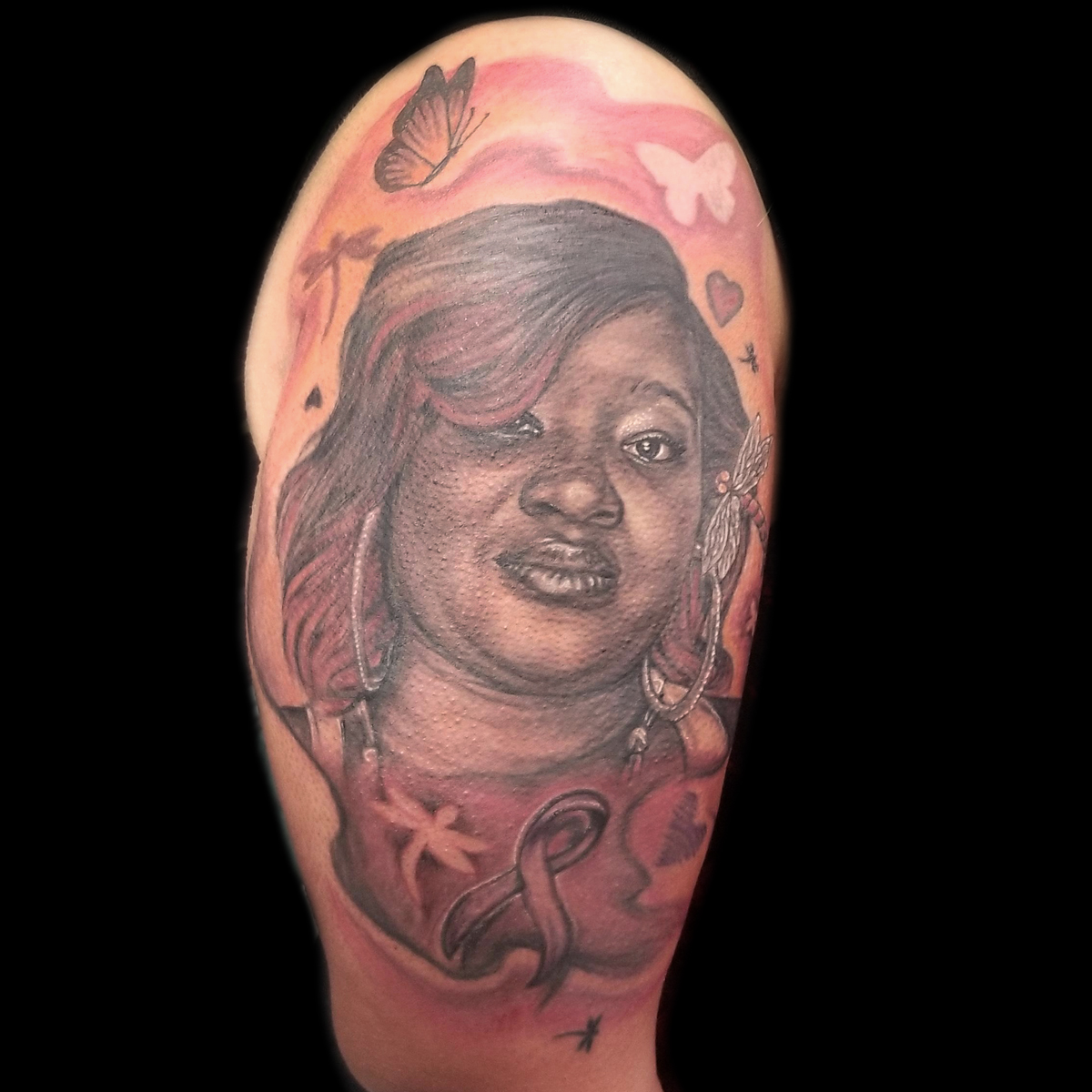
Flowers can also become part of a realistic portrait.
A woman’s face surrounded by roses creates one type of composition. Another design might combine a portrait with sunflowers, lilies, or wildflowers.
The flowers can frame the face without covering important facial details.
Lighting needs to remain consistent between the portrait and botanical elements.
When the shadows work together, the entire tattoo feels like one scene.
Explore the realistic portrait tattoo collection for more ideas.
Black and Gray Flower Tattoos
Black and gray realism can give flowers a sophisticated appearance.
Dark values can define the deepest areas between petals. Gray gradients create softness across the flower.
Highlights then bring selected petals forward.
This technique works particularly well for roses, peonies, lilies, orchids, and wildflowers.
Without bright colors, texture becomes even more important.
Petal folds, leaf veins, stems, and natural imperfections can all contribute to the realism.
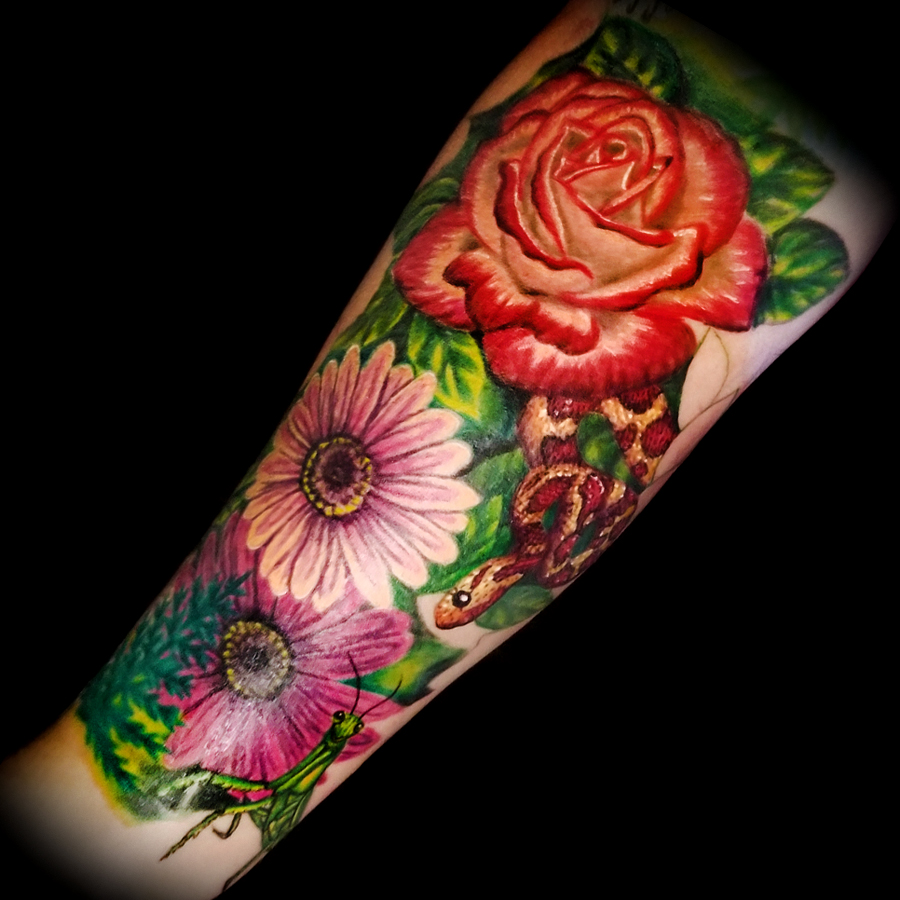
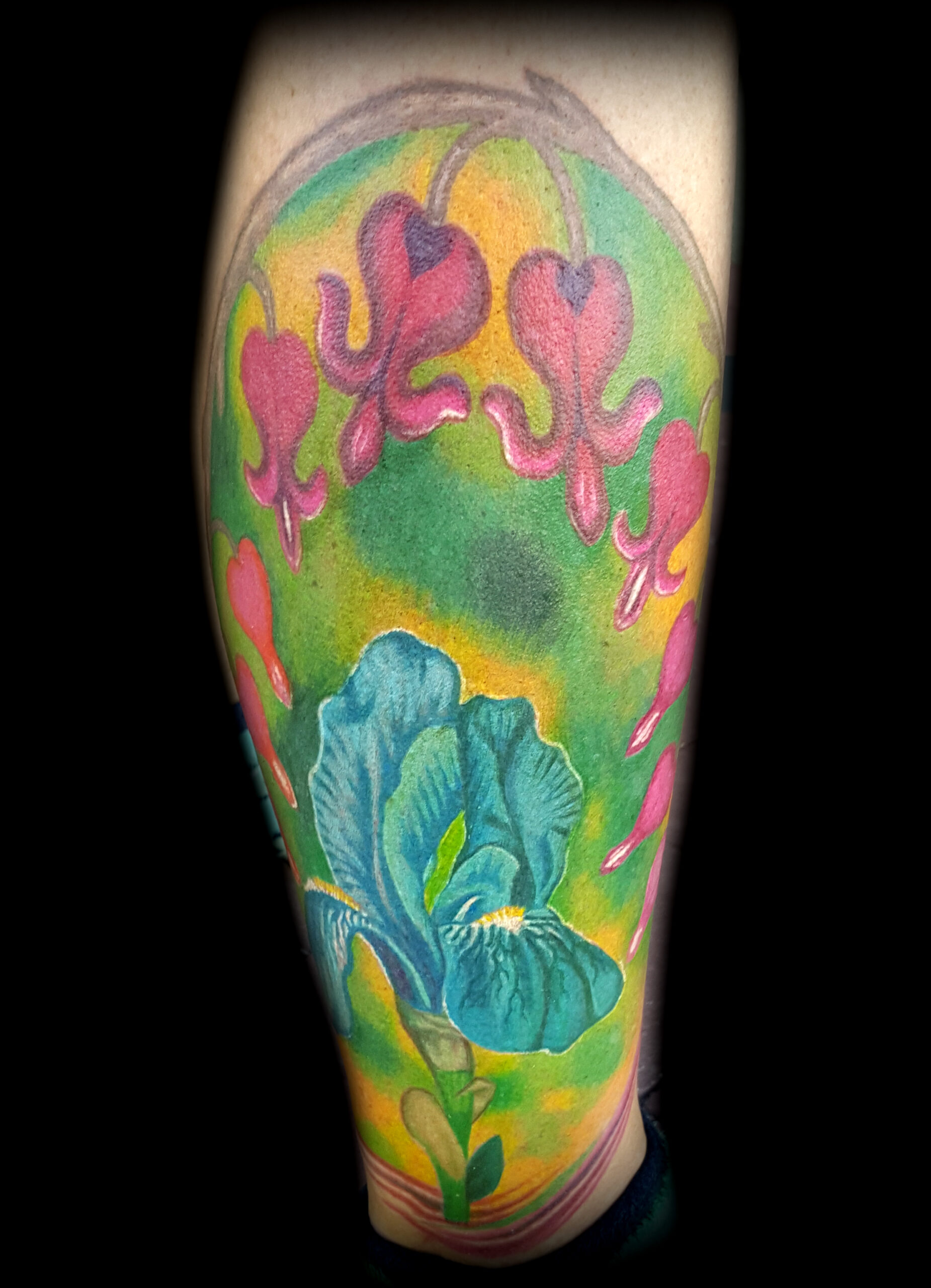
Color Flower Tattoos
Color creates a completely different mood.
Bright reds can make roses appear bold and passionate. Yellow flowers can create warmth. Purple flowers offer a more mysterious appearance.
Muted colors can produce a softer and more natural result.
However, realistic color tattooing requires careful control.
The goal is not simply to make the flower colorful. Instead, different tones should work together to create believable light and depth.
Skin tone, background shading, and neighboring tattoos should also be considered.
3D Flower Tattoos
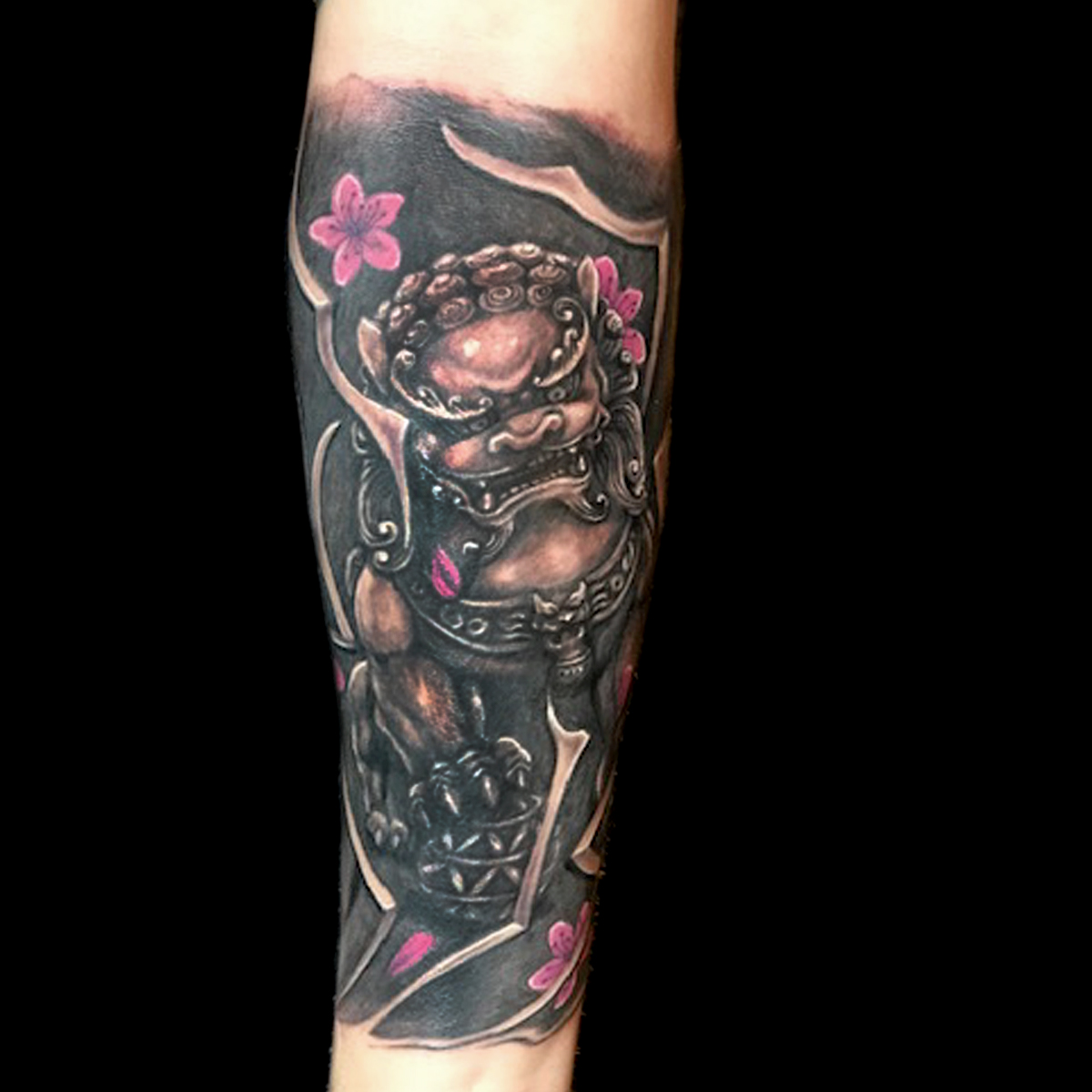
Flowers can look surprisingly dimensional when realistic shadows are used correctly.
A petal can appear raised above another petal. A leaf can seem to sit behind the flower. Stronger cast shadows can make the entire bloom appear to project from the skin.
Lighting determines whether the illusion works.
Highlights need to match the direction of the shadows.
For clients interested in dimensional artwork, explore the 3D tattoo artist collection.
Floral Sleeve Tattoos
A floral sleeve can combine multiple flowers into one flowing composition.
Roses might occupy the upper arm while smaller flowers and leaves continue toward the forearm.
Instead of filling every space with identical blooms, different sizes can create visual rhythm.
Leaves and stems can also connect separate sections.
Furthermore, negative space can help prevent the sleeve from becoming too heavy.
Planning the entire arm as one composition makes it easier to create natural movement from shoulder to wrist.
Flower Chest Tattoos
The chest offers enough space for both symmetrical and asymmetrical floral artwork.
Large roses can spread toward the shoulders. A central flower can sit over the sternum. Alternatively, several blooms can follow the natural shape of the chest.
The choice depends on the desired appearance.
Some clients prefer a bold central flower. Others want a softer arrangement that follows the body’s contours.
Realistic shading can help the flowers sit naturally on the chest rather than looking like separate images.
Flower Backpiece Tattoos
A floral backpiece provides an enormous canvas for detailed botanical artwork.
Large flowers can establish the main focal points. Smaller blooms and leaves can fill the surrounding areas.
Background shading can create additional depth.
For a dramatic concept, dark shadows can surround bright flowers. Another option uses softer values to create a lighter botanical scene.
Large-scale work also allows individual petals to receive more attention.
As a result, the back can support an extremely detailed floral composition.
Flower Forearm Tattoos
The forearm is a popular location for floral artwork.
Long stems can follow the length of the arm. A large bloom can become the main focal point, while smaller leaves create movement around it.
Roses, lilies, sunflowers, and wildflowers can all work well in this area.
Placement should account for how the tattoo looks from different angles.
A flower that looks centered from the front may shift visually when the arm rotates.
Therefore, body movement should be considered during the design process.
Flower Shoulder Tattoos
The shoulder’s rounded shape works naturally with flowers.
A large rose or peony can wrap around the shoulder. Leaves can then extend toward the upper arm.
This placement can also connect with an existing sleeve.
Flowers provide natural transitions between different tattoo subjects.
For example, botanical elements can connect a portrait with an animal or landscape.
That flexibility makes floral artwork useful beyond standalone flower designs.
Dark Floral Tattoos
Flowers do not always need to look bright and delicate.
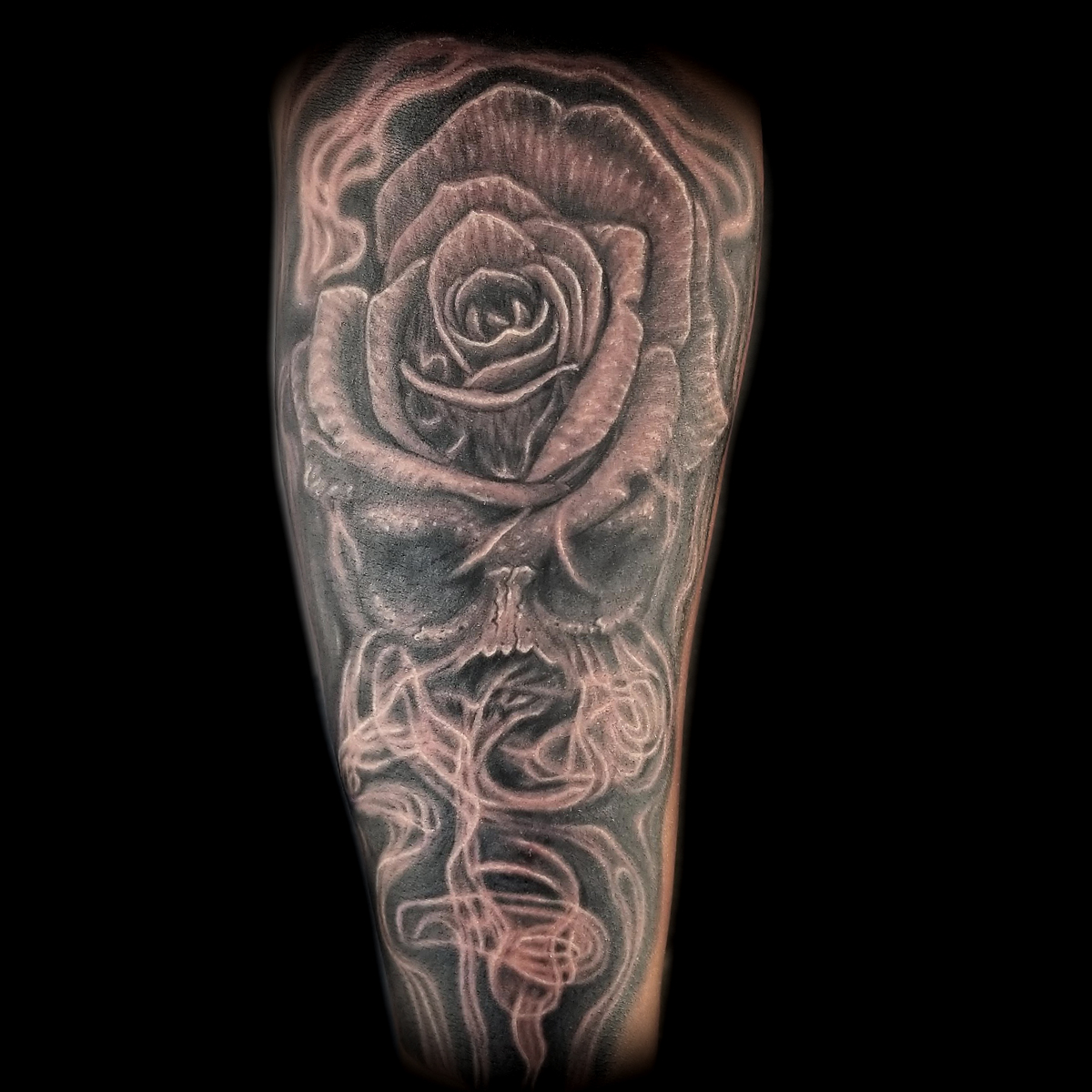
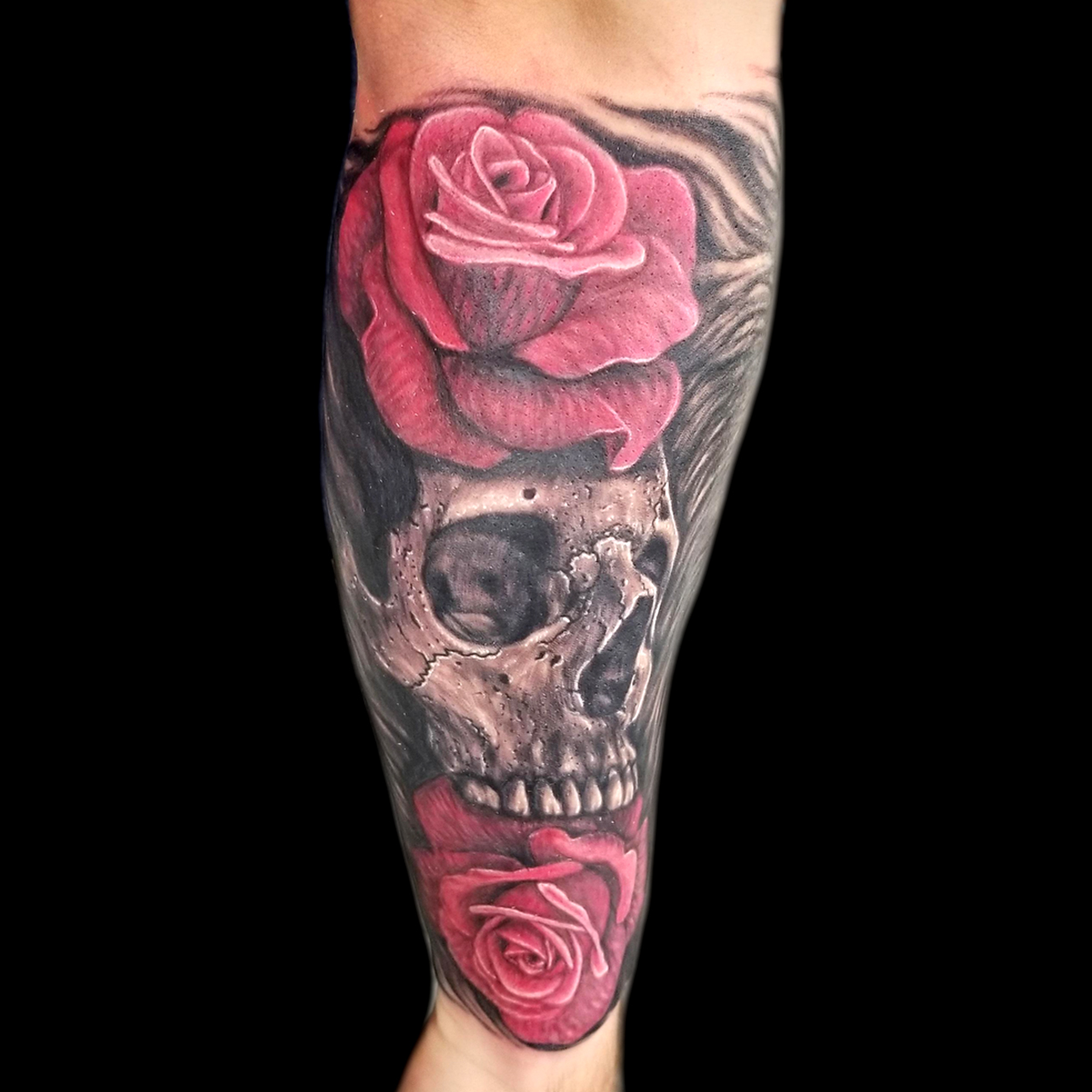
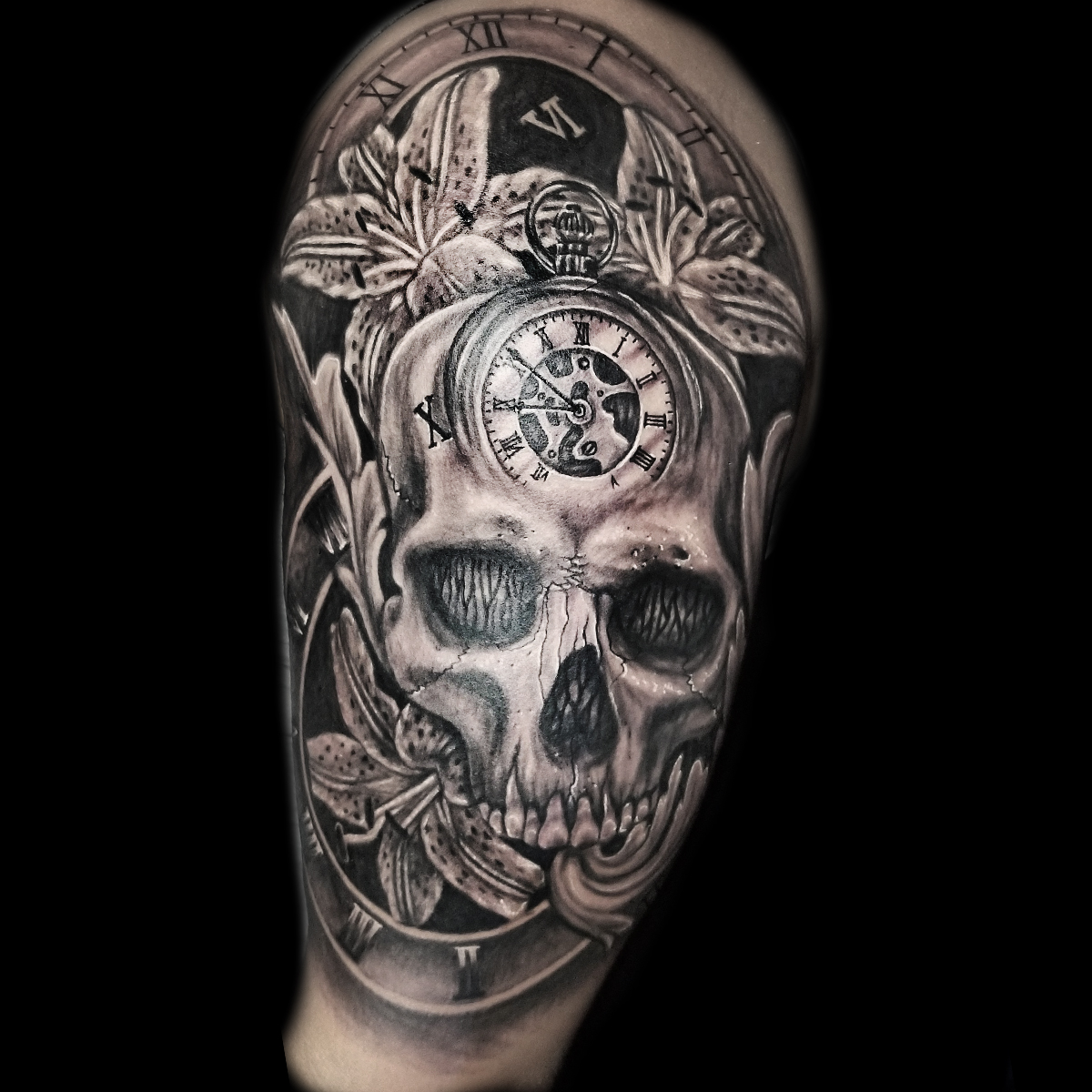
Dark floral tattoos can combine botanical subjects with heavy shadows, skulls, insects, smoke, or gothic imagery.
Black roses are one popular direction.
Another concept might feature realistic flowers growing around a skull or emerging from a dark environment.
Strong contrast gives these designs a dramatic personality.
Explore the dark tattoo collection for additional inspiration.
Surrealistic Flower Tattoos
Surrealism can completely change the way a flower is represented.
A realistic rose might grow from an unusual object. Petals could transform into birds, butterflies, smoke, or another natural element.
Another concept might place an oversized flower inside an impossible landscape.
Although the idea can be imaginative, realistic rendering keeps the individual elements believable.
This combination creates artwork that feels both familiar and strange.
For more unconventional ideas, visit the surrealistic tattoo collection.
Flower and Butterfly Tattoos
Butterflies pair naturally with flowers.
The butterfly can rest on a petal or fly above the composition.
Realistic wings create another opportunity for texture and color.
Meanwhile, the flowers provide a stable visual foundation.
Together, the subjects can symbolize growth, change, beauty, or personal transformation.
Placement can also be flexible.
A small flower and butterfly can work on the forearm or shoulder, while a larger arrangement can become part of a sleeve or thigh piece.
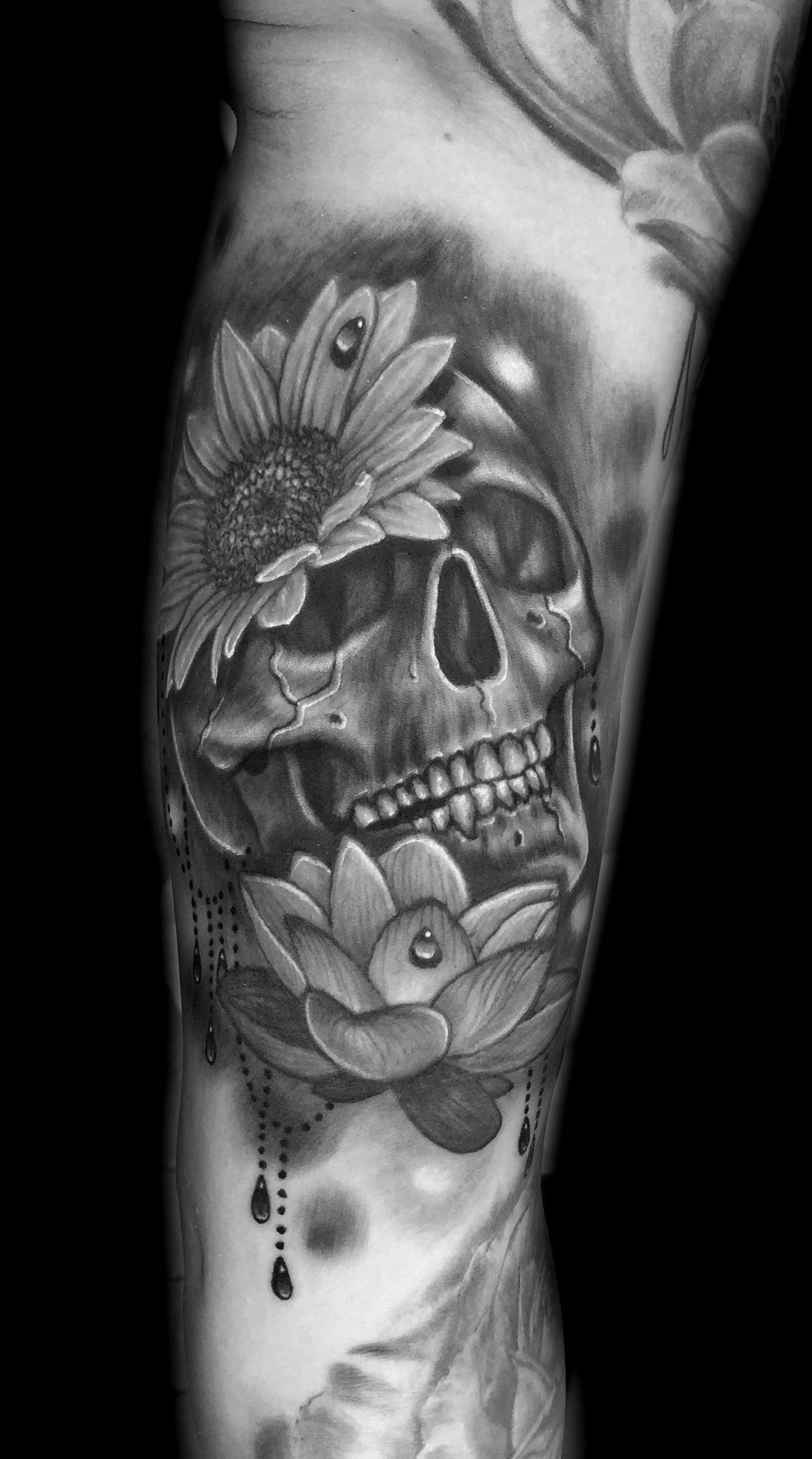
Flower and Skull Tattoos
The contrast between flowers and skulls creates a compelling visual theme.
Flowers can represent life and beauty. A skull can introduce ideas of mortality and impermanence.
Together, they create a design built around contrast.
A rose growing beside a realistic skull is one possible approach. Another composition could show flowers emerging from the skull itself.
Dark shading can unify the two subjects.
For additional skull inspiration, explore the realistic skull tattoo collection.
Floral Cover-Up Tattoos
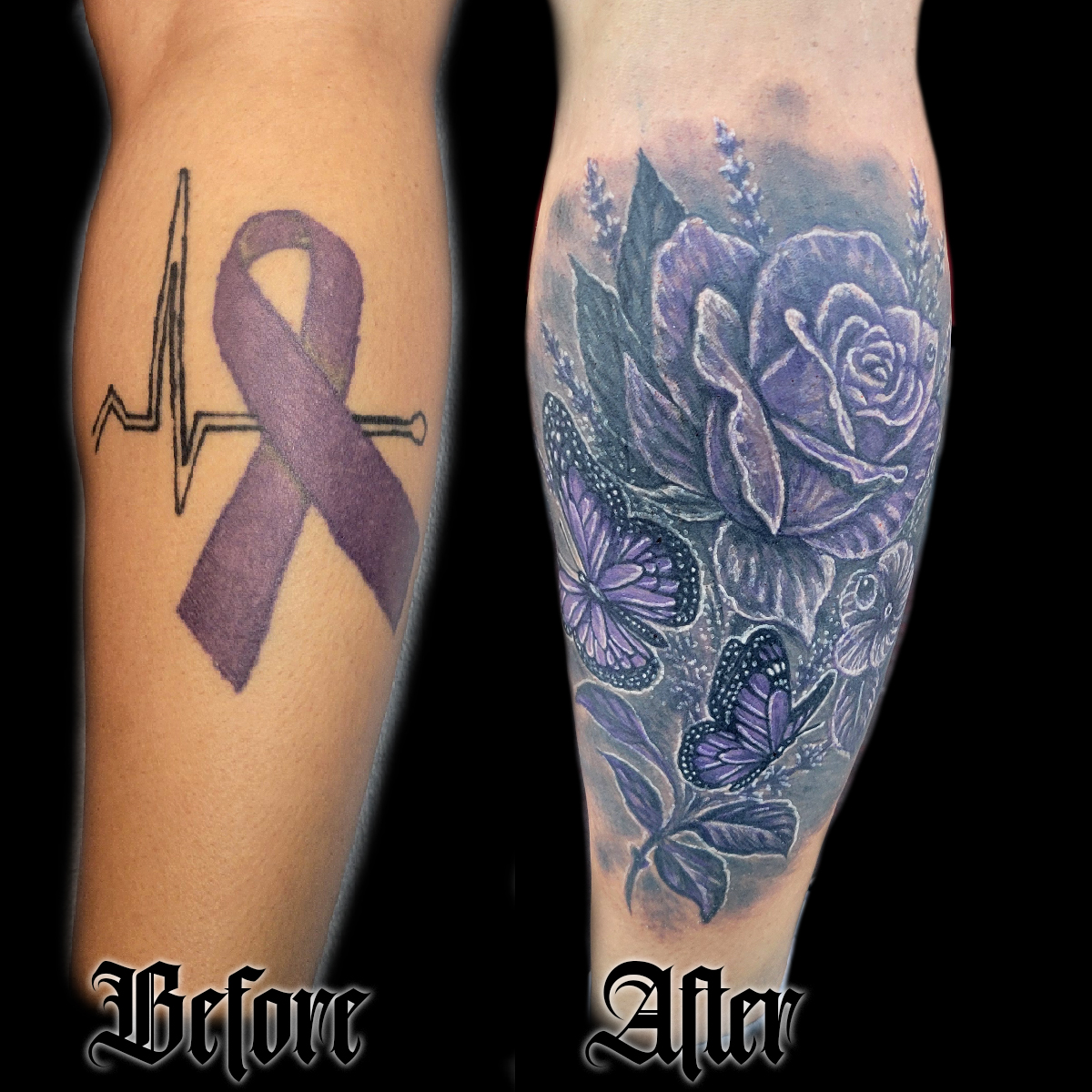
Flowers can also be useful when planning certain tattoo cover-ups.
Petals provide opportunities for layered shading. Leaves can create darker sections. Background elements can help disguise portions of an older tattoo.
Nevertheless, every cover-up needs a custom approach.
Existing ink affects what colors and values can be used. The size and location of the old tattoo matter as well.
A realistic floral cover-up should therefore be designed around the existing artwork.
Learn more through the cover-up tattoo artist page.
Choosing the Right Flower
The best flower is not always the one with the most popular symbolism.
Think about the visual qualities you actually enjoy.
Large petals create a bold appearance. Small wildflowers can produce a more delicate composition. Roses offer dramatic layers, while lilies provide elegant shapes.
Color should also be considered.
Some flowers naturally lend themselves to vibrant color. Others can look striking in black and gray.
Most importantly, choose a flower that feels meaningful to you.
Designing a Custom Floral Tattoo
Reference images can be extremely helpful during the consultation.
Bring photographs of flowers you like. You can also show examples of preferred colors, placements, lighting, or artistic styles.
Those references do not need to become direct copies.
Instead, they can help establish the direction for an original composition.
Size is another important consideration.
A larger flower allows more realistic petal detail. Smaller artwork may require simplified textures so the design remains clear over time.
The final concept should be designed specifically for the intended placement.
Why Botanical Detail Matters
Realistic flowers contain more complexity than they initially appear to have.
Petals overlap. Leaves fold. Stems bend. Light changes across every surface.
Even tiny details can affect realism.
Natural imperfections are also important.
A perfectly identical group of petals may look artificial. Slight differences can make the flower feel more organic.
For that reason, realistic floral tattooing requires careful observation rather than simply following an outline.
Brian Martinez at Masterpiece Tattoos
Brian Martinez is the owner and lead artist of Masterpiece Tattoos in San Francisco.
With more than 17 years of tattooing experience, he specializes in realistic tattoos, portraits, 3D artwork, color realism, black and gray realism, and custom cover-ups.
His approach focuses on light, shadow, contrast, texture, and depth.
Those techniques can bring botanical subjects to life.
Petals need softness. Leaves require natural texture. Shadows must create depth between overlapping elements. Color needs to work with the lighting.
Each detail contributes to the final appearance.
Explore the Brian Martinez tattoo portfolio to see examples of his work.
Flower Tattoo Artist in San Francisco Bay Area
If you are searching for a flower tattoo artist in San Francisco Bay Area, consider the artist’s ability to handle both small details and complete compositions.
A beautiful flower requires more than clean tattooing.
Realistic work depends on shading, texture, contrast, lighting, and placement.
At Masterpiece Tattoos, Brian Martinez creates custom floral tattoos in San Francisco, California.
Projects can include roses, sunflowers, lilies, lotus flowers, peonies, orchids, wildflowers, and custom botanical combinations.
Flowers can also be incorporated into portraits, animal tattoos, skull designs, landscapes, surrealistic compositions, and cover-ups.
Black and gray realism provides a timeless option. Realistic color creates a more vibrant appearance. Meanwhile, 3D shading can give petals and leaves additional depth.
Explore the realistic tattoo artist page, 3D tattoo artist page, portrait tattoo page, and cover-up tattoo page for more examples.
Masterpiece Tattoos is a private tattoo studio in San Francisco and works by appointment.
Bring your favorite flower photographs, personal references, or simply an idea.
From there, Brian Martinez can create a custom flower tattoo designed around your body, your style, and the meaning behind the artwork.