
Jesus portrait tattoos by Brian Martinez




Jesus Portrait Tattoo Artist San Francisco Bay Area | Realistic Jesus Tattoos
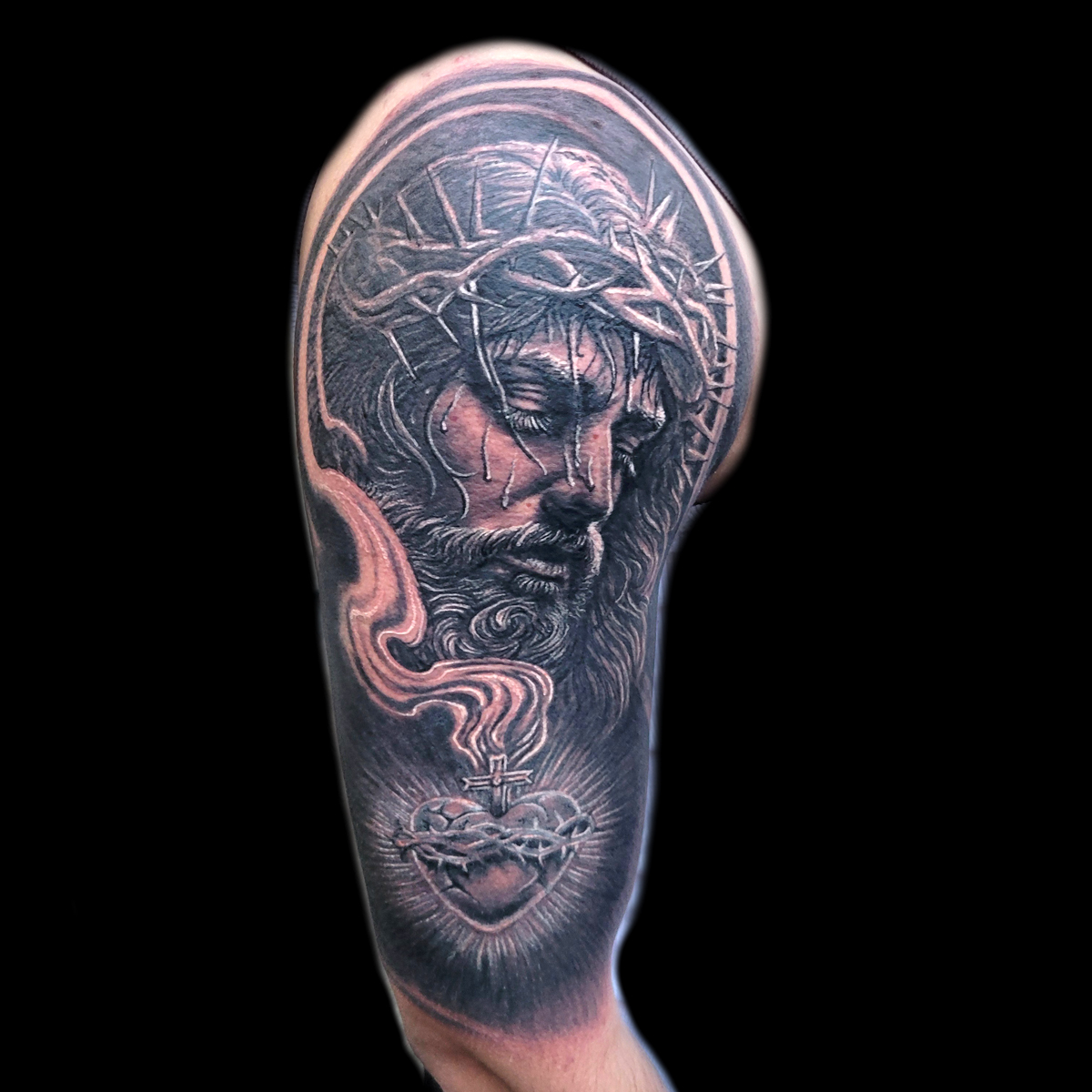
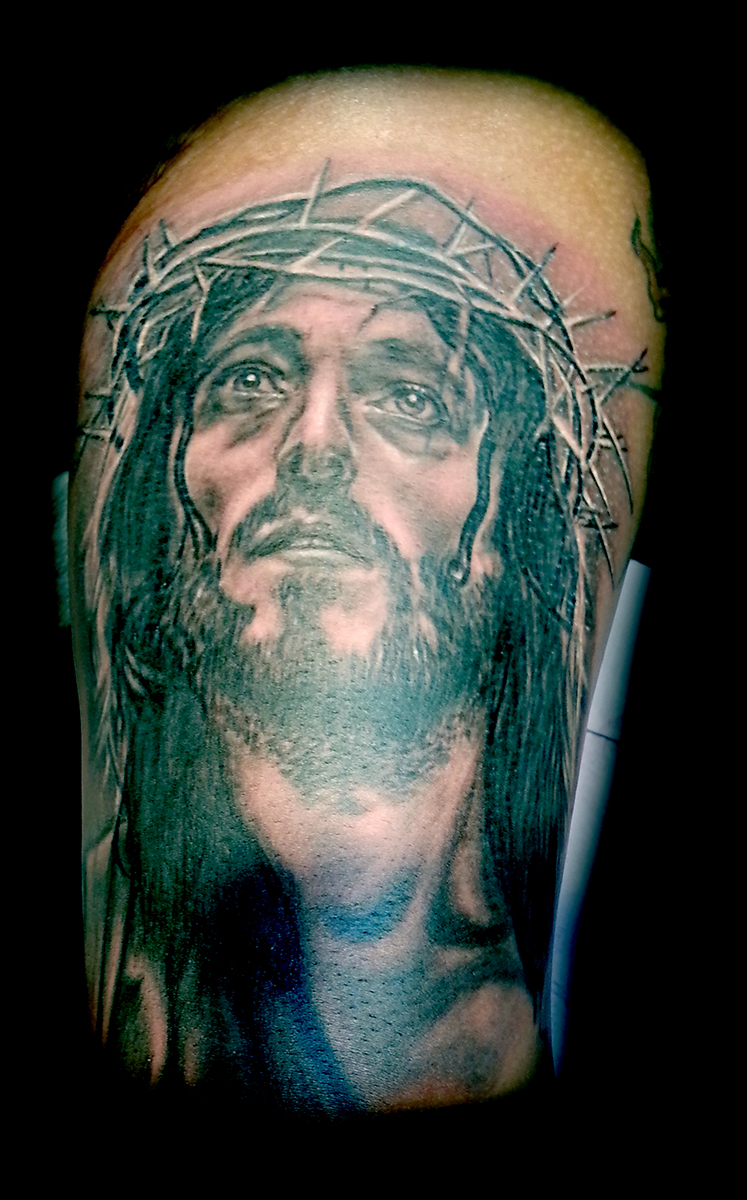
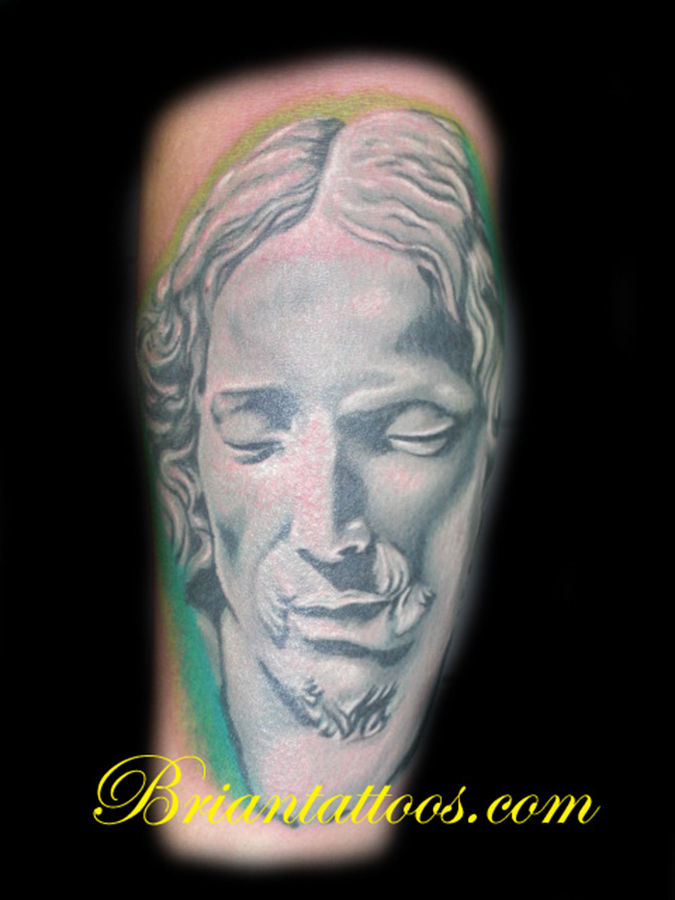
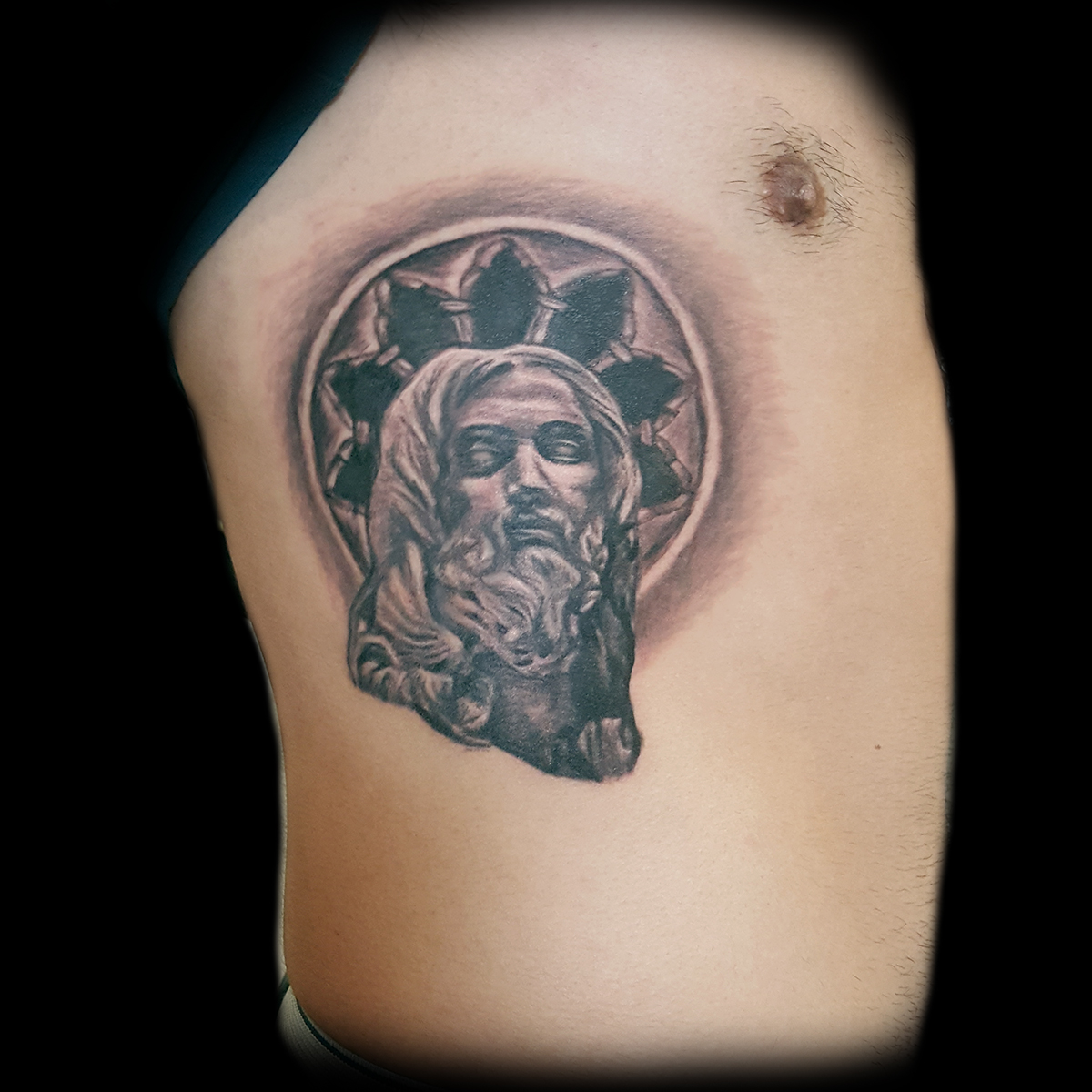
A Jesus portrait tattoo can combine faith, personal meaning, and realistic tattoo artistry in one powerful image. For many people, the portrait represents hope, sacrifice, protection, forgiveness, or a connection to their beliefs. Because facial expression carries so much emotion, realistic portrait techniques are especially important when creating this type of religious tattoo.
At Masterpiece Tattoos in San Francisco, Brian Martinez creates custom realistic portraits with careful attention to facial proportions, lighting, shadows, texture, and expression. Rather than relying on a generic religious image, each Jesus portrait tattoo can be developed around the client’s preferred reference, body placement, and overall vision.
When Faith Becomes Personal Artwork
A religious tattoo can represent something deeply personal.
For one person, Jesus may symbolize guidance during a difficult chapter. Someone else may choose the image to honor their faith or remember an important moment in life.
The design can also tell a visual story.
A peaceful expression creates one atmosphere. A crown of thorns introduces another. Adding a cross, heavenly light, clouds, or angels can further develop the meaning.
Because of these possibilities, no two religious portrait tattoos have to look alike.
What Makes a Jesus Portrait Look Realistic?
Portrait realism depends on much more than adding facial details.
Proportions have to remain consistent from the forehead to the chin. The eyes need proper alignment. Likewise, the nose, lips, cheeks, and jaw must work together naturally.
Lighting then brings those features to life.
Soft transitions can define the face without creating harsh edges. Deeper values may be placed beneath the cheekbones or around the eyes. Highlights can bring forward areas that receive more light.
As a result, the portrait gains depth without depending on heavy outlines.
The Eyes Create the Emotion
Eyes often become the focal point of a religious portrait.
A calm gaze can communicate peace. Looking upward may suggest prayer or spiritual connection. Meanwhile, a direct gaze can make the portrait feel more powerful and personal.
Even a subtle change in expression can alter the entire mood.
For that reason, selecting the right reference image is an important part of the design process.
A photograph with strong lighting and a clear expression gives the artist more information to work with.
Crown of Thorns as a Focal Detail
The crown of thorns can immediately identify the subject while adding texture to the composition.
Individual branches can be shaded with different values. Small highlights along the thorns can make them appear raised.
However, the crown should not overpower the face.
A carefully balanced design allows the viewer’s attention to move naturally from the crown toward the eyes and facial features.
This is particularly effective in a close-up Jesus portrait tattoo.
Adding the Cross
The cross can function as a background element rather than competing with the portrait.
One option places it directly behind the head. Another approach uses a smaller cross farther into the background.
Lighting can separate the cross from the face.
For instance, a darker cross behind a lighter portrait creates strong contrast. Alternatively, atmospheric shading can make the cross appear farther away.
Those decisions allow the religious symbolism to remain visible while keeping the portrait as the primary subject.
For more inspiration, visit the religious tattoo collection.
Jesus on the Cross
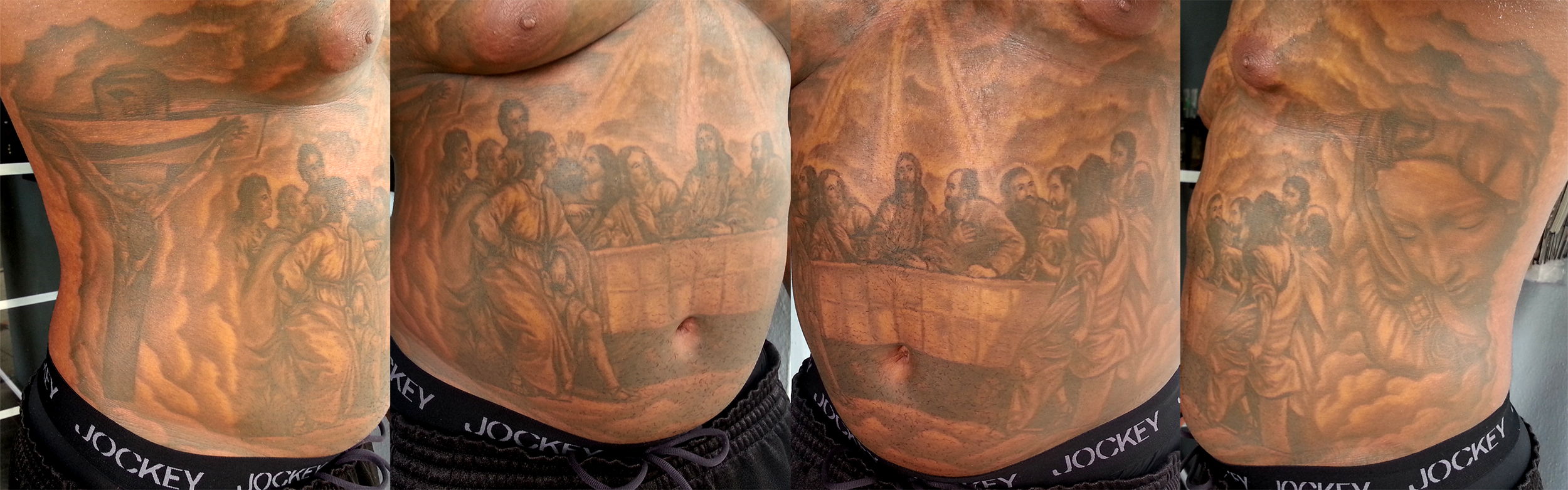
A full depiction of Jesus on the cross creates a completely different type of tattoo.
Instead of focusing only on the face, the composition can show the figure, cross, clothing, and surrounding atmosphere.
Larger placements work particularly well for this concept.
The chest, back, thigh, and upper arm provide enough room for the figure to remain detailed.
Clouds and dramatic lighting can also create a sense of scale. Meanwhile, controlled shadows can keep the composition from becoming too bright or crowded.
Combining Jesus With Angels
Angels can introduce a heavenly atmosphere around the central portrait.
Large wings can frame the face. Smaller angelic figures may appear farther into the background.
Clouds provide another useful transition between foreground and background.
In addition, rays of light can guide attention toward Jesus.
The result can feel like a complete scene rather than a collection of separate tattoo elements.
Clients interested in darker religious imagery can also explore the angels and demons tattoo collection.
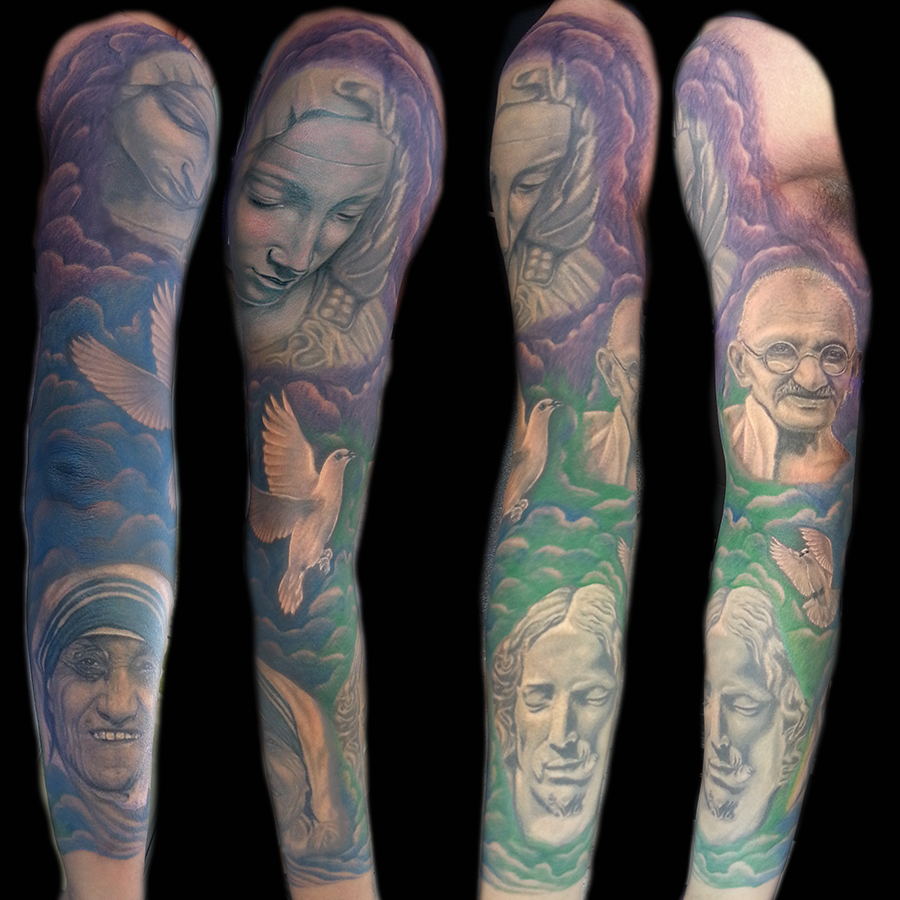
Jesus and Mary Portraits
A composition featuring both Jesus and Mary can create a deeply meaningful religious tattoo.
The portraits may sit beside each other or occupy different sections of a larger piece.
Matching lighting helps connect the two faces.
For example, if light comes from the upper left, both portraits should respond to that same direction. Shadows then become part of the overall composition.
This consistency is important when combining multiple realistic portraits.
Black and Gray Religious Portraits
Black and gray is a natural choice for realistic religious artwork.
Without bright color, the tattoo relies on value and contrast to create dimension.
Deep shadows can frame the face. Midtones reveal facial structure. Carefully placed highlights bring attention to important features.
The same technique can be applied to the cross, crown of thorns, clothing, clouds, and background.
Consequently, the entire tattoo can have a dramatic appearance while remaining cohesive.
Explore the black and gray tattoo collection for more ideas.
Color Jesus Portrait Tattoos
Color realism offers a different interpretation.
Warm skin tones can create a softer appearance. Gold and warm highlights can suggest heavenly light. Muted background colors can provide atmosphere without distracting from the face.
Still, realism does not require excessive color.
A controlled palette often produces a more natural result. The artist can concentrate on accurate skin tones, realistic shadows, and consistent lighting.
This approach can make the portrait feel dimensional without looking overly saturated.
Creating a 3D Religious Portrait
Three-dimensional techniques can make a Jesus portrait appear to separate from the background.
Cast shadows are particularly useful.
A shadow beneath the face or around a cross can create visual distance. Highlights along the forehead, nose, and cheekbones can then make those areas appear closer.
Similarly, clouds can be layered behind the portrait to increase depth.
The effect becomes stronger when every element follows the same light source.
For examples of dimensional work, explore the 3D tattoo artist page.
Jesus Sleeve Tattoo Concepts
A religious sleeve can tell a complete story from shoulder to wrist.
The portrait might occupy the upper arm. From there, clouds can transition toward a cross on the forearm.
Angels, rays of light, scripture-inspired imagery, or other religious elements can fill supporting areas.
Rather than treating each section independently, the sleeve should be planned as one composition.
This allows the background to flow naturally around the arm.
It also makes future additions easier to integrate.
Chest Placement for a Jesus Portrait
The chest gives a portrait plenty of visual space.
A centered design can place Jesus directly over the sternum. Large background elements may extend toward both shoulders.
Another option is an asymmetrical composition with the portrait positioned slightly to one side.
The right approach depends on the client’s preferred style.
Either way, anatomy should be considered before finalizing the proportions.
A face that looks perfect on a flat drawing may need adjustments when placed across a curved area of the body.
Forearm Jesus Portrait Tattoos
The forearm works well for a vertical portrait.
Because the available width is limited, the design usually benefits from a strong central focus.
Jesus can be shown from the shoulders upward. A crown of thorns can occupy the upper portion, while a cross or clouds provide background depth.
Simplifying secondary elements keeps attention on the face.
That becomes especially important as tattoo size decreases.
Shoulder and Upper Arm Designs
The rounded shape of the shoulder can create interesting opportunities for religious artwork.
A portrait may follow the curve of the shoulder before extending into the upper arm.
Wings, clouds, or a cross can continue around the anatomy.
This placement is also useful for clients who may eventually want a full sleeve.
Planning that possibility from the beginning can make future additions much easier.
Full Back Religious Tattoos
A large backpiece allows the artist to build an entire religious scene.
The Jesus portrait can occupy the central area while angels, clouds, crosses, and rays of light create surrounding depth.
Dark atmospheric shading can fill large areas without competing with the main subject.
Because the back provides so much space, facial details can also be developed at a larger scale.
For a dramatic custom composition, few body areas offer as much flexibility.
Jesus and Skull Imagery
Religious imagery can be paired with darker subjects for a more dramatic tattoo.
A realistic skull beside a Jesus portrait can represent the contrast between mortality and faith.
The two subjects can also create a visual balance.
The skull may occupy a darker section while the portrait receives stronger highlights. Background smoke or clouds can connect the elements.
This concept works particularly well in black and gray realism.
See the realistic skull tattoo collection for more dark realism inspiration.
Dark Religious Tattoo Concepts
Not every religious tattoo needs to have a bright or traditional appearance.
Heavy shadows can create a darker atmosphere. Gothic architecture, storm clouds, skulls, crosses, and dramatic lighting can further develop the mood.
A darker background also provides contrast around the face.
As a result, the portrait can become the brightest and most noticeable part of the tattoo.
For more ideas, visit the dark tattoo collection.
Surrealistic Jesus Tattoos
Surrealism can take religious tattoo artwork in a completely different direction.
Instead of a traditional portrait, Jesus could appear within an unusual landscape or dreamlike environment.
Clouds might transform into another object. A cross could emerge from an unexpected setting. The portrait itself could become part of a larger visual illusion.
Realistic rendering keeps the unusual concept grounded.
This combination of realistic technique and imaginative subject matter can produce a highly original tattoo.
Explore the surrealistic tattoo collection for additional concepts.
Choosing the Right Reference
The reference image is one of the most important decisions.
A clear photograph allows the artist to study facial proportions, expression, hair, beard texture, and lighting.
Different references can produce very different results.
Someone looking for a peaceful Jesus portrait should choose a reference with a calm expression. A more dramatic tattoo may benefit from stronger directional lighting.
Reference images can also establish the desired angle.
A straight-on portrait feels different from a three-quarter view or a profile.
Designing Around Your Body
Body placement should influence the artwork from the beginning.
An arm has a long, narrow shape. The chest is broader and more symmetrical. The shoulder curves around the body, while the back provides a large continuous canvas.
Because of these differences, one design should not simply be resized for every location.
Instead, proportions should be adjusted for the anatomy.
This helps the finished tattoo look natural when the body moves.
Why Shading Matters in Portrait Tattoos
Shading creates the structure of a realistic face.
Too little contrast can make facial features disappear. Excessive darkness can make the portrait appear harsh.
The goal is controlled value.
Soft gradients can define rounded areas of the face. Stronger shadows can establish depth around the eyes, nose, lips, and jaw.
Highlights then provide the final separation.
When these values are balanced, the face can appear dimensional without relying on heavy linework.
Building a Complete Religious Composition
A strong religious tattoo needs visual hierarchy.
The face should normally remain the primary focal point. Secondary elements should support it.
For example, a cross can sit behind the portrait. Clouds can create atmospheric depth. Angels can frame the composition.
Meanwhile, darker background areas can guide attention toward the face.
This approach prevents the tattoo from feeling crowded.
Every added element should have a reason for being there.
Brian Martinez and Masterpiece Tattoos
Brian Martinez is the owner and lead artist of Masterpiece Tattoos in San Francisco.
With more than 17 years of tattooing experience, he specializes in realistic portraits, 3D realism, black and gray tattoos, color realism, and custom cover-up work.
His approach focuses on light, shadow, contrast, texture, and dimensional detail.
Those skills are especially important when creating a Jesus portrait tattoo.
Facial proportions need to remain natural. Expressions need to communicate emotion. Background elements must support the portrait.
Most importantly, the finished piece should feel like one complete work of art.
View the Brian Martinez tattoo portfolio for more examples of realistic tattoo work.
Jesus Portrait Tattoo Artist in San Francisco Bay Area
Finding the right Jesus portrait tattoo artist in San Francisco Bay Area starts with looking at realistic portrait work.
Religious portraits demand precision.
The artist needs to understand facial anatomy, realistic shading, lighting, contrast, and composition.
At Masterpiece Tattoos, Brian Martinez creates custom Jesus portrait tattoos in San Francisco, California.
Designs can feature Christ portraits, crowns of thorns, crosses, angels, Mary, clouds, rays of light, skulls, and other religious imagery.
Black and gray realism offers a dramatic option. Color realism can create warmer and more vibrant artwork. Meanwhile, 3D shading can add another level of depth.
You can explore the realistic tattoo artist page, portrait tattoo artist page, 3D tattoo artist page, and religious tattoo page for related work.
Masterpiece Tattoos is a private tattoo studio in San Francisco and works by appointment.
Bring a reference photograph, a personal concept, or simply an idea you have been considering.
From there, Brian Martinez can develop a custom religious portrait designed around your placement, preferred style, and personal meaning.